Ca parte a unui pachet de măsuri menite să reducă prețul energiei electrice, Ministerul Energiei a anunțat în luna septembrie intenția de a introduce un mecanism de formare a pieței (market making) pe piața de futures a energiei electrice din România, afectată de un deficit de lichiditate. Anunțul a venit la câteva luni după Ordinul ANRE nr. 15 din 29/4/2025 , care a stabilit un cadru general de reglementare pentru market making pe piețele centralizate de energie. În lipsa unor clarificări ulterioare cu privire la forma finală pe care o va lua acest mecanism, studiul de față servește drept introducere în aspectele fundamentale ale politicilor de market making în energie, cu exemplificări din practica internațională.
Deși există exemple internaționale pozitive de market makeri, care au îmbunătățit semnificativ condițiile de piață pentru toți participanții – de la producători până la consumatorii finali – există și cazuri în care încercările de market making au adus puține beneficii pieței. Pentru a evita acest din urmă scenariu, este important ca factorii de decizie să ia în considerare următoarele cerințe:
Entitatea desemnată ca market maker ar trebui să aibă experiență în producția și comercializarea energiei.
Market maker-ul ar trebui să dețină o cotă de piață semnificativă și să dispună de resurse suficiente pentru a absorbi schimbările bruște în dinamica pieței.
Autoritățile trebuie să elaboreze un sistem clar și stimulativ de remunerare activității de market making.
Autoritățile trebuie să stabilească în detaliu responsabilitățile market maker-ului, clarificând următoarele elemente: tipurile de produse tranzacționate; diferența dintre prețul de cumpărare și cel de vânzare; perioada operațională (în timpul zilei de tranzacționare); condițiile de conformitate și decontare.
Arhitectura juridică a operatorului pieței (OPCOM) trebuie extinsă cu instrumente de interacțiune cu un market maker.
Autoritățile trebuie să stabilească și să anunțe un termen înainte de punerea în aplicare, odată ce faza de proiectare a politicii este finalizată, cu o perioadă recomandată pentru pregătire de 12 luni.
Noah Murray is a Research Assistant at the Energy Systems Department, working on power markets and district heating. He holds a Bachelors degree in Global Governance, Economics, and Legal Order at ESADE Business and Law School in Barcelona, and is interested in electricity market design and development of renewable energy sources, specifically wind, solar, and battery storage.
Noah has had international academic experiences at SciencePo, Paris campus and Georgetown University, Washington D.C.. Previously Noah worked for a solar power development company, with experience in projects in Ukraine and the United States. He also has had past experiences working in consultancies in the United States and Spain.
The expansion of the EU Emissions Trading System (ETS) through a dedicated system for the buildings and road transport sectors (ETS2) is one of the most impactful and contentious decisions in EU climate policy in recent years. These sectors are major sources of emissions: buildings account for approximately 36% of the EU’s energy-related GHG emissions, while road transport contributes around 20%, with emissions rising in Romania over the past three decades.
The ETS2 is designed to complement existing regulatory instruments, most notably the Effort Sharing Regulation, which has so far been the main policy setting emissions targets on the transport and building sectors, among others. Under the ETS2, fossil fuel suppliers will be required to purchase emissions allowances, with the overall supply of allowances diminishing progressively over time. This mechanism is intended to introduce a carbon price signal to households and businesses, encouraging a shift towards lower-emission alternatives for heating and transportation.
To address the potential burden on lower-income households, the EU has created a EUR 65 billion Social Climate Fund. The fund would primarily support investments aimed at reducing greenhouse gas emissions from heating systems and road transport, and, to a limited extent, provide direct income support. The ETS2 is expected to have a considerable impact on the short term on vulnerable households, exacerbating fuel poverty, if not addressed in a timely manner. Similarly, certain companies, especially transport service providers and small industrial producers are expected to be impacted, prompting the need for protective measures.
Even though it is a policy of considerable impact on the citizens, no large-scale public information campaigns have yet been organised in Romania. Studies on the domestic impact are also scarce, with only two having discussed the Romanian context so far. The timing is also tight, as the ETS2 is scheduled to be fully operational from 2027. However, during the Environment Council of 4th November, Member States agreed to a postponement of one year, with the new starting date in 2028. The extra time could give governments more room for preparing the implementation and ensuring a smooth start, but may increase costs in the long run.
Romania has transposed the revised directive with a delayed start of the ETS2 in 2031, as per the Government Decision no. 907 from 23 October 2025. This entails serious consequences, such as the potential loss of financial allocations under the Social Climate Fund and foregone ETS2 revenues, delaying crucial investments targeted to the vulnerable households, as well as likely leading to an infringement procedure. As the Just Transition Fund will end in 2027 with no foreseen continuity in the new Multiannual Financial Framework, the Social Climate Fund (SCF) stands as the only available financial instrument to deliver a just transition. At a time of high fiscal deficit, losing an important source of funding and revenue would be a missed opportunity, especially for the transition to cleaner and future-proof heating and transport, but also for stimulating domestic production of low-carbon technologies. The SCF and ETS2 revenues are also one of the only sizeable opportunities to ensure that lower income socio-economic groups can feel the benefits of the transition through improved living conditions and modern, clean and efficient transportation.
Ana-Maria Niculicea is a Researcher at Energy Policy Group, in the Clean Economy Department. She coordinates research activities on climate governance with a focus on enhancing national climate governance and the social acceptance of the transition to a low carbon economy. Additionally, she conducts research on social acceptance of CCUS technologies in the Horizon2020 ConsenCUS project.
She holds a MSc in Politics, Economics and Philosophy from University of Hamburg and a bachelor’s degree in Political Science from National University of Political Studies and Public Administration.
The European Union has introduced a set of instruments that support the deployment of CCUS technologies. The EU Emissions Trading System (ETS) remains a central pillar, and its upcoming inclusion of carbon removals will have direct implications for CCUS deployment. For industrial operators in hard-to-abate sectors, this shift increases the importance of permanent CO₂ storage as a cost-effective compliance strategy. In this context, CCUS becomes a necessary solution for maintaining competitiveness under stricter emissions rules.
The Net-Zero Industry Act (NZIA), in force since June 2024, reinforces these dynamics by setting a binding EU-wide target of 50 million tonnes of annual CO₂ injection capacity by 2030. It mandates open-access storage and contributions from oil and gas producers, aiming to address one of the major barriers to CCUS scale-up: the lack of accessible, shared CO₂ storage infrastructure.
Complementary initiatives such as the Clean Industrial Deal, the Projects of Common Interest (PCI) framework, and the Innovation Fund are also designed to support new CCUS projects by improving access to funding. They aim to streamline and simplify permitting procedures through the Net Zero Industry Act and foster cross-border cooperation. These instruments can benefit Romania, provided national frameworks are aligned and capable of absorbing such support.
At the same time, the general landscape of CCS project development in the EU remains uneven. Infrastructure and investment are heavily concentrated in Western and Northern Europe, leaving Central and Eastern European (CEE) countries dependent on storage capacity developed in other Member States – a solution that is not desirable in Romania’s case. While the EU-level framework offers a strong foundation, its effective implementation depends on national action. The following assessment analyses how Romania is responding to these developments and what remains to be done to enable CCUS deployment at scale.
In this regulatory context, Romania’s three main oil and gas operators, OMV Petrom1, Romgaz2, and Black Sea Oil & Gas3, must collectively account for over 20% of the EU’s total CO₂ storage targeti, despite Romania’s currently limited domestic CO₂ storage infrastructure. While the NZIA obligation has been introduced without a fully defined business model, feasibility studies, or established financial instruments to ensure cost recovery, it marks an important step forward for accelerating CCS deployment in the EU. By creating a clear demand signal, it encourages investment in CO₂ infrastructure that might not have progressed otherwise. Nonetheless, successful implementation will require greater clarity on cost recovery mechanisms, regulatory conditions, and long-term viability to support industry commitment.
The delegated regulation defines who must contribute but leaves enforcement and penalties to individual Member States, potentially resulting in inconsistent implementation and legal uncertainty for cross-border operators. In Romania’s case, the lack of precedent and administrative readiness in this area could further delay the development of a clear and predictable compliance environment. Without guidance on proportionality, timelines, or acceptable justifications for delays, companies may struggle to assess their risk exposure and investment timelines, potentially discouraging timely engagement in CO₂ storage development.
The environmental and safety aspects of CCS storage in the EU are governed by three key directives. First, the CCS Directive establishes the core framework. Second, the Environmental Liability Directiveii addresses environmental damage from CO₂ storage, excluding climate impacts covered under the EU ETS. Third, the Environmental Impact Assessment Directiveiii ensures thorough ex-ante evaluation, public consultation, and regulatory oversight for CCS projects.
At national level, the Romanian Energy Strategy outlines two possible scenarios available to the economic operators concerned, in line with NZIA’s provisions:
Scenario 1: Invest in the development of their own CO₂ storage projects;
Scenario 2: Enter into agreements with existing storage project developers or third-party investors (mainly from other countries) to meet their storage target.
This paper was written as part of the GreenHorizon CEE Project: Industrial Carbon Management for a Sustainable Future in CEE. The project is funded by the European Climate Initiative (EUKI) of the German Federal Ministry of Economic Affairs, Climate Action, Nature Conservation and Nuclear Safety.
Ioana Maria Vasiliu is Senior Researcher within the Clean Economy Department at EPG, where she leverages her extensive expertise in climate policy. She holds a bachelor’s degree in public administration management and a post-university diploma in sustainable development, both from the Economic Academy of Bucharest.
Before joining EPG, Ioana worked as a European Affairs Advisor in the Climate Strategies and Reporting Department at the Romanian Ministry of Environment, Waters and Forests, where she was responsible for developing policies aimed at reducing greenhouse gas emissions and enhancing climate resilience. Her work reflects a strong focus on climate change, sustainable development and international cooperation.
Notably, Ioana played a key role in formulating Romania’s national position on EU climate legislation, helping align the country’s climate goals with broader EU objectives. She actively participated in expert-level EU negotiations, advocating for Romania’s specific needs and ensuring they were represented in final policies. She also coordinated Romania’s climate-focused efforts during its accession to the OECD, representing the country in key working groups, including the Environment Policy Committee, the Working Party on Climate, Investment and Development, and the Inclusive Forum on Carbon Mitigation Approaches.
She also played a role in preparing international reports on Romania’s environmental performance, such as the UNECE Environmental Performance Reviews and the OECD Economic Surveys 2024, with a focus on decarbonizing Romania’s industry and the EU report on Strengthening cultural heritage resilience for climate change – Where the European Green Deal meets cultural heritage and she contributed to the development of the UNIDO Strategy for Climate Change.
In addition to international work, Ioana supported significantly the development of Romania’s National Strategy for Adaptation to Climate Change, the National Strategy for Disaster Risk Reduction and the Climate Change Strategy for Ministry of National Defense. She also served as Romania’s rapporteur for Articles 17 and 19 of EU Regulation 2018/1999.
Further, as a member of the interministerial Working Group for the Social Climate Fund, Ioana provided recommendations to address energy poverty and the socio-economic impacts of Romania’s green transition. She also contributed to the review and amendment of Romania’s Emergency Ordinance 64/2011, ensuring it remained aligned with EU legislation and national priorities.
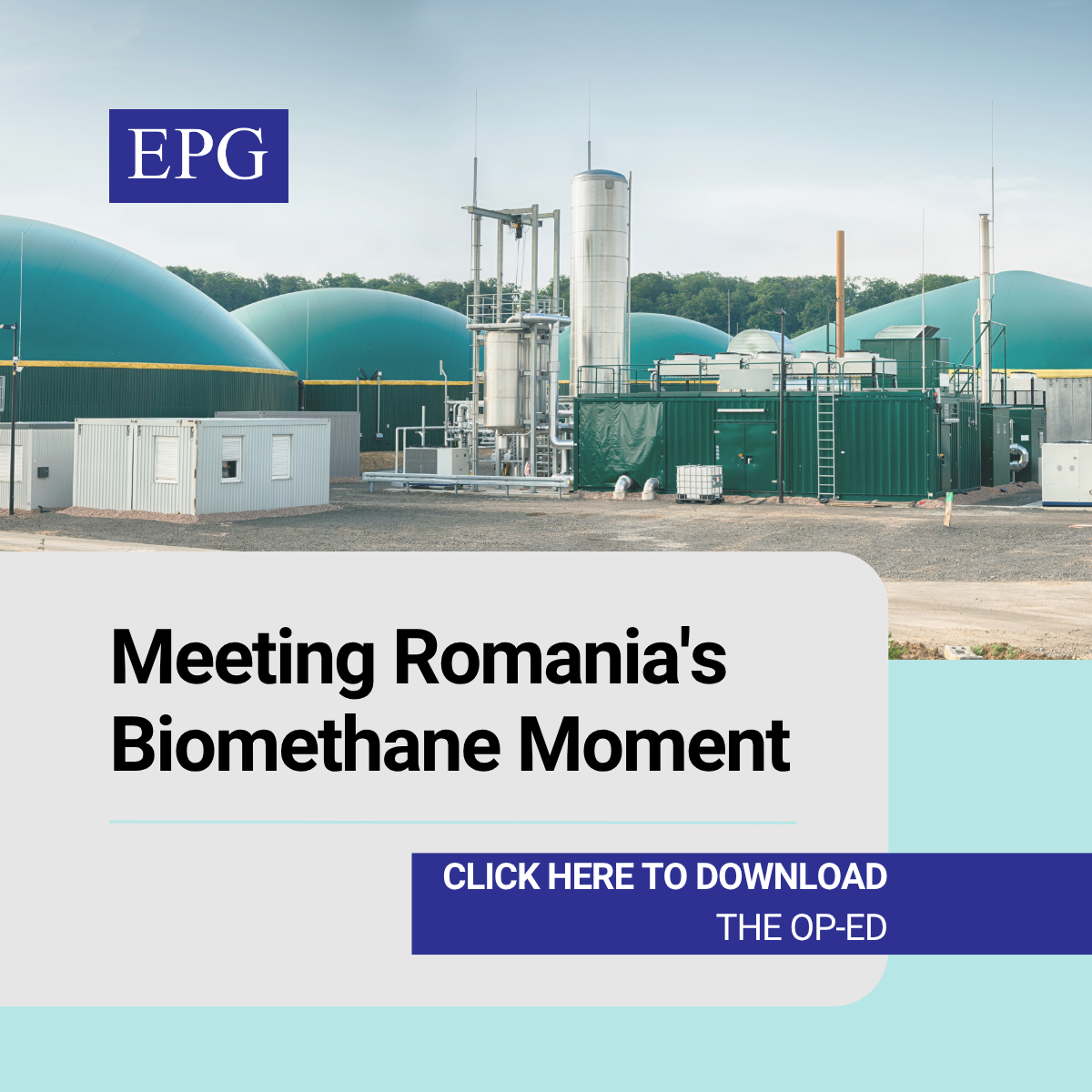
The new biomethane ordinance is a step forward, despite a key drawback
The new draft emergency ordinance on the support of biomethane production is a real step towards the development of a biomethane market in Romania. It introduces a legal definition for biomethane producers and sets out their rights and obligations in alignment with that of natural gas producers. They are required to meet strict quality and safety standards to inject into the gas grid, secure the needed licence and ensure responsible facility operation. These conditions make it possible for Romania’s first biomethane production facility to connect to the gas grid.
The ordinance will undoubtedly contribute to Romania’s 5% biomethane target by 2030. However, it includes a contradiction which threatens to undermine the sector’s growth. The ordinance requires natural gas producers and biomethane producers to be treated equally despite different cost recovery mechanism allowances between the two kinds of producers. Natural gas producers are allowed to recover their investment in grid connections and upgrades through tariffs, while biomethane producers are deprived of this privilege.
Biomethane producers must bear every cost of connection, injection facilities and related infrastructure and reinforcement costs, despite delivering chemically identical gas to the grid.
Romania has some of the highest biomethane potential in the EU
Romania’s gas distribution grid is extensive and could be adapted for renewable gas adoption. According to Romania’s biomethane fiche published by the European Commission, the country has the technical ability to replace about a quarter of current natural gas imports with biomethane, representing a significant win for energy security and emissions reductions. Romania has an estimated 5.5 bcm of biomethane production potential by 2040 – one of the highest in the EU.
Romania’s biogas production briefly rose to 30 MW and dropped again to 21 MW in 2023 while biomethane production has not yet begun. Biomethane production has multiple benefits: it supports job creation in rural areas, increased energy security in a decarbonised world and puts a price on waste products, which stimulates the circular economy. Therefore, asking investors to pay for connection to the gas grid undermines multiple strategic interests.
Nadia Maki is a Senior Researcher within the Energy Systems Department of EPG. She is an energy policy researcher focused on renewable energy financing, green technology and innovation and emerging economies.
Before joining EPG, Nadia worked as an independent evaluator for renewable energy financing schemes for the UK Department of Energy Security and Net Zero, evaluating schemes such as the Contracts for Difference scheme and the Capacity Market scheme. Nadia has extensive experience using theory-based evaluation methods. She has also contributed to projects for DG CLIMA, DG Environment, the Research Council of Norway, UN Women, the World Health Organization and ActionAid.
Nadia holds an MSc in Climate Change, Development and Policy from the Science Policy Research Unit and the Institute of Development Studies at the University of Sussex and a Bachelors of Arts degree from Queen’s University in Canada.
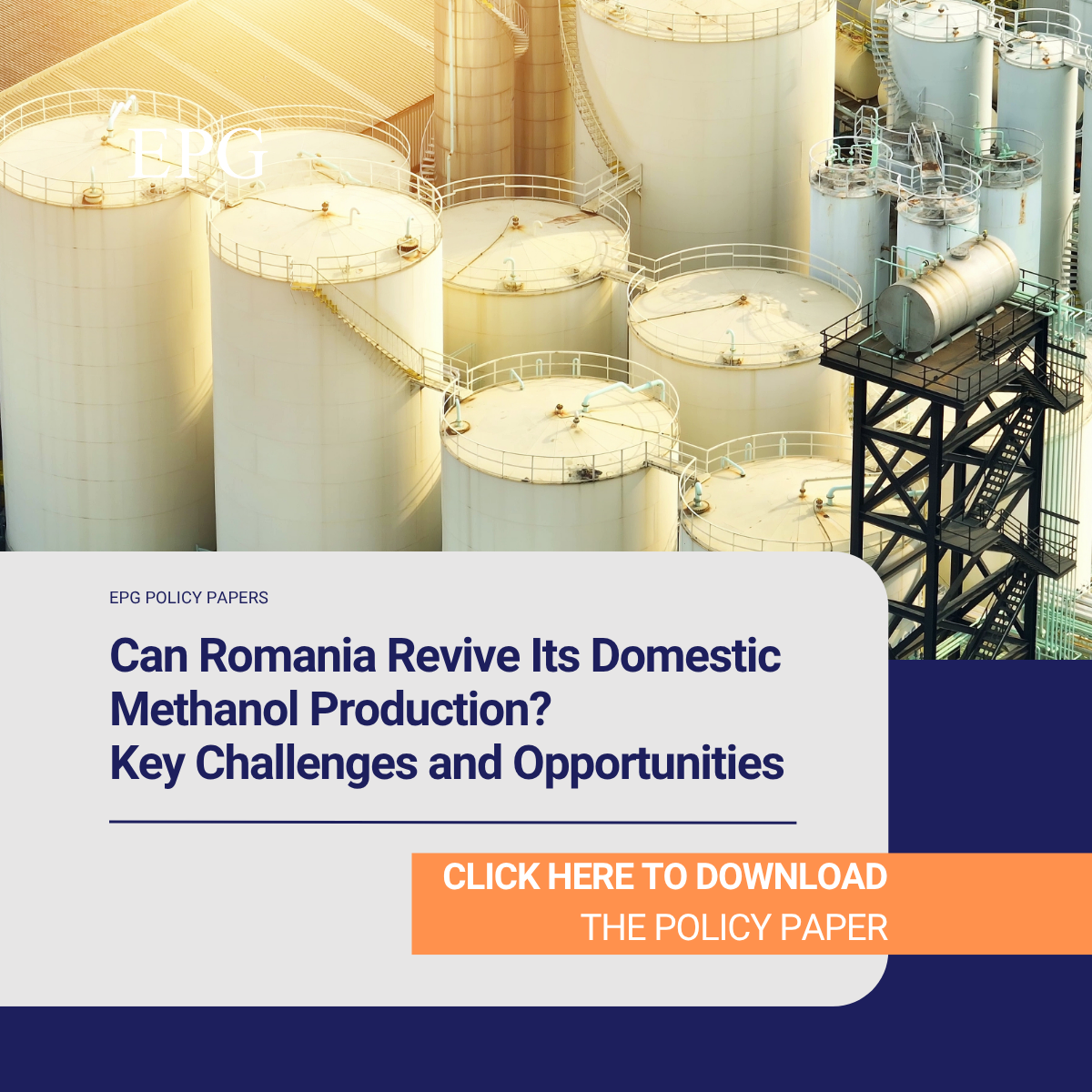
Energy Policy Group a publicat o analiză de politici publice privind potențialul României în producția de metanol. Elaborată de Mara Bălașa, Sabina Strîmbovschi și Mihnea Cătuți, publicația examinează perspectivele relansării producției interne în contextul tranziției energetice și al transformărilor din industria chimică europeană. Studiul analizează principalele provocări economice, tehnologice și de infrastructură, precum și oportunitățile oferite de potențialul regenerabil al României, baza industrială existentă și infrastructura portuară.
Având în vedere prețurile ridicate la energie și concurența internațională tot mai mare, producția europeană de produse chimice pe bază de combustibili fosili va rămâne sub presiune.
Deși politicile climatice ale UE vor stimula cererea de produse cu emisii reduse de carbon, nu există nicio garanție că aceasta va fi satisfăcută prin producție internă. Europa deține avantaje importante în ceea ce privește tehnologia, infrastructura și politicile publice, însă competitivitatea sa depinde de asigurarea unei energii curate la prețuri accesibile și a unor materii prime alternative.
Metanolul este atât un element chimic de bază, cât și un vector emergent de energie verde. Totuși, modalitățile de producție cu emisii reduse de carbon se confruntă cu provocări semnificative: asigurarea unei cantități suficiente de energie regenerabilă și hidrogen curat, implementarea tehnologiilor CCUS și gestionarea pierderilor mari prin conversie; producția de biometanol este limitată de disponibilitatea redusă a biomasei durabile și de necesitatea de a redirecționa parțial utilizarea sa actuală de la încălzirea rezidențială către aplicații de materii prime chimice.
Deși metodele alternative de producere a metanolului cu emisii reduse de carbon implică costuri mai mari, densitatea energetică și versatilitatea metanolului îl fac o opțiune viabilă pentru sectoare dificil de electrificat, cum ar fi petrochimia, transportul greu, transportul maritim și aviația.
România prezintă atât riscuri, cât și oportunități: odată producător de metanol, acum depinde în totalitate de importuri, ceea ce indică declinul industrial și ridică întrebări despre securitatea aprovizionării. În același timp, potențialul României în materie de energie regenerabilă, infrastructura portuară și istoricul în acest sector oferă o platformă pentru o renaștere a producției de metanol, dar cu emisii reduse de carbon. Este puțin probabil ca producția pe bază de combustibili fosili să devină viabilă. O strategie industrială orientată spre viitor ar trebui să se concentreze mai degrabă pe metanolul verde, produs din hidrogen curat, CO2 capturat și biomasă durabilă. O fabrică de e-metanol care să satisfacă cererea actuală a industriei chimice ar necesita o capacitate de 44 MW și 11.500 de tone de hidrogen pe an. Alternativ, metanolul verde ar putea fi produs la fața locului de către utilizatori, mai ales dacă sunt necesare cantități mai mici.
Atât e-metanolul, cât și biometanolul implică costuri suplimentare și provocări în materie de infrastructură, ceea ce subliniază necesitatea unor măsuri de sprijin specifice. Fezabilitatea și competitivitatea producției de metanol verde în România vor depinde de trei factori principali: o mai bună prioritizare a utilizării biomasei, stimularea cererii și reducerea costurilor de producție. Pentru a realiza acest lucru, va fi necesară o mai bună prelucrare a biomasei, utilizarea pe scară largă a energiei din surse regenerabile, accesul la hidrogen curat, dezvoltarea infrastructurii pentru hidrogen și CO2, precum și modernizarea și extinderea rețelelor de energie electrică.
Studiul poate fi citit integral, în limba englează, AICI.
Methanol (CH3OH) is a primary chemical found in many everyday products, such as plastics, paints, car parts, construction materials, as well as pharmaceuticals. It is the feedstock used by wood processing factories to produce formaldehyde, which is then used as a binding agent in resins. The large refineries also use methanol as a blending component, while other chemical manufacturers would require it to produce amines, that are subsequently used by the defence industry in ammunition production.
Methanol can also serve as a clean energy carrier for powering road and maritime transportation, fuel cells, boilers and cook stoves. Methanol presents some advantages over ammonia or hydrogen. For instance, its energy density is higher compared to that of ammonia and therefore storage can be done in smaller spaces, and ships would not have to refuel as often.
Methanol also has a head start within the technological emergence phase. More than 60 methanol-capable vessels are already on the water, with more than 300 on order, being in the initial scale phase as shipping fuel. By contrast, ammonia is in the proof-of-concept phase, having passed initial pilot tests. Furthermore, infrastructure already exists for methanol, as globally 100 ports already have methanol available and almost half of those also have storage capacity.
Traditionally, methanol is produced from natural gas and coal, accounting for about 10% of global CO2 emissions of the chemical and petrochemical sectors. To reduce its carbon footprint, it can also be synthesised from alternative feedstocks. These include captured CO28 combined with clean hydrogen, a process known as e-methanol, or from biomass sources such as agricultural waste, forestry residues, and municipal solid waste, referred to as biomethanol. These alternatives to conventional fossil-based methanol are generally referred to as green methanol. Compared to conventional methanol, e-methanol using renewable electricity can reduce CO2 emissions by up to 95%.10 Similarly, biomethanol derived from woody biomass can emit approximately 0.2 kg CO2/kg, significantly less than natural gas (1.6 kg CO2/kg) or coal-based (3.8 kg CO2/kg) production methods.
Mara is an Associate within the Clean Economy department of the EPG. With a background in economics and political science (BSc University of Warwick), applied economic analysis, and data analysis (MSc Stockholm School of Economics), she is currently researching the green transition with a focus on industrial policy. Mara has been a PhD Fellow at the Center for Statecraft and Strategic Communication, Stockholm School of Economics, since 2022. During her master’s degree, she was the recipient of the UniCredit Foundation Masterscholarship for top students.
Previously, Mara was a market operations analyst at the European Central Bank and a research executive in public affairs in Brussels, focusing on energy and transport. She has also briefly worked in public administration at the Ministry of Economy in Romania and at the Permanent Representation of Romania to the European Union.
Salary: paid internship, see full job ad below for details
Preferred start date: As soon as possible
Application deadline: Monday, 20 October, end of day
Do you want to use your communications skills to support sound climate and energy policy? Join EPG and help make our research accessible, engaging, and impactful.
This is a hands-on, paid internship where you’ll:
Draft communication materials (press releases, articles, social media posts)
Create short summaries of research papers for newsletters, media, or website highlights
Support EPG’s digital presence by creating engaging content for social media and the website.
Update and maintain the EPG website, ensuring content is accurate, accessible, and visually appealing
Assist in event logistics and promotion (e.g., drafting agendas, managing guest lists, handling on-site registration).
Ensure consistency with EPG’s branding and communications guidelines.
You’re a strong fit if you:
Are currently enrolled in or recently graduated from a programme in communications, journalism, public relations, marketing, political science, or a related field.
Have excellent writing and editing skills in English and Romanian
Are creative, detail-oriented, and able to adapt your style to different audiences.
Have a good understanding of social media platforms and digital communication trends.
Are well-organised, proactive, and eager to learn.
Please send your application in English to office@epg-thinktank.org, clearly stating your name and the position title in the subject line. The email should contain a pdf file with:
A CV maximum of 2 pages.
A cover letter of maximum 300 words outlining your interest and motivation for applying;
The deadline for applications is 20 October 2025. The selected candidate is expected to start as soon as possible. EPG welcomes applications from a diversity of backgrounds irrespective of age, gender, ethnicity, religious beliefs, sexual orientation, or disability.
Incomplete application will not be considered. To apply, you must have the right to work in Romania.
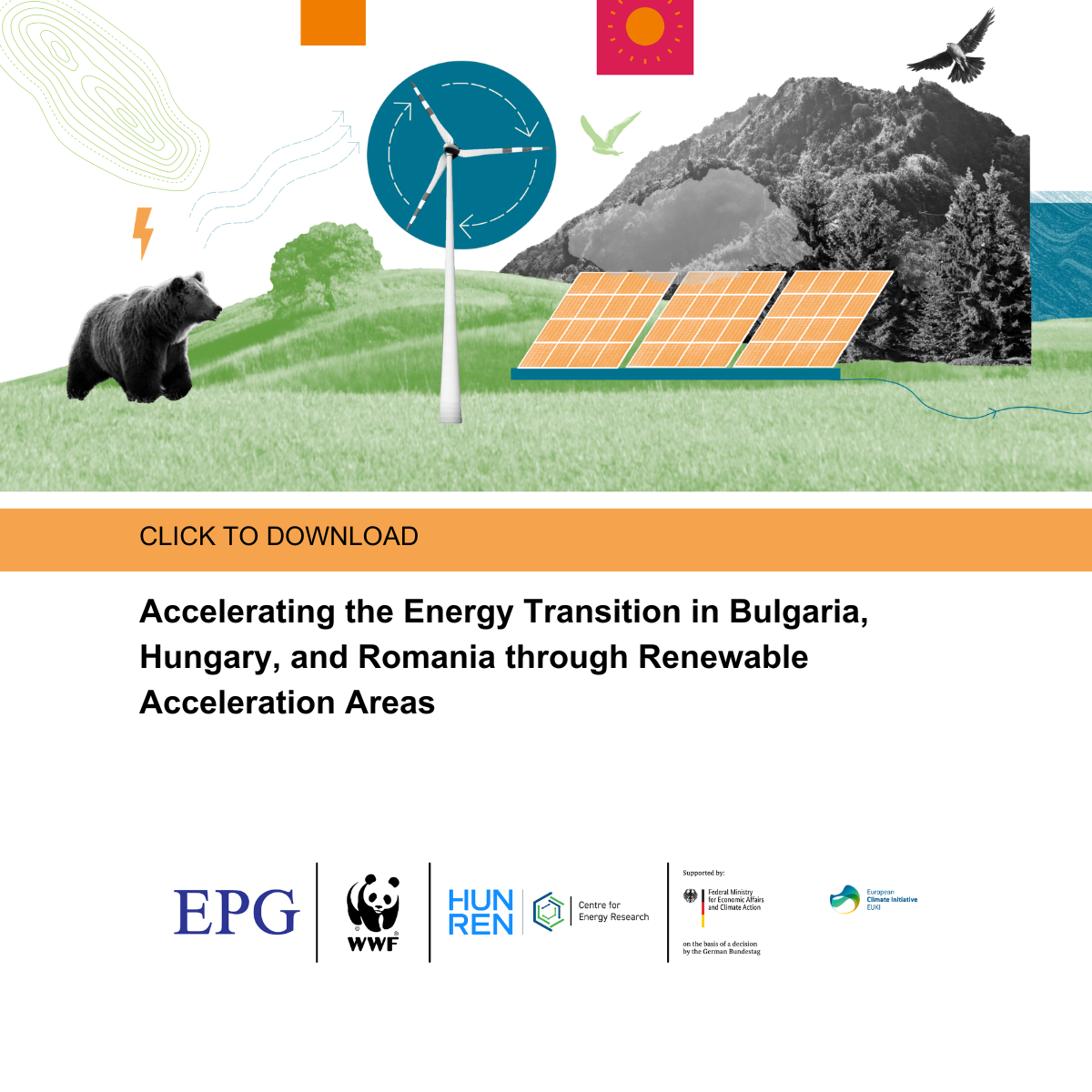
Given Europe’s mounting climate ambitions and in the wake of the energy security crisis caused by Russia’s war on Ukraine, the European Union has adopted a new wave of legislative instruments, most notably the REPowerEU Plan and the revised Renewable Energy Directive (RED III). These frameworks task Member States with facilitating a swift deployment of renewable energy through spatial planning and the creation of Renewable Energy Acceleration Areas (RAAs).
This policy position provides a strategic analysis of progress, barriers, and recommendations for Bulgaria, Hungary, and Romania. It explains the challenges and makes recommendations for faster development of renewable energy in these countries.
The RENewLand project, launched in 2023, supports this assessment. By providing a science-based and stakeholder-driven methodology for spatial planning of renewables, RENewLand aims to bring support to these countries in fulfilling RED III requirements. However, despite technical tools and regional cooperation, implementation remains hindered by institutional fragmentation, data gaps, regulatory delays, and limited local engagement. This paper offers a comparative diagnosis and targeted policy guidance to address these shortcomings and accelerate progress toward the 2030 climate and energy goals.
RENewLand is part of the European Climate Initiative (EUKI) of the German Federal Ministry for Economic Affairs and Climate Action (BMWK). The opinions expressed in this study are entirely the responsibility of the author(s) and do not necessarily reflect the views of the Federal Ministry for Economic Affairs and Climate Action (BMWK).
Mihai Constantin, Senior Researcher
Mihai Constantin is a Senior Researcher at the Energy Policy Group, where he focuses on energy policies on topics such renewable energy and decarbonisation policies. As part of the Energy Systems Department he has contributed to a series of reports and policy papers addressing topics such as offshore wind development, solar energy potential, coal phase-out etc. At the same time, he engaged in advocacy activities with different stakeholders in order to promote the collaboration between public authorities, industry, and civil society on topics such as the development of offshore wind (through the Black Sea Renewable Coalition) or designating acceleration areas for renewable energy.
Mihai has a Master Degree in European Economics at Bucharest University of Economic Studies.
He has expertise on public policies in the fields of energy, climate change and economics. He also occupies a position of Senior Energy Expert at the World Bank. Before joining EPG, he worked for WWF Romania as Climate & Energy Manager and as Advisor on Public Policies in the Romanian Parliament.
Guarantees of Origin can provide an additional revenue stream for RES producers
Romania is in process of designing its Guarantee of Origin (GO) scheme with the intention of transparently communicating where consumer energy comes from. However, the scheme can target multiple aims at once, if designed carefully.
European businesses are under pressure to deliver their products and services with a green mandate. Romania has leverage here; selling its renewable energy to companies can ensure their ESG targets are met and, in turn, shift financing for renewable energy development from the public sector onto the private sector. However, current GO schemes squander this opportunity through oversupply yielding ESG gains for private companies at prices too low to incentivise new development.
While limited in their ability to incentivise electricity development, GOs may be able to play a bigger role in the development of renewable heat and fuel. There are a significant number of customers who struggle to electrify but would like to reduce their emissions intensity. The low availability of renewable heat and fuel could yield a higher GO price.
Increasing transparency in renewable energy consumption
The revised Renewable Energy Directive mandates that all Member States GOs to promote informed renewable energy consumption and encourage uptake. A GO certifies that 1 MWh of energy was generated from a renewable source. Much like a product label, it tells the consumer the source, date and place of production. In turn, companies purchase GOs to fulfil theirEnvironmental Social Governance targets while also creating a new revenue stream for producers.
Each MWh of generation is tracked within the electricity system, and consumers claim renewable energy use by cancelling certificates. Once cancelled, that energy is removed from the remaining mix to prevent double counting – what’s left is called the residual mix. This untracked electricity (excluding that sold through GOs) is used by electricity suppliers, system operators, regulators and consumers to understand the carbon intensity of their electricity usage. GOs are purely an accounting scheme and remains separate from all physical electricity purchase, and are not counted towards any national targets.
The Association of Issuing Bodies acts as a central point for transferring GOs and ensures standardisation across national systems. Countries are required to observe the scheme and its regulations before becoming full members.
Nadia Maki is a Senior Researcher within the Energy Systems Department of EPG. She is an energy policy researcher focused on renewable energy financing, green technology and innovation and emerging economies.
Before joining EPG, Nadia worked as an independent evaluator for renewable energy financing schemes for the UK Department of Energy Security and Net Zero, evaluating schemes such as the Contracts for Difference scheme and the Capacity Market scheme. Nadia has extensive experience using theory-based evaluation methods. She has also contributed to projects for DG CLIMA, DG Environment, the Research Council of Norway, UN Women, the World Health Organization and ActionAid.
Nadia holds an MSc in Climate Change, Development and Policy from the Science Policy Research Unit and the Institute of Development Studies at the University of Sussex and a Bachelors of Arts degree from Queen’s University in Canada.
The second CfD auction clears at record low solar prices, but fails to meet quota for wind
The second Contracts for Difference (CfD) auction has cleared at record low solar prices, but has failed to meet quota for wind. For wind power, the total tendered capacity was 2 GW, with a maximum strike price of €80/MWh. The concluded contracts, though, cover 60% of the intended capacity, with the lowest strike price going down to €65.17/MWh (a 211 MW project in the Constanța county). The full intended capacity for solar was procured with 1.49 GW of capacity awarded contracts.
The lowest strike price is €35.77/MWh, which was part of a project broken up into smaller bids. The previous auction procured the full 1.5 GW intended capacity with strike prices of €51/MWh for solar and €65/MWh for wind.
The scheme was modified for the second auction with the removal of the maximum capacity allowed per bidder, a more flexible increase in the total procurement cap and the establishment of a Do No Significant Harm principle.
Are clearing prices this low sustainable?
Many developers who were not awarded contracts in the first round declined to submit bids in the second auction, likely anticipating they would not be competitive with the eventual low clearing prices.
There is a sense of desperation in the solar market. The abundance of PV projects creates a rush to ‘secure something’. A possible reason for these low strike prices could be this market pressure — likely in combination with underestimations of the number of hours with negative prices and penalties for imbalances — have resulted in bids that risk delivering without even marginal profits. Furthermore, low strike prices from €35-45/MWh send a signal to future potential off-takers who may believe these prices are reasonable to expect in a PPA and, when confronted with a significantly higher offer, may be pushed further into a ‘wait and see’ mode, waiting for a better deal which the market cannot actually provide.
Low clearing prices are exacerbated when considering that inflation may outstrip the strike price as indexation only occurs every three years and is only adjusted if inflation exceeds 10%. However, inflation, measured through the Harmonised Index of Consumer prices, mostly remains in the single digits and the likely result is developers coping with several years of a much lower strike price than is appropriate. This is a high residual risk for developers to shoulder, especially on top of the existing development and CAPEX risks. It is unclear how developers could balance with such low revenue – even with a PPA. Besides, there is a risk that bond penalties may soon begin to look more appetising. Based on results for wind, it is clear that many developers are not willing to accept the risk as the CfD was not able to secure more than 60% of its intended procurement.
CfDs should be designed to enhance market participation
Developers bid into the wholesale market based on the lowest price they can afford that still offers them enough profit to run. CfD generators, who receive a top up payment regardless of spot market bid price, are incentivised to sell as much electricity as possible on the spot market at once. This gaming behaviour discourages participation of players who are not able to bid at artificially low prices and is forbidden under other CfD schemes such as in the UK, where regulatory scrutiny can minimise this behaviour, with the risk of voiding contracts. A possible solution to such a behaviour would be to amend the profit-sharing mechanism so CfD generators are allowed to make enough profit to encourage real bids and increase participation in other markets – like balancing or ancillary services which could help balance the grid.
Another related element which is incentivising CfD generators to operate in ways that hinder grid balancing is the discouragement of energy storage. This is because electricity generated from solar or wind, stored, discharged and fed into the grid cannot be considered for CfD payments. Introducing storage colocation would allow generators to self-curtail during periods of negative pricing and opt-in when profit could be made. This would favour the inclusion of larger, more experienced players, who may be able to reduce their bids (which are currently too high to participate). The state would still benefit financially, though from a smaller margin – but the real benefit would be to the grid. Separating out storage changes the way a company optimises its projects, likely downsizing the amount of storage attached to a project. This kind of interference in project design optimisation increases likelihood of an unbalanced project and, eventually, an unbalanced grid. Despite ambiguity in the EU legislation, Romania should push for this allowance in the national CfD scheme as it has been successfully implemented in other countries. Ireland’s comparable Renewable Energy Support Scheme allows for the inclusion of co-located storage, subject to stringent requirements such as metering behind the project and the demonstration that the asset only stores electricity generated by the supported project.
Where do we go from here?
Rightly or wrongly, the CfD is viewed as a proxy for price signalling to consumers and developers alike. With so much of the market trapped in an inert ‘wait and see’ mode, unsustainably low prices can create more uncertainty and keep future actors inert, waiting for stability. Given Romania’s target of delivering at least 10 GW of new solar and wind capacity by 2030, there should be focus on projects which are financially stable and they should be incentivised to act in a way that reduces pressure on the grid.
Nadia Maki is a Senior Researcher within the Energy Systems Department of EPG. She is an energy policy researcher focused on renewable energy financing, green technology and innovation and emerging economies.
Before joining EPG, Nadia worked as an independent evaluator for renewable energy financing schemes for the UK Department of Energy Security and Net Zero, evaluating schemes such as the Contracts for Difference scheme and the Capacity Market scheme. Nadia has extensive experience using theory-based evaluation methods. She has also contributed to projects for DG CLIMA, DG Environment, the Research Council of Norway, UN Women, the World Health Organization and ActionAid.
Nadia holds an MSc in Climate Change, Development and Policy from the Science Policy Research Unit and the Institute of Development Studies at the University of Sussex and a Bachelors of Arts degree from Queen’s University in Canada.
Folosim cookie-uri pentru a ne asigura că vă oferim cea mai bună experiență pe site. Dacă veți continua să utilizați acest site vom presupune că sunteți de acord.AcceptRefuz