
The new biomethane ordinance is a step forward, despite a key drawback
The new draft emergency ordinance on the support of biomethane production is a real step towards the development of a biomethane market in Romania. It introduces a legal definition for biomethane producers and sets out their rights and obligations in alignment with that of natural gas producers. They are required to meet strict quality and safety standards to inject into the gas grid, secure the needed licence and ensure responsible facility operation. These conditions make it possible for Romania’s first biomethane production facility to connect to the gas grid.
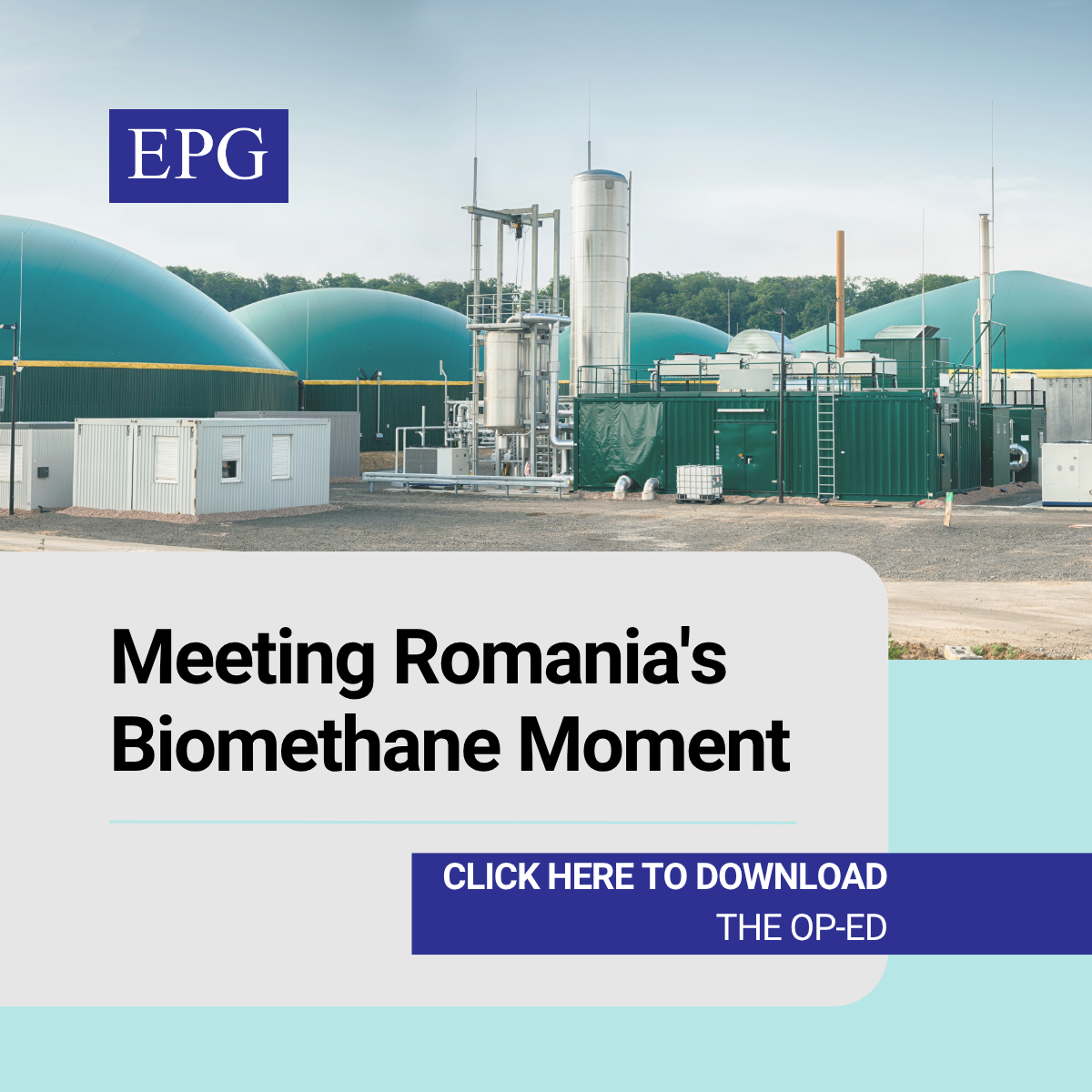
The ordinance will undoubtedly contribute to Romania’s 5% biomethane target by 2030. However, it includes a contradiction which threatens to undermine the sector’s growth. The ordinance requires natural gas producers and biomethane producers to be treated equally despite different cost recovery mechanism allowances between the two kinds of producers. Natural gas producers are allowed to recover their investment in grid connections and upgrades through tariffs, while biomethane producers are deprived of this privilege.
Biomethane producers must bear every cost of connection, injection facilities and related infrastructure and reinforcement costs, despite delivering chemically identical gas to the grid.
Romania has some of the highest biomethane potential in the EU
Romania’s gas distribution grid is extensive and could be adapted for renewable gas adoption. According to Romania’s biomethane fiche published by the European Commission, the country has the technical ability to replace about a quarter of current natural gas imports with biomethane, representing a significant win for energy security and emissions reductions. Romania has an estimated 5.5 bcm of biomethane production potential by 2040 – one of the highest in the EU.
Romania’s biogas production briefly rose to 30 MW and dropped again to 21 MW in 2023 while biomethane production has not yet begun. Biomethane production has multiple benefits: it supports job creation in rural areas, increased energy security in a decarbonised world and puts a price on waste products, which stimulates the circular economy. Therefore, asking investors to pay for connection to the gas grid undermines multiple strategic interests.

Nadia Maki, EPG Senior Researcher
Nadia Maki is a Senior Researcher within the Energy Systems Department of EPG. She is an energy policy researcher focused on renewable energy financing, green technology and innovation and emerging economies.
Before joining EPG, Nadia worked as an independent evaluator for renewable energy financing schemes for the UK Department of Energy Security and Net Zero, evaluating schemes such as the Contracts for Difference scheme and the Capacity Market scheme. Nadia has extensive experience using theory-based evaluation methods. She has also contributed to projects for DG CLIMA, DG Environment, the Research Council of Norway, UN Women, the World Health Organization and ActionAid.
Nadia holds an MSc in Climate Change, Development and Policy from the Science Policy Research Unit and the Institute of Development Studies at the University of Sussex and a Bachelors of Arts degree from Queen’s University in Canada.
Contact: nadia.maki@epg-thinktank.org