Home Blog

Propuneri pentru sistemele de încălzire centralizată din municipiile Drobeta-Turnu Severin și Craiova

Sistemele de încălzire centralizată din România, odinioară esențiale pentru aprovizionarea cu energie a orașelor, se confruntă acum cu un declin structural marcat de infrastructura învechită, costurile ridicate ale combustibililor și creșterea numărului de consumatori care renunță la acest serviciu. Pentru a opri această tendință și a restabili accesibilitatea și fiabilitatea, trebuie luate mai multe măsuri. Acestea includ decarbonizarea cu prioritate prin electrificare, cu integrarea surselor regenerabile, stocarea energiei și îmbunătățirea eficienței clădirilor, toate calibrate în contextul specific al fiecărui oraș.
Studiul de caz al orașului Drobeta-Turnu Severin ilustrează clar aceste provocări. Dezvoltat inițial pentru a sprijini producția industrială și extins ulterior la consumul casnic, sistemul se caracterizează în prezent prin pierderi tehnice și comerciale ridicate, dependență puternică
de subvenții și insecuritate recurentă în ceea ce privește combustibilul. În perioada 2020 2024, numărul consumatorilor conectați la sistemul centralizat a scăzut de la peste 26.000 la puțin peste 22.000, în timp ce deconectările anuale au atins 1.500 de consumatorilor în

Producția și consumul au scăzut cu peste 20% în aceeași perioadă, pierderile din 2024 depășind 40% din căldura generată. Costurile au devenit de nesusținut. În 2020, producția de energie termică costa puțin peste 400 RON/MWh iar în 2024 a atins peste 650 RON/MWh. Costurile combustibilului au crescut de la 253 RON/MWh în 2020 la 460 RON/MWh în 2024. Subvențiile municipale, triplate între 2020 și 2024, protejează consumatorii dar pun presiune pe bugetele locale. Un scenariu în care consumatorii trec în totalitate la centrale individuale pe gaz ar necesita o investiție inițială de peste 61,5 milioane EUR, fără a lua în calcul extinderea rețelei de gaze, expunând în același timp consumatorii la facturi mai mari în cadrul sistemului ETS 2 de tranzacționare a certificatelor de emisii de carbon și agravând poluarea locală a aerului.

În Craiova, pe de altă parte, numărul consumatorilor conectați a scăzut de la aproape 60.000 la 53.000 în perioada 2020-2024. Raportul între căldura livrată și cea produsă a scăzut de la aproximativ 70% la aproximativ 65%. Prețul căldurii a crescut rapid, factura subvențiilor a explodat, iar consumatorii au fost protejați doar cu un sprijin local masiv. Costurile livrate de centrala termoelectrică au crescut de la 280 RON/MWh în 2020 la peste 540 RON/MWh în 2024, în timp ce centralele de cartier au rămas la aproximativ 800 RON/MWh, cu mult peste tarifele pentru utilizatorii finali. Gospodăriile1 au plătit aproximativ 250 RON/MWh în 2020 și 340 RON/MWh în 2024, municipalitatea acoperind diferența. Ponderea costurilor cu căldura în cheltuielile gospodăriilor a depășit 80% în 2021-2022, a scăzut sub 40% în 2023, apoi s-a redresat ușor în 2024, reflectând volatilitatea prețurilor și nivelurile pierderilor. În 2023, cheltuielile cu subvențiile orașului au fost de peste 5,5 ori mai mari decât în 2020 și de aproape trei ori mai mari în 2024, cumulând peste 138 de milioane de RON în cinci ani. Aceste traiectorii confirmă creșterea costurilor structurale și a sarcinii fiscale fără măsuri de eficiență și de schimbare a combustibilului.


Alături de acest raport, EPG a publicat două articole Op-Ed despre sistemele de încălzire din cele două orașe.

Citiți articolul despre Drobeta-Turnu Severin AICI.

Citiți articolul despre Craiova AICI.


alex ciocan enpg
Alexandru Ciocan, EPG Senior Researcher

Alexandru Ciocan become a member of the EPG team at the end of 2023 and started working as a Senior researcher in the Energy System Programme. Previous he has working extensively for almost 10 years in the field of hydrogen-based technologies, renewable energies sources and lithium-ion batteries. Between 2012 and 2021 he held various research positions at the National R&D Institute for Cryogenic and Isotopic Technologies – ICSI Rm. Valcea.

Nevertheless, Alexandru gained experience in the energy policy, following his contribution to the national strategic documents from the position of Senior Advisor within the Energy Policy and Green Deal Department into the Ministry of Energy of Romania between 2021 – 2023.

Since 2017 Alexandru holds a PhD in engineering sciences from the IMT Atlantique as well as the University Politehnica of Bucharest.

Contact: alexandru.ciocan@epg-thinktank.org
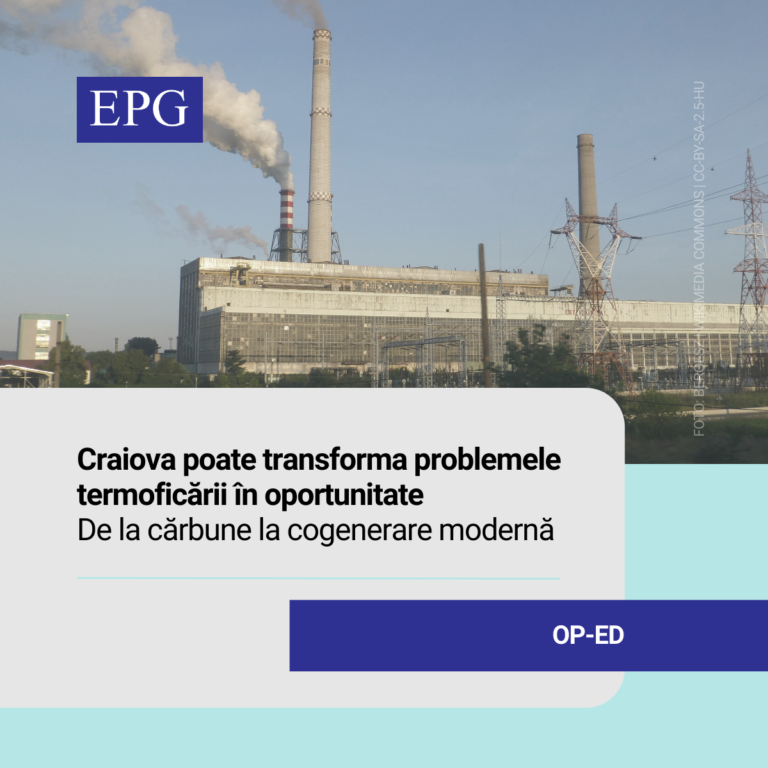
Craiova poate transforma problemele termoficării în oportunitate

Un sistem sub presiune

Craiova rămâne unul dintre cele mai mari orașe din România care menține un sistem centralizat de încălzire, deservind consumatori casnici, instituții publice, agenți economici, precum și sectorul industrial. Centrala termoelectrică din Craiova a fost proiectată în anii ‘80 pentru o economie și o cerere complet diferite față de cele actuale.

Astăzi, pierderile mari din rețea, costurile ridicate cu certificatele de CO2 aferente utilizării cărbunelui, incertitudinea referitoare la închiderea grupurilor pe cărbune și lipsa investițiilor coerente sunt probleme care au vulnerabilizat sistemul și au erodat încrederea consumatorilor, rezultând în mii de deconectări anual. Mulți locuitori au ales instalarea de centrale individuale pe gaz natural.

Costurile tot mai mari ale agentului termic au forțat primăria să acorde subvenții masive. Aceste intervenții au menținut sistemul funcțional, dar nu l-au modernizat. Orașul a rămas blocat într-un cerc vicios: costuri mari, pierderi structurale și absența unei direcții clare spre decarbonizare. Problema este amplificată de poluarea cu care se confruntă în principal locuitorii din proximitatea centralei.

Situația în care a ajuns sistemul de termoficare din Craiova contrastează puternic cu tendințele europene. În orașe precum Viena, Berlin, Copenhaga, termoficarea nu este un serviciu în declin, ci reprezintă infrastructura-cheie pentru atingerea neutralității climatice, unde tranziția a început prin diversificarea surselor, integrarea pompelor de căldură a soluțiilor de stocare, cu accent pe resursele locale ca sursă de energie.


alex ciocan enpg
Alexandru Ciocan, EPG Senior Researcher

Alexandru Ciocan become a member of the EPG team at the end of 2023 and started working as a Senior researcher in the Energy System Programme. Previous he has working extensively for almost 10 years in the field of hydrogen-based technologies, renewable energies sources and lithium-ion batteries. Between 2012 and 2021 he held various research positions at the National R&D Institute for Cryogenic and Isotopic Technologies – ICSI Rm. Valcea.

Nevertheless, Alexandru gained experience in the energy policy, following his contribution to the national strategic documents from the position of Senior Advisor within the Energy Policy and Green Deal Department into the Ministry of Energy of Romania between 2021 – 2023.

Since 2017 Alexandru holds a PhD in engineering sciences from the IMT Atlantique as well as the University Politehnica of Bucharest.

Contact: alexandru.ciocan@epg-thinktank.org
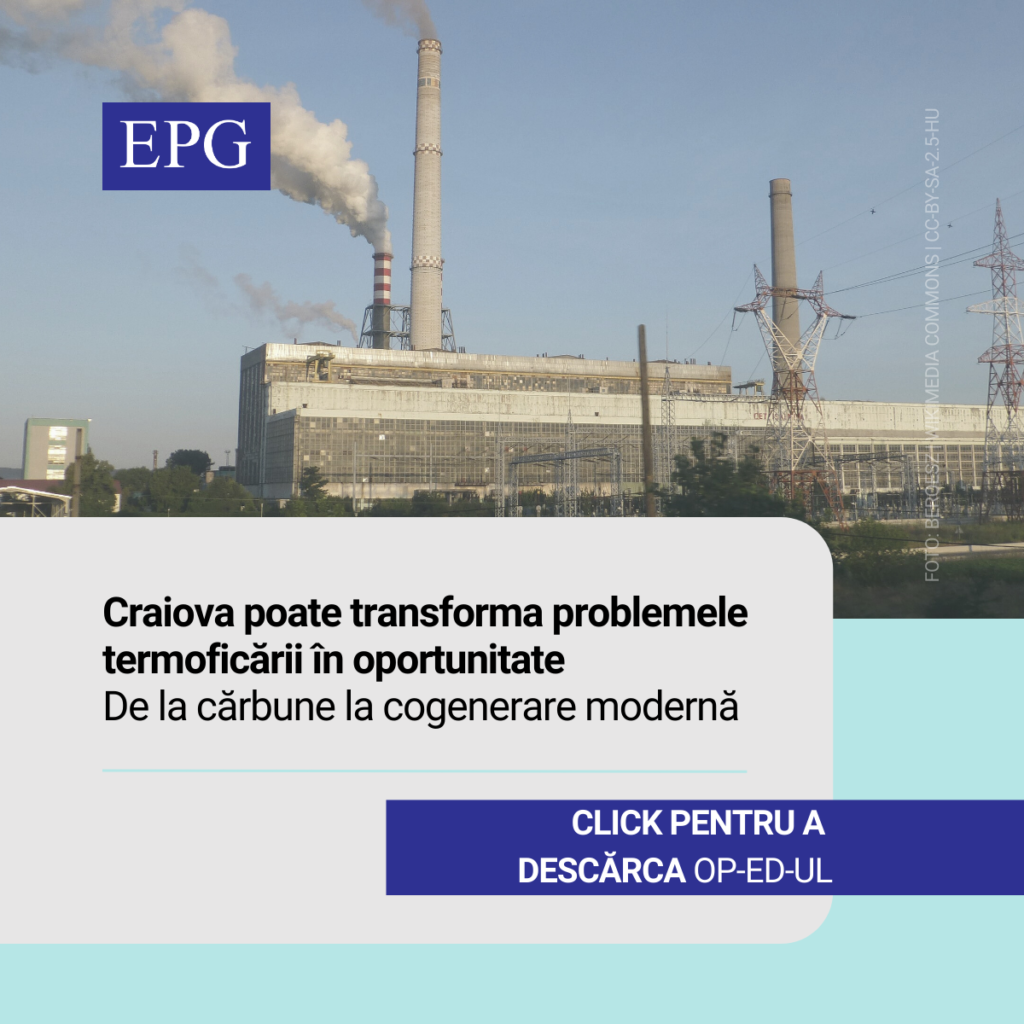
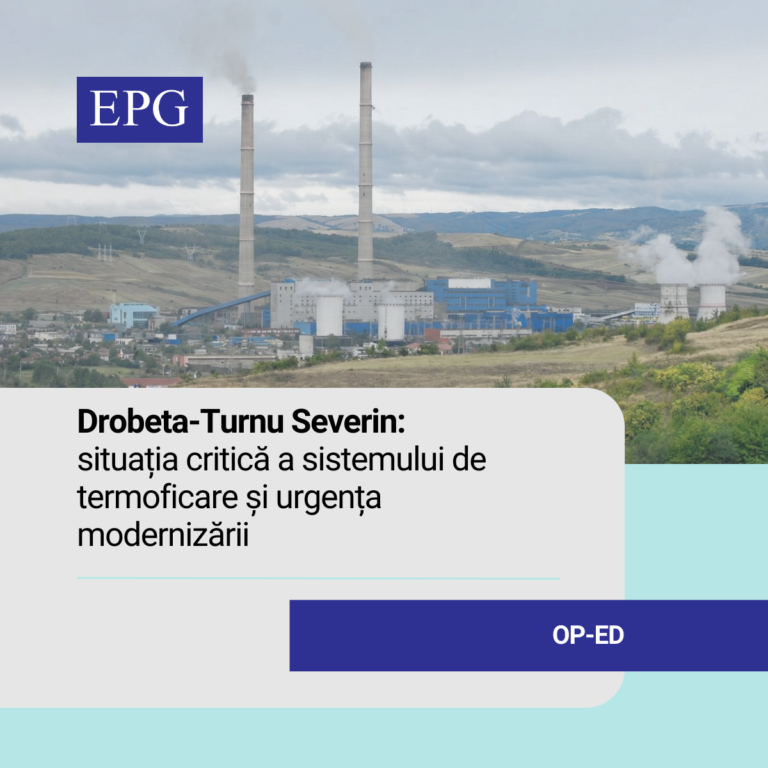
Drobeta-Turnu Severin: situația critică a sistemului de termoficare și urgența modernizării

O criză prelungită și un potențial ignorat

Drobeta-Turnu Severin ilustrează provocările cu care se confruntă sistemele centralizate de încălzire din România. După oprirea termocentralei Halânga, orașul a fost forțat să se bazeze pe soluții temporare, dependente de păcură și cu o eficiență scăzută. Costurile ridicate ale combustibilului, pierderile din rețea și lipsa investițiilor în modernizarea capacităților de producție și în rețeaua de transport au transformat încălzirea centralizată într-o problemă pentru locuitori și pentru bugetul local.

Această situație este rezultatul unei tranziții neplanificate. În absența unei strategii coerente, sistemul supraviețuiește prin subvenții de urgență (de la bugetul central, pentru achiziția de combustibil și de la cel local, prin plata certificatelor ETS) și reparații izolate. Situația incertă a centralei Halânga (în insolvență), de unde autoritățile locale închiriază anual, în sezonul rece, două cazane pentru furnizarea de agent termic ridică problema renunțării la sistemul centralizat odată cu extinderea rețelei de gaz natural în oraș. În timp ce mai multe orașe europene cu condiții climatice apropiate au făcut pasul către modernizarea sistemelor de termoficare prin integrarea surselor regenerabile, în special a pompelor de căldură și a recuperării de căldură din apele uzate, Drobeta invocă argumentul lipsei unui sistem sustenabil național, care să nu se bazeze pe subvenții locale, în decizia de a renunța la sistemul de termoficare centralizat.

Autoritățile locale percep sistemul de termoficare ca pe o povară financiară și administrativă. Lipsa contorizării individuale și pierderile mari din rețea fac imposibilă recuperarea costurilor reale. În acest context, municipalitatea înclină să încurajeze soluțiile individuale de încălzire, care permit fiecărui consumator să-și gestioneze propriul necesar energetic. Abordarea transferă responsabilitatea către gospodării, cu riscul de a fragmenta sistemul și cu impact asupra obiectivelor de eficiență energetică și de reducere a emisiilor.

În plus, tranziția către soluții individuale bazate pe gaz natural expune consumatorii la volatilitatea prețurilor pe piața gazelor și la costuri suplimentare după aplicarea ETS 2 începând cu 2028. În contrast, sistemele centralizate de termoficare oferă posibilitatea modernizării treptate prin integrarea surselor regenerabile de energie și a sistemelor de stocare, permițând astfel diversificarea mixului energetic. În cazul orașului Drobeta, o producție de energie termică curată este posibilă prin instalarea pompelor de căldură de mare capacitate, dar pentru ca acest lucru să se materializeze situația trebuie remediată rapid. Consumatorii nu pot aștepta, iar modernizarea unui sistem de termoficare necesită timp, planificare și investiții consistente pentru întreg lanțul valoric, de la producție la consumatorul final.


alex ciocan enpg
Alexandru Ciocan, EPG Senior Researcher

Alexandru Ciocan become a member of the EPG team at the end of 2023 and started working as a Senior researcher in the Energy System Programme. Previous he has working extensively for almost 10 years in the field of hydrogen-based technologies, renewable energies sources and lithium-ion batteries. Between 2012 and 2021 he held various research positions at the National R&D Institute for Cryogenic and Isotopic Technologies – ICSI Rm. Valcea.

Nevertheless, Alexandru gained experience in the energy policy, following his contribution to the national strategic documents from the position of Senior Advisor within the Energy Policy and Green Deal Department into the Ministry of Energy of Romania between 2021 – 2023.

Since 2017 Alexandru holds a PhD in engineering sciences from the IMT Atlantique as well as the University Politehnica of Bucharest.

Contact: alexandru.ciocan@epg-thinktank.org
Pathways for the Decarbonisation of the District Heating Systems in Drobeta-Turnu Severin and Craiova

Romania’s district heating systems, once central to urban energy supply, now face structural decline marked by aging infrastructure, high fuel costs, and growing consumer disconnections. To arrest this trajectory and restore affordability and reliability, several measures must be addressed. These include decarbonisation, with priority for electrification (including the integration of renewable energy sources), energy storage, and improved building efficiency, all calibrated to each city’s specific context.

The case study of Drobeta-Turnu Severin illustrates these challenges clearly. Originally developed to support industrial production and later extended to residents, the system is now characterised by high technical and commercial losses, heavy reliance on subsidies, and recurring fuel insecurity. From 2020 to 2024, connected households fell from over 26,000 to just above 22,000, while annual disconnections reached 1,500 households in 2024. Production and consumption volumes dropped by more than 20% over the same period, with losses in 2024 exceeding 40% of generated heat. The cost burden has grown unsustainable. In 2020, thermal energy production cost was just above 400 RON/MWh; by 2024, it peaked above 650 RON/MWh. Fuel costs rose from 253 RON/MWh in 2020 to 460 RON/MWh in 2024. Municipal subsidies, which more than tripled between 2020 and 2024, now shield households from full exposure but strain local budgets. A scenario where consumers switch entirely to individual gas boilers would demand over €61.5 million in upfront investment, excluding gas network expansion, while exposing households to higher bills under ETS 2 carbon pricing and worsening local air pollution.

In Craiova, on the other hand, the number of connected households declined from nearly 60,000 to 53,000 in 2020–2024. Delivered-to-produced heat ratio slid from about 70% to 65%. Craiova’s heat price rose fast, the subsidy bill increased dramatically, and households were shielded only by heavy local support. Plant-delivered costs climbed from 280 RON/MWh in 2020 to >540 RON/MWh in 2024, while neighbourhood plants1 stayed near 800 RON/MWh, far above end-user tariffs. Households paid about 250 RON/MWh in 2020 and 340 RON/MWh in 2024, the municipality covering the gap. The household cost share of the heat bill jumped above 80% in 2021–2022, fell below 40% in 2023, then recovered slightly in 2024, mirroring price volatility and loss levels. In 2023, the city’s subsidy outlay was over 5.5 times the 2020 level and nearly 3 times in 2024, amounting to over 138 million RON in five years. These trajectories confirm rising structural costs and a mounting fiscal burden without efficiency and fuel-switch measures.


Together with this report, EPG has published two Op-Eds (in Romanian), each focusing on one of the two case study cities:

Read the Op-Ed on Drobeta-Turnu Severin’s district heating system HERE.

Read the Op-Ed on Craiova’s district heating system HERE.


alex ciocan enpg
Alexandru Ciocan, EPG Senior Researcher

Alexandru Ciocan become a member of the EPG team at the end of 2023 and started working as a Senior researcher in the Energy System Programme. Previous he has working extensively for almost 10 years in the field of hydrogen-based technologies, renewable energies sources and lithium-ion batteries. Between 2012 and 2021 he held various research positions at the National R&D Institute for Cryogenic and Isotopic Technologies – ICSI Rm. Valcea.

Nevertheless, Alexandru gained experience in the energy policy, following his contribution to the national strategic documents from the position of Senior Advisor within the Energy Policy and Green Deal Department into the Ministry of Energy of Romania between 2021 – 2023.

Since 2017 Alexandru holds a PhD in engineering sciences from the IMT Atlantique as well as the University Politehnica of Bucharest.

Contact: alexandru.ciocan@epg-thinktank.org
[OPEN] Researcher in the Buildings and Cities Team

0

Location: Bucharest, on site, with possibility for hybrid

Type: 12 months fixed-term contract, with possibility of extension

Availability: as soon as possible

About EPG

EPG is an independent, non-profit think tank focused on energy and climate policy in Romania and the European Union. Founded in 2014, EPG operates as a policy research institute primarily financed through competitive grants, philanthropic organisations and, to a limited extent, private sector projects. EPG aims to promote an evidence-based dialogue on how to balance decarbonisation, economic competitiveness and social fairness, engaging decision-makers, industry, and the public. 

The role: key responsibilities

You will be joining as a Researcher in the Buildings and Cities Team which carries out research to support the transition to sustainable, low-carbon built environment.  We examine buildings and communities to understand energy use, emissions, housing quality, and social impacts. Most of our research is done nationally and internationally, in consortiums and in close collaboration with organisations, experts, and public institutions in the construction sector.

In this role, you will contribute to research projects by preparing background analysis, presentations, and contribute to drafting policy and research papers. Your work will focus on one or more of the dimensions mentioned above, depending on your skills, experience, and interest. You will also support the communication and dissemination of our research, which may include contributing to conferences, workshops, and stakeholder events.

Your responsibilities will include:

  • Conducting research on EU and national policy areas on building decarbonisation and housing, literature reviews, data collection and analysis, monitoring policy developments.
  • Writing research reports, policy papers, commentaries, op-eds, and presentations.
  • Presenting findings at conferences and engaging directly with stakeholders.
  • Supporting the delivery of workshops, seminars, and stakeholder events.
  • Contributing to grant proposals and supporting project coordination tasks.
  • Preparing data visualisations and research results to support presentations and reports in collaboration with the Data Analytics Team.
  • Supervising research assistants and interns.

Why join EPG?

Independence and impact. EPG is funded through competitive grants and philanthropic organisations; we do not accept money that requires predetermined conclusions. Your research serves policy impact, not client interests.

Direct engagement. You will meet with ministry officials, contribute to policy consultations, and present at stakeholder roundtables. Your work directly informs Romania’s implementation of EU directives.

Personal recognition. You will publish under your own name and build a publication record immediately.

Specialist expertise. You will focus exclusively on buildings policy. Buildings account for 40% of EU energy consumption, making them critical to reaching net zero. Fewer researchers specialise in this area compared to renewable energy or electric vehicles, meaning less competition and faster recognition as an expert.

Due to our small, grant-funded think tank structure, candidates must accept specific conditions:

Flexible task allocation. Small team size means everyone handles multiple tasks beyond pure research. You will be involved in event organisation, publication review, and general office support.

Limited administrative support. Researchers do some of their own coordination and logistics.

Funding uncertainty. Grant-based funding means some uncertainty about the future project portfolio.

Commitment. You must be willing to stay in or relocate to Bucharest and maintain a regular office presence (hybrid working).

Candidate profile

This role is suitable for a professional who values building recognised expertise in an undersupplied field.

Experience: 3 to 5 years of relevant work experience in research, academia, non-profit organisations in similar or related fields, with a solid interest in research.

Skills and abilities:

  • Professional writing skills for reports, policy papers, and other academic publications.
  • Professional written and oral communication skills, as well as analytical abilities.
  • Presentation and facilitation abilities.
  • Proven ability to work independently and collaboratively within diverse teams.
  • Organisational skills, attention to detail and ability to synthesise complex data.
  • Project management skills, organisational skills, with the ability to multitask and meet deadlines.
  • Excellent command of Romanian and English (C1 or native), both orally and in writing.

Additional requirements:

  • Keen interest in and good understanding of buildings and housing policy issues.
  • You are comfortable with direct stakeholder engagement: presenting to public officials, moderating roundtables, speaking in public.
  • You understand that small team size means flexible task allocation beyond your core research area.

How to apply

Applications are taken on a rolling basis until 18.01.2026.

Send a single PDF to office@epg-thinktank.org containing:

  • CV, maximum 2 pages.
  • Cover letter, maximum 1 page, explaining why you want this specific role.
  • List of personal publications, maximum 1 page.
  • Next stage: Selected candidates will be asked to provide a written sample in English, no more than 20 pages.

Important: Incomplete applications will not be considered.

EPG welcomes applications from diverse backgrounds irrespective of age, gender, ethnicity, religious beliefs, sexual orientation, or disability.

Privacy notice 

By submitting your application (CV, cover letter, and any supporting documents) for the Researcher position, you acknowledge and agree that the Energy Policy Group (EPG) will process your personal data for the purpose of recruitment and selection. EPG acts as the Data Controller for the data provided in this application. 

Your data will be processed strictly for the purposes of evaluating your suitability for the role, communicating with you regarding your application, and documenting the recruitment process. 

The processing of your personal data is necessary to take steps at your request prior to entering into a contract (Article 6(1)(b) of the GDPR). 

We will retain your personal data for a limited period after the recruitment process concludes. This retention period will not exceed 6 months unless you explicitly consent to a longer retention period for future opportunities. 

Any questions regarding your data privacy? Please contact us at dpo@epg-thinktank.org.  

Energy Storage: A Challenge Romania Must Overcome

The present report analyses the status, challenges, and opportunities for energy storage in Romania, focusing on technological, regulatory, financial, and business aspects. It emphasizes the urgent need to accelerate storage deployment in parallel with the expansion of renewable energy sources (RES) and proposes policy measures to support this effort.

A review of available technologies is provided, with focus on pumped hydro energy storage (PHES), lithium-ion batteries, and vehicle-to-grid (V2G). PHES remains the most mature and cost-efficient solution for large-scale, long-duration storage but faces environmental and geographic barriers.

Lithium-ion batteries, whose costs have declined significantly, offer rapid response for short-and medium-term applications. V2G, though still emerging, could transform Romania’s growing electric vehicle fleet into a valuable distributed storage
resource.

Storage’s role in supporting grid ancillary services – including frequency regulation, voltage control, congestion management, and black start – is highlighted, along with its potential to complement or replace conventional generation. International case studies showcase proven integration of batteries and PHES in stabilizing renewable-heavy systems.

Despite its potential, Romania’s installed total storage capacity remains low. Barriers include the absence of explicit national targets, regulatory ambiguity, lengthy grid connection approvals, limited funding, and weak market incentives. Investor interest is present but constrained by low project bankability and lack of proven business models.

This report recommends strategic alignment of Romania’s energy strategy with the EU objectives, adoption of clear storage targets, and policies supportive of storage deployment. It proposes regulatory reforms, streamlined approvals, support schemes such as capacity markets, contracts for difference, and the use of EU funding. Additionally, pilot projects and incentives for emerging solutions like V2G are encouraged to diversify the storage mix.

Romania’s decarbonisation path, energy security, and investment attractiveness hinge on the rapid and diversified deployment of energy storage. A favourable and coherent policy framework will likely turn storage into a cornerstone of the country’s clean energy transition.


Radu Cîrligeanu EPG thinktank
Radu Cîrligeanu, EPG Senior Researcher

Radu works as a Senior Researcher in the Energy Systems Department of EPG, focusing on the role of hydrogen in the energy mix. 

Radu is an aerospace engineer, specialized in propulsion. He holds an MSc. degree from Cranfield University (UK) in Thermal Power, with a focus on aircraft propulsion.

He has more than ten years of experience in the field of aerospace engineering. He worked as gas turbine performance engineer at Rolls-Royce, in the UK, both for civil and military applications. He also acquired experience in the development of novel thermal and hybrid propulsive cycles at Safran Tech, the R&D department of Safran, in Paris.

Radu is convinced that the solution to developing a more sustainable society is not novel technology, but its development and implementation greatly speeds up the process.

Contact: radu.cîrligeanu@epg-thinktank.org

Seven Organisations Call for the Industrial Accelerator Act to Drive Industrial Transformation in Central and Eastern Europe

Energy Policy Group, Bellona Europa, Reform Institute, Clean Air Task Force, Institut Cirkulární Ekonomiky, Asociace pro mezinárodní otázky, and Center for the Study of Democracy have released a joint statement about the Industrial Accelerator Act and its potential benefits for advancing a competitive and clean industrial base in Central and Eastern Europe.

Signed by seven organisations, the statement is addressing the potential opportunities offered by the Industrial Accelerator Act (IAA) to support decarbonisation, strengthen competitiveness, and develop clean manufacturing in Central and Eastern Europe. The statement calls for clear EU labels for green and low-carbon steel, cement, and chemical; green public procurement mandates for low-carbon industrial products; private offtake agreements; and equitable access to funding to ensure a resilient and regionally balanced industrial transition that benefits both CEE and Europe as a whole.

Central and Eastern European (CEE) economies who relied more on energy-intensive industries, now face problems in modernising their industrial base to remain competitive in a low-carbon world. Industry accounts for between 21% and 33% of national GDP in the region, making it more important for domestic economies than in some other EU member states. CEE produces nearly one-fifth of EU’s steel and one-third of its cement, accounting for a third of EU’s consumption of these materials. Yet, growing challenges such as rising energy costs, tight public budgets, demographic trends, labour shortages, a lack of political drive, and limited institutional capacity hinder industrial transformation in the region.

The Industrial Accelerator Act (IAA) represents a unique opportunity to address these challenges by speeding up permitting procedures for industrial decarbonisation, improving the business case for clean projects and technologies, de-risking investments, and creating demand for clean, high-value industrial products. If tailored appropriately, the IAA could transform CEE’s traditional manufacturing-dependent economies into strategic clean industry hubs integrated into European value chains.

To ensure industrial competitiveness without deepening intra-EU disparities, the EU must pay attention to the narrower fiscal margins and increased barriers to attracting private capital in the CEE region. The same applies to the potential implications of “EU content” requirements, which must be designed carefully to avoid inadvertently widening competitiveness gaps within the Single Market.

In these circumstances, the organisations have the following recommendations:

  1. Combine carbon content and circularity criteria with EU content requirements for procurement policies, to prioritise clean European production and strengthen the value chains of downstream industries that rely on these products.
  2. Develop clear common EU labels for green and low-carbon steel, cement, and chemicals aligned with long-term climate commitments and relevant proposed sectoral legislation (such as ESPR and CPR), going beyond the existing benchmarks of the EU Emissions Trading System.
  3. Open the way for GPP mandates for low-carbon industrial products and for introducing annual gradual national targets, beginning with requirements to incorporate green criteria in the evaluation and award phases of public procurement (i.e. bonus points to bids using low-carbon materials), eventually leading to mandatory quotas. Priority sectors should include construction works for highways, roads, railways, bridges, and public buildings, where public procurement in CEE amounts to  4.5 Mt of steel and 15.6 Mt of cement annually. Impact of procurement costs can be manageable – procurement costs would increase by 0.4 – 0.9% for cement, and 0.6 – 1.3% for steel if low-carbon criteria were adopted for these products, while the impact on public procurement budgets in CEE would range from +0.11% in Austria to +1.35% in Romania
  4. It is important that the private sector gradually moves beyond voluntary green procurement commitments and increases its use of offtake agreements since most industrial materials are sold through private supply chains (69% of the EU’s cement and 89% of its steel).
  5. Contribute to scaling up funding and streamlining permitting for cross-border projects, such as electricity grids, the development of hydrogen and CO2 infrastructure, and foster regional cooperations and integrated planning, with particular attention to addressing disproportionately high energy costs in Central and Eastern Europe.
  6. Bring clear commitments to ensuring equitable and regionally fair access to EU-level funding, to ensure that the IAA enables industrial transformation across the EU.

The joint statement signed by seven organisations details the importance of implementing the Industrial Accelerator Act in Central and Eastern European, tailored to the needs and factors of the region.

România poate câștiga din tranziția către un sistem de transport cu emisii reduse

România are oportunitatea de a-și consolida sistemul de transport și de a-și spori competitivitatea pe termen lung prin trecerea la transport cu emisii reduse. O nouă analiză realizată de experții EPG, intitulată „Powering Clean Mobility – Pathways for the Future of Transport in Romania”, prezintă modul în care țara se poate alinia la obiectivele climatice europene, îmbunătățind în același timp securitatea energetică și sprijinind creșterea economică.

Transport curat ca motor al competitivității

Studiul arată că transportul mai curat nu este esențial doar pentru reducerea emisiilor. Acesta poate reduce și costurile de exploatare, dependența de combustibilii importați și poate încuraja inovarea în tehnologiile moderne. Aceste beneficii ajută România să treacă la o economie mai durabilă și mai rezilientă.

Planul Național Integrat pentru Energie și Climă al României (PNIESC) pentru perioada 2025-2030 stabilește obiective sectoriale clare pentru extinderea combustibililor regenerabili, dezvoltarea infrastructurii durabile și promovarea mobilității curate, în conformitate cu obiectivele UE.

Cu toate acestea, în ciuda progreselor înregistrate în ultimii ani, România rămâne în urma planului național de decarbonizare. Ritmul electrificării transporturilor rămâne prea lent, ceea ce evidențiază necesitatea unor politici publice mai puternice și a unor măsuri de piață mai eficiente.

Concluziile principale ale analizei EPG

EPG subliniază că un mix energetic echilibrat și utilizarea pe scară mai largă a vehiculelor cu emisii zero vor fi esențiale pentru tranziția României. Studiul solicită soluții practice pentru îmbunătățirea accesului la mobilitate curată, inclusiv scheme de leasing social care să facă vehiculele electrice mai accesibile pentru gospodăriile cu venituri mici.

După evaluarea tendințelor globale, europene și naționale în domeniul transporturilor, EPG oferă o serie de recomandări menite să ajute România să construiască un sistem de mobilitate mai curat și mai competitiv:

• Crearea unei strategii naționale pentru încărcarea vehiculelor electrice, cu opțiuni de încărcare rapidă, acoperire teritorială completă și planificare anticipată a capacității, în conformitate cu normele UE.

• Creșterea utilizării combustibililor regenerabili în transportul rutier și aerian până în 2030, prin îmbunătățirea lanțurilor de aprovizionare și prin sisteme clare de certificare.

• Accelerarea adoptării vehiculelor cu emisii zero prin măsuri care sprijină gospodăriile cu venituri mici și medii și încurajează electrificarea flotelor în companii.

• Construirea unui ecosistem integrat de întreținere pentru vehiculele electrice prin formarea tehnicienilor și stabilirea unor norme de reciclare care să asigure recuperarea responsabilă a materialelor critice.

• Introducerea de programe de sprijin care să ajute industria auto românească să rămână competitivă, cum ar fi stimulente pentru producție, finanțare pentru cercetare și dezvoltare și regimuri fiscale preferențiale pentru vehiculele electrice produse local.

• Aplicarea unor standarde de eficiență mai stricte pentru vehiculele noi cu motor cu ardere internă și corelarea subvențiilor și impozitelor cu indicatorii reali de performanță ai vehiculelor, inclusiv eficiența consumului de combustibil și amprenta de carbon.

O cale către viitor

EPG concluzionează că România poate accelera trecerea la un sistem de transport durabil și competitiv prin reunirea factorilor de decizie, a industriei și a sectorului privat. O abordare coordonată va contribui la reducerea emisiilor, va stimula inovarea și va răspunde atât obiectivelor climatice europene, cât și nevoilor economice interne.

Versiunea completă în limba engleză a analizei este disponibilă AICI.

Powering Clean Mobility – Pathways for the Future of Transport in Romania

Romania has a major opportunity to strengthen its transport system and boost long term competitiveness by moving towards low emission mobility. A new analysis by the Energy Policy Group (EPG), titled Powering Clean Mobility – Pathways for the Future of Transport in Romania, outlines how the country can align with European climate goals while improving energy security and supporting economic growth.

Clean mobility as a driver of competitiveness

The study shows that cleaner transport is not only essential for cutting emissions. It can also lower operating costs, reduce dependence on imported fuels and encourage innovation in modern technologies. These benefits help Romania shift towards a more sustainable and resilient economy.

Romania’s Integrated National Energy and Climate Plan for 2025 to 2030 sets out clear sectoral targets for expanding renewable fuels, developing sustainable infrastructure and promoting clean mobility in line with EU objectives.

Yet despite progress in recent years, Romania still lags behind the decarbonisation path outlined in the national plan. The pace of transport electrification remains too slow, which highlights the need for stronger public policy and more effective market measures.

Key findings from the EPG analysis

EPG stresses that a balanced energy mix and the wider use of zero emission vehicles will be central to Romania’s transition. The study calls for practical solutions to improve access to clean mobility, including social leasing schemes that make electric vehicles more affordable for low income households.

After assessing global, European and national transport trends, EPG offers a set of recommendations designed to help Romania build a cleaner, more competitive mobility system:

• Create a national strategy for electric vehicle charging with fast charging options, full territorial coverage and forward looking capacity planning consistent with EU rules.
• Increase the use of renewable fuels in road and aviation transport by 2030 through better supply chains and clear certification systems.
• Speed up the adoption of zero emission vehicles with measures that support low and middle income households and encourage fleet electrification in companies.
• Build an integrated maintenance ecosystem for electric vehicles by training technicians and setting up recycling rules that ensure responsible recovery of critical materials.
• Introduce support programmes that help the Romanian automotive industry remain competitive, such as production incentives, research and development funding and preferential tax regimes for locally produced electric vehicles.
• Apply stricter efficiency standards for new internal combustion vehicles and link subsidies and taxes to real vehicle performance indicators, including fuel efficiency and carbon footprint.

A coordinated path forward

EPG concludes that Romania can accelerate its shift to a sustainable and competitive transport system by bringing together policymakers, industry and the private sector. A coordinated approach will help cut emissions, spark innovation and meet both European climate targets and domestic economic needs.


Luminița Gabriela Horga EPG Thinktank Profile Picture
Luminița Gabriela Horga, EPG Senior Researcher

Luminita Gabriela Horga is a Senior Researcher in industrial decarbonisation within the Clean Economy Department of EPG.

Luminita has cross-sectoral experience spanning strategy consulting, private equity, venture capital, and academic research. She brings a multidisciplinary perspective to the EPG team, with a strong commitment to evidence-based work and a focus on green technologies, sustainable innovation, and policies that support industry’s transition toward a just and climate-resilient future.

Luminita holds a PhD in Biotechnology, undertaken in collaboration with industry, from the University of Manchester, UK. Before joining EPG, she worked at Roland Berger, a global strategy consulting firm, where she contributed to multiple industrial projects with large companies in Romania and abroad, with a focus on the CEE and GCC regions. She also gained experience in venture capital, working with climate and sustainability start-ups and developing early exposure to the evolving innovation landscape.

Contact: luminita.horga@epg-thinktank.org

Market Making pe piața românească de energie electrică: Ce înseamnă, cum poate fi implementat, ce să avem în vedere

Ce ar trebui să includă o schemă de market making pentru a îmbunătăți lichiditatea pieței de energie?

Ca parte a unui pachet de măsuri menite să reducă prețul energiei electrice, Ministerul Energiei a anunțat în luna septembrie intenția de a introduce un mecanism de market making pe piața de futures a energiei electrice din România, afectată de un deficit de lichiditate. 

EPG alături de CRE lansează o analiză care explică schemele de market making și sintetizează bune practici internaționale relevante. În lipsa unor clarificări ulterioare cu privire la forma finală pe care o va lua acest mecanism, studiul de față servește drept introducere în aspectele fundamentale ale politicilor de market making în energie.

Deși există exemple internaționale pozitive de market makeri, care au îmbunătățit semnificativ condițiile de piață pentru toți participanții, există și cazuri în care încercările de market making au adus puține beneficii pieței. Ca viitoarea schemă de market making a României sa aibă un efect pozitiv asupra lichidității din piață, experții celor doua organizații recomandă:

  • Autoritățile responsabile pentru selecționarea market maker-ului să considere exclusiv entități cu:
  • Experiență în tranzacționarea pe piața angro ca generator și furnizor de energie electrică;
  • Ocuparea unei cote de piață semnificativă;
  • Resurse suficiente pentru a absorbi șocuri financiare, încât să poată să opereze efectiv pe o piață cu volatilitate ridicată;
  • Autoritățile trebuie să elaboreze un sistem clar și stimulativ de remunerare activității de market making.
  • Autoritățile trebuie să stabilească în detaliu responsabilitățile market maker-ului, clarificând următoarele elemente: tipurile de produse tranzacționate, diferența dintre prețul de cumpărare și cel de vânzare, perioada operațională (în timpul zilei de tranzacționare), condițiile de conformitate și decontare.
  • Arhitectura juridică a operatorului pieței (OPCOM) trebuie extinsă cu instrumente de interacțiune cu un market maker.
  • Autoritățile trebuie să stabilească și să anunțe un termen înainte de punerea în aplicare, odată ce faza de proiectare a politicii este finalizată, cu o perioadă recomandată pentru pregătire de 12 luni.

Citiți întregul studiu semnat de Noah Murray, Radu Dudău, Corneliu Bodea (CRE) și Mihai Macarie (CRE) AICI.