Home Blog Page 24

Renewable energy directive revision impact on the Romanian energy sector

The current Renewable Energy Directive (RED II) is being amended, as part of a broader overhaul of EU climate and energy legislation, to update the target and the legislation for delivering at least a 55% reduction in GHG emissions by 2030.

The European Commission’s RED revision is the key EU legislative instrument for promoting the uptake of renewable energy sources and lays the foundation for higher RES targets at EU level and in every member state, mainstreaming renewables in buildings, H&C, industry, and transport.

There are specific challenges that need to be addressed as part of the revision:

  • The increased RES share in the H&C sector for transitioning away from inefficient district heating systems, individual gas boilers and firewood to electric heating and tightened biomass sustainability criteria are unlikely to be met in the absence of dedicated EU funding.
    • Unrestricted imports of second-hand personal vehicles would need to be limited in order to meet the GHG intensity reduction objectives in the transport sector by 2030 in Central and Eastern Europe.

The RED II revision could bring significant opportunities for Romania to overhaul its entire energy system:

  • It will encourage Romania to address its generation capacity deficit and replace outdated fossil power plants with renewable capacities, translating into cheaper electricity, more jobs, more economic benefits, and the possibility of developing national value chains for clean energy technologies.
    • It will allow Romania to become more ambitious regarding a wide-scale penetration of renewables in sectors other than electricity.
    • Romania is encouraged to investigate and develop its significant offshore wind potential, as well as set-up a cross-border pilot project. If carefully implemented, regional cooperation on renewables opens a pathway for Romania to monetise its above-average RES potential.
    • It can help create a market for clean hydrogen, allowing Romania to be the key player in the region and develop local value chains based on its significant potential.

Public acceptance of carbon capture and storage: An underestimated challenge in the race to net zero

The debate around carbon capture and storage (CCS) is often focused on costs.

But social acceptance may be the Achille’s heel of CCS, particularly where narratives stress the risks of storage.

Having signed the Paris Agreement, many of the world’s leading economies have manifested their plans to become carbon neutral in the coming decades.

While in the public mind carbon neutrality is associated primarily with a dramatic growth in the share of renewable energy and electrification of the most energy-intensive industries and sectors, investing in these solutions alone is unlikely to lead to reaching carbon neutrality on time.

Though this is generally due to factors such as significant costs associated with converting the entire technological process from fossil fuels to renewables, limitations posed by scarce critical minerals and hampered technology transfer, hard-to-abate emissions also play a huge role. In fact, around a third of the global CO2 emissions is generated by essential industries such as steel, cement, aluminum, and chemicals – i.e.  the hardest-to-decarbonize areas of the global economy.

Most experts admit that in these hard-to-abate sectors, achieving net zero carbon by mid-century is not possible without applying carbon capture and storage (CCS) – the process of trapping carbon dioxide and storing it securely away from the atmosphere. Although many CCS technologies have already reached the commercialization stage and can be applied to real-life emission reduction projects, the number of such projects around the world is still quite modest.

While many CCS projects are slow to be implemented due to significant installation costs (around USD 400-500 million per average unit), financial concerns are not the only barriers for CCS. In fact, even the most affluent companies and governments that can easily cover these expenses often face other significant challenges preventing such projects from being launched. Social acceptance of CCS is one of them.

Schwarze Pumpe and ‘numbyism’

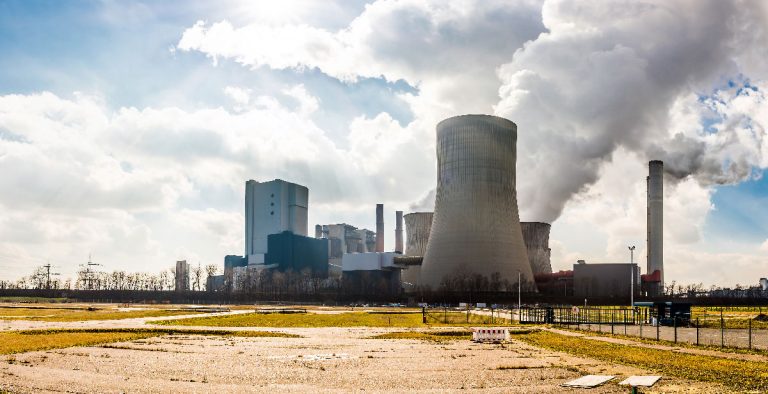
One of Europe’s most industrialized economies, Germany, was a global pioneer in initiating large-scale CCS projects. In cooperation with Vattenfall, the Schwarze Pumpe CCS project in Spremberg launched in a blaze of publicity in 2008 – a beacon of hope for industrial decarbonization- was supposed to be the first pilot scheme effectively linking the three stages of capturing, transporting and storing carbon dioxide. Designed to capture annually up to 100,000 tonnes of CO2 produced by the 1,600 MW Schwarze Pumpe power plant, then compress it and bury some 3,000 metres below the surface of the depleted Altmark gas field, the project would have been the world’s first successful demonstration of CCS technology. This, unfortunately, did not happen.

The reason was strong opposition of local communities to the idea of storing carbon dioxide in the vicinity of their homes. As a result, the Schwarze Pumpe CCS project became a victim of the so-called ‘numbyism’ (not-under-my-backyard) thinking, a mentality by which individuals or communities oppose the idea of interference in (or in this case, under) their residential areas. In particular, because of local communities’ significant concerns about the safety of the project, Vattenfall was not permitted to start injecting the captured carbon dioxide into the ground. Consequently, the investment project worth EUR 70 million, had to vent the CO2 straight into the atmosphere. In the end, after five years of liaising with the local communities, when Vattenfall did not manage to alleviate concerns around the risks of the Schwarze Pumpe CCS project to communities’ wellbeing, the company was forced to abandon the initiative and withdraw from CCS research altogether.

A no-go issue that must be reconsidered

Unfortunately for companies like Vattenfall as well as all levels of the German government, the case of the Schwarze Pumpe CCS project caused a chain reaction with respect to other similar initiatives proposed around the country. For instance, having been awarded EUR 180 million from the European Programme for Energy Recovery to develop a pilot CCS plant at the Janschwalde coal-fired power plant, Vattenfall had to cancel the project again ‘due to the large scale opposition from the public’. In fact, with time, the question of launching CCS projects in Germany became a no-go issue for the country’s politicians who did not want to lose potential voters. This should not be of any surprise, as, according to a 2015 analysis of public acceptance of CCS, the technology barely has any support in Germany. In particular, the study findings indicate that German citizens ‘assess the technology as that of high risk and do not perceive its benefits’.

At the same time, with its ambitious climate plans, Germany will need to address the issue of improving public acceptance of CCS. Indeed, since a quarter of German emissions stem from hard-to-abate industries (such as cement, steel, and chemicals production), most researchers and industry experts warn that reaching climate neutrality by 2045 without introducing reliable CCS systems may not be possible. Research conducted for the Federation of German Industries on possible emissions reduction pathways stated that reaching an ambitious emissions reduction goal of up to 95% would require exponentially larger investments and the use of ‘currently unpopular technologies such as CCS’. In this respect, while dedicating additional funds to decarbonization is essential, increasing the societal acceptance of CCS technologies seems to be an equally important part on the climate agenda.

Given that the joint efforts of various German stakeholders have been struggling to improve the public opinion on CCS for more than a decade, this case should serve as an example for other European countries where such projects may be launched. In particular, the countries of Central and Eastern Europe, where such initiatives as CCS4CEE emerge, should develop their own policies on improving societal acceptance of CCS technology. This will be particularly challenging in the CEE region, where a general lack of public and institutional knowledge of CCS prevails and thus attitudes are more uncertain. However, history shows the unmistakable ability of social opposition to derail CCS or ‘CCS-like’ projects, such as fracking and gold mining. In these countries, the challenges of gaining local and national acceptance for CCS projects could become real and sizable very soon.


*Aliaksei Patonia is an EPG Fellow. The views expressed in this paper are those of the author and do not necessarily reflect the opinions of EPG.

E-INFRA

0

E-INFRA provides critical infrastructure, essential to the society, as a national leader in cross-sector integrated services that combine expertise in constructions, telecom and energy infrastructure. E-INFRA is the holding entity for a group of 4 companies, namely Electrogrup, Nova Power and Gas, Netcity and Direct One which covers the full infrastructure deployment value-chain, thus unlocking benefits and optimal costs and timing for all their partners.

Starting with 2017, E-INFRA set-up as holding company for the group whereas the main activity is focused on coordinating the management of the four subsidiaries, assist them in achieving synergies, allocate capital among subsidiaries and provide support in certain areas of critical interest including market strategy, HR, marketing, finance, legal, IT & logistics.

Engie

0

Engie is a global energy and services group, focused on three core activities, low-carbon power generation, mainly based on natural gas and renewable energy; global networks and customer solutions.

Driven by our ambition to contribute to a harmonious progress, we take up major global challenges such as the fight against global warming, access to energy to ail, or mobility, and offer our residential customers, businesses and communities energy production solutions and services that reconcile individual and collective interests. Its ambition is conveyed by 150,000 employees in 70 countries. Together with their customers and partners, Engie forms a community of imaginative builders who invent and build today solutions for tomorrow.

The ENGIE Romania Group consists of:

  • ENGIE Romania SA – supplier of natural gas, electricity and services and producer of electricity
  • Distrigaz Sud Retele SRL – operator of natural gas distribution in the south-east of the country; a company set up in March 2008 as a result of the separation of the trading activity from the distribution activity.
  • ENGIE Services SRL – provider of services for the safe use of the natural gas installation (revisions, verifications, maintenance works) created in October 2009.
  • ENGIE Buildings Solutions – Inspection, maintenance and repair services for buildings and industrial spaces Braila Winds SA – wind energy producer Alizeu Eolian SRL – wind energy producer Depomures (the first private storage operator in Romania).

E.ON

0

E.ON is an international energy company headquartered in Essen. With intelligent energy networks, innovative customer solutions and renewable energy, we are focused on the new energy world – and on improving people’s lives. E.ON employs more than 42,000 people. We offer them responsible tasks and exciting challenges. They are there for our more than 30 million customers in Europe.

E.ON entered Romania in 2005, when it took over the former state-owned gas and electricity companies. Companies in the E.ON Group structure currently operate a natural gas distribution network with a length of more than 21,650 km, an electricity distribution network of over 81,500 kilometers and operates in 20 counties in the middle of North of the country, with about 3.1 million customers. Over the past 11 years, E.ON has invested over 1.4 billion euros in Romania.

Its objective is to strengthen E.ON’s position on the Romanian energy market and to ensure the security of supply of natural gas and electricity to consumers. E.ON focuses its efforts on being recognized as effective, competitive, and trustworthy suppliers in order to bring more comfort to their customers.

Enel

0

Enel is a multinational power company and a leading integrated player in the global power, gas and renewables markets. It is one of Europe’s largest utility and figures among Europe’s leading power companies in terms of installed capacity and reported EBITDA. The Group is present in over 30 countries worldwide, producing energy with around 89 GW of managed capacity.

Enel distributes electricity through a network of over 2.2 million kilometers, and with around 73 million business and household end users globally, the Group has the largest customer base among its European peers. Enel’s renewables arm Enel Green Power already manages around 43 GW of wind, solar, geothermal and hydropower plants in Europe, the Americas, Africa, Asia and Australia.

Enel Romania is a leading private investor in energy, with operations in power distribution and supply as well as renewable energy production, active on the local market since 2005. The company has 3,100 employees and around 3 million business and household end users in the country. The E-Distributie companies operate a network of around 128,000 kilometres in three key areas of the country: Muntenia Sud (including Bucharest), Banat and Dobrogea, accounting for one third of Romania’s electricity distribution market, and are developing an investment programme aimed at securing a proper service for customers, improving the quality and security of the network while also complying with Enel’s environmental standards.

Enel Energie and Enel Energie Muntenia are leading suppliers of energy in the country, and their offer includes both electricity and natural gas, as well as value-added services (assistance, lighting and others).

OMV Petrom

0

OMV Petrom is the largest integrated oil and gas group in Southeastern Europe with an annual hydrocarbon production of about 61 million boe in 2017. The Group has a refining capacity of 4.5 million tons annually and operates an 860 MW high efficiency power plant. The group is present on the oil products retail market in Romania and neighboring countries through 790 filling stations, as of end of June 2018, under two brands – Petrom and OMV.

OMV Aktiengesellschaft, one of the largest listed industrial companies in Austria, holds a 51.01% stake in OMV Petrom. The Romanian State, through the Ministry of Energy, holds 20.64% of OMV Petrom shares, Fondul Proprietatea holds 9.9985%, and 18.35% is the free float on the Bucharest Stock Exchange and the London Stock Exchange.

OMV Petrom is the largest contributor to the state budget, with contributions of about 25.5 billion euro in taxes and dividends paid between 2005 and 2017. Since 2007, OMV Petrom has included corporate responsibility principles into its business strategy. During this period, the company has allocated approximately 52 million euro to develop communities in Romania, focusing on environmental protection, education, health and local development.

Renewable Energy Sources in the Ukrainian Electricity Mix – Opportunities and Challenges

Ukraine’s electric mix is one of the most carbon intensive in Europe. The majority of the country’s electricity is produced by outdated, inefficient thermal and nuclear power plants, whose fuelling is subject to geopolitical pressure. Past and present policies have thus far favoured a status quo, inefficiently tackling the climate and political challenges plaguing the electric system. Despite a significant potential, production from renewable energy sources remains marginal and project development in this field is slowed down by unstable and ambiguous policies. Nonetheless, a clarification of Ukraine’s short and long-term energy policy coupled with a clear and efficient fight against corruption could put the country’s energy transition back on track towards the goals of the Paris Agreement, along with widespread benefits for the Ukrainian society.

In an early 2021 article, Svitlana Chekunova of the Razumkov Center, an independent Ukrainian think-tank, highlighted some of the challenges faced by the Ukrainian electric system: “the existing electricity market model is functioning with distortions in all of its segments and in the conditions of financial instability of the state-run energy generating companies, debt crisis, unfavourable investment climate, unstabilized renewables”. In addition to these significant market design flaws, the current electric mix is one of Europe’s most carbon intensive, relies on geopolitically sensible imports to fuel and maintain key assets, and suffers from a lack of political, financial and strategical stability.

Amidst these critical challenges, the Ukrainian electric mix lies at a major crossroad. The country’s contribution to the Paris Climate Agreement implies a significant shift in its production mix, phasing away fossil fuels and enhancing the role of low-carbon assets. In this regard, what role could renewable energy sources to lower the electric mix’s carbon footprint? Which political, financial and social barriers would need to be lifted for such sources to gain momentum in the mix? Which would be the required policies necessary to these evolutions? After an assessment of the challenges the Ukrainian electric mix currently faces and an analysis of their climate, political, social and economic implications, this paper will examine the electricity production potential of three renewable energy sources – solar photovoltaics, wind and biomass – in the country, as well as the technical feasibility and implications of a Ukrainian electric mix where a significant part of production would be handled by renewable sources. Preceded by an analysis of past policies directed towards the electricity sector and of their inefficiency to effectively liberalize and decarbonize Ukraine’s electric mix, the paper will be concluded by a series of policy proposals aimed at a Paris Agreement-compatible electricity mix through an increased role of renewable energy sources.


*Aimé Boscq is an EPG Fellow. The views expressed in this paper are those of the author and do not necessarily reflect the opinions of EPG.

Clean Hydrogen in Romania – elements of a strategy

Decarbonising the EU economy will most of all require direct electrification of over 60% of end-uses, based on energy efficiency considerations. However, this will not always be technically possible or cost-efficient. Decarbonised molecules, such as hydrogen, will also contribute to eliminating ‘stubborn emissions’ in hard-to-abate sectors such as high-temperature heat and feedstock in industry, aviation and long-haul shipping, and possibly large-scale district heating and long-term electricity storage, thus increasing the flexibility and resilience of the energy system.

There seems though to be a level of confusion among domestic actors about the role that hydrogen is to play in decarbonisation. In Romania, hydrogen is portrayed as a silver bullet towards a decarbonised future in sectors looking to find their place in a landscape shaped by the European Green Deal. However, as argued in the present report, its real impact will greatly depend on the country’s economic strategy and costs of technology.

In Romania, the most promising hydrogen uses are in industry (steel, ammonia, fertilisers, refineries, and high value chemicals), transport (long-haul aviation, maritime shipping, HDVs and some railway segments), existing district heating systems and, potentially, long-term or seasonal energy storage beyond 2030. Other uses, such as gas blending or green hydrogen use in CCGTs are rather a waste of economic value, given the comparatively high costs of producing hydrogen.

The Romanian authorities announced the intention to release a national hydrogen strategy in 2022. This will be an opportunity to make informed and comprehensive decisions regarding the future of hydrogen, including on uses, as opposed to the current patchwork of uncoordinated and poorly designed initiatives. The strategy should be developed based on the active involvement of public and private stakeholders, with targets and potential funding sources.

Finding economically viable opportunities for sector integration based on best practices in R&D cooperation and commercial projects will be imperative to the development of a Romanian hydrogen industry. From the outset, there ought to be a solid business case for the hydrogen value chains that are set to expand once funding opportunities become available and technology costs decrease.

Based on considerations regarding carbon intensity, cost and availability, green (a.k.a. clean or renewable) hydrogen is the most promising for delivering the goals of decarbonisation on the long term. Pink hydrogen also promises near-zero GHG emissions, but factoring in the cost aspect, green hydrogen is on a clear path to significant cost reductions that render it competitive with fossil-based hydrogen by 2030. Therefore, the study argues that clean hydrogen should be the focus of the Romanian national hydrogen strategy.

Today there is still a cost gap between fossil-based and clean hydrogen. However, electrolyser CAPEX is expected to decrease from €1,060/kW (PEM) to €375/kW (PEM), and as low as €100/kW (alkaline). The current cost differences between the two electrolyser types in terms of cost and performance are likely to narrow in time as innovation and widespread deployment of various 9 technologies will boost convergence towards similar cost structures. However, the cheaper alkaline electrolysers expected to be available by 2030 will likely be supplied by Chinese manufacturers, while the European hydrogen value chain will focus more on PEM electrolysers. Either way, by 2030, producing clean hydrogen will no longer be a CAPEX intensive business. The price of renewable energy becomes the main cost component, especially at medium to high electrolyser load factor. Coupled with the decreasing cost of renewable energy, higher carbon price and elimination of free allocation of CO2 allowances, this will allow clean hydrogen to breakeven with fossil alternatives between 2028 and 2032 based on local renewable potential.

Two modelling scenarios analysed for this report, based on the Fit for 55 package proposals regarding the use of clean hydrogen in industry and transport, show that between 1,470 MW and 2,350 MW of electrolyser capacity will need to be installed in Romania by 2030. This amounts to 3.7% and 6%, respectively, of the EU electrolyser capacity by 2030 targeted in the European Commission’s Hydrogen Strategy. When factoring in the additionality principle, this will require between 3 and 4.5 GW of new renewables to be installed besides the capacities included in the current National Energy and Climate Plan.

Based on an electricity price of €50/MWh, a reasonable if not conservative assumption for Romania in 2030, given the RES potential and expected cost reductions, the resulting levelized cost of hydrogen (LCOH) for alkaline electrolysis is between €2.21/kgH2 and €2.3/kgH2, while for PEM electrolysis it ranges from €2.34 to €2.73/ kgH2, depending on load factor. The LCOH can go down to as much as €1.38/kgH2 for alkaline electrolysis and €1.59/ kgH2 for PEM electrolysis in 2030 for an electricity price of €25/MWh. The only way of ensuring a stable and predictable source of low-cost electricity for the electrolysis units is long-term Power Purchase Agreements (PPAs) with multiple RES producers, or wholesale purchasing of electricity that comes with Guarantees of Origin (GOs). To respect the additionality principle, a temporal and geographical connection between the electrolyser and renewable capacity would also be needed.

Key strategic choices will have to be made in the upcoming strategy regarding hydrogen production pathways, location of sites, end-uses, and transport infrastructure. This report offers arguments about cost, carbon intensity, and availability for the Romanian authorities to focus on clean hydrogen, and to prioritise large-scale investments in renewable and electrolyser capacities. This would be fully compliant with the European pathway enshrined in the EU Hydrogen Strategy and Fit for 55 package provision and will help Romania capitalise on the major opportunities of developing new value chains as part of the energy transition.

Evaluarea impactul taxării carbonului în România

0

Alături de asociaţia din România, la proiect mai participă organizaţii din Polonia, Ungaria, Bulgaria şi Germania, care efectuează evaluarea acestui impact în cele 4 ţări central şi est-europene în comparaţie cu Germania.

Rolul proiectului este studierea efectelor creşterii costului carbonului în UE asupra grupurilor vulnerabile economic din consumatorii finali de energie.

Proiectul se concentrează pe cele patru state deoarece acestea depind de combustibilii fosili mai mult decât media UE, având totodată niveluri de sărăcie energetică mai mari decât alte ţări.