The Energy Policy Group (EPG) is a Bucharest-based non-profit, independent think-tank specialising in energy and climate policy, market analytics and decarbonisation strategy, grounded in 2014. EPG is committed to promoting long-term decarbonisation policies and actions across all economic sectors. Through publications and public events, EPG disseminates knowledge about the green transition and provides well-documented input to stakeholders and decision-makers. Its publications are freely available as research reports, opinion papers, and policy briefs. EPG’s conferences, roundtables and workshops provide a platform for informed discussion and expert analysis. EPG’s funding comes mainly from research grants, but also from sponsorships and membership fees.
The new research position will support the Energy Systems program, one of our two main research programs. Our current projects focus on renewable energy, energy efficiency in buildings, energy technology, industrial transition, strategic planning, carbon capture and storage, carbon pricing and social acceptability of climate policies.
The selected candidate will join our team of researchers. The candidate is expected to contribute to our research outputs, as well as to the broader strategic thinking of EPG.
The position is offered for a one-year fixed-term contract, with possibility of extension to an indefinite-term contract. The level of the position will be decided based on the qualifications of the successful candidate. EPG welcomes applications from a diversity of backgrounds irrespective of age, gender, ethnicity, religious beliefs, sexual orientation, or disability.
Tasks
Conducting research activities in the field of energy and climate policy. The precise topics will be determined based on the competences of the candidate and specific EPG projects
Producing analysis in support of our research outputs and strategic thinking
Participating in international research teams as part of our research grants
Monitoring key policy developments at national and EU levels
Giving presentation at workshops and conferences and engaging with key stakeholders
Writing op-eds and commentaries
Assisting the application process for new research proposals
Supporting our overall activity at the office
Background and experience
Undergraduate degree in energy or energy-related public policy or economics. A post-graduate qualification represents an advantage for the Research Assistant position and a prerequisite for the Researcher position.
For the Research Assistant position, no prior work experience is required, but is an advantage. For a Researcher position, a minimum 2-year work experience in the energy sector and/or climate policy is required.
Demonstrable knowledge on energy technologies, as well as energy and climate policies both at EU and national level. A good understanding of the Romanian energy sector represents an advantage.
Ability for critical thinking, summarising complex research, drafting reports, and communicating effectively in writing.
Demonstrable presentation skills.
Ability to work in a diverse team of experts.
Track record of stakeholder engagement and access to a network of relevant experts is an advantage for a Research Assistant position and a requirement for a Researcher position.
Previous involvement in the organisation of workshops and events. Researchers are also expected to be capable of moderating roundtables and workshops.
Experience in international research grants is an advantage.
Excellent command of English, both orally and in writing. Knowledge of Romanian is a significant advantage.
Personal profile
You are dedicated and committed to conducting research and formulating policy solutions for the decarbonisation of the Romanian and EU economy.
You understand the need for reaching net-zero greenhouse gas emissions by 2050 and are passionate about contributing to climate change mitigation efforts.
You are intellectually curious and able to engage in multidisciplinary research.
You have great analytical abilities, you can deal with complex information, and can communicate in a concise, yet nuanced manner.
You are willing to participate in the dissemination of EPG’s work.
You are a keen team-player, but also capable of organising your own work.
What EPG offers
Full-time employment for a fixed one-year contract, with possibility of further extension to an indefinite-term contract. A competitive salary, in accordance with your previous experience, our salary scale and the level of the position for which you are applying. 23 days of legal holiday entitlement and a flexible work environment which can accommodate remote working. Opportunity to progress in your career path and gain valuable knowledge and insights on energy and climate policy. EPG also encourages the participation of its employees in training and education programmes in relevant areas.
How to apply
The deadline for applications is May 31st, 2022 EOD. Interviews will be conducted before the end of June. Successful candidates are expected to start no later than the beginning of September 2022. Complete applications in English should be emailed to office@epg-thinktank.org, mentioning the position you are applying for (Research Assistant or Researcher) and your name. The email should contain a single pdf file with:
A CV maximum of 2 pages
A cover letter of maximum one page outlining your interest and motivation for applying
A list of maximum one page with your personal publications
Incomplete application will not be considered. You must have the right to work in the EU.
Candidates selected for an interview will be asked to provide a written sample in English of no more than 20 pages.
Unfortunately, we will not be able to reply to every candidate. If you have not received a reply within two weeks of the application deadline, you should consider you application unsuccessful.
The Energy Efficiency Directive (Directive 2012/27/EU), adopted in 2012, established a common framework of measures for the promotion of energy efficiency to help the European Union (EU) reach a 20% energy efficiency target by 2020.
In 2018, the EED was amended as part of the European Commission’s ‘Clean Energy for All Europeans’ package, updating some specific provisions and introducing several additional elements.
Above all, it established a new headline EU energy efficiency target for 2030 of at least 32.5% primary energy savings, with the possibility of an upward revision in 2023. To achieve this target, each Member State was required to achieve higher annual energy savings obligations (+0.8%).
The Energy Efficiency Directive (EED) is an essential instrument for achieving the energy and climate objectives of the European Union (EU). The recast EED aims to align its provisions – since many of them require increased ambition and enhancement of their scope – with the target of 55% reduction of greenhouse gas (GHG) emissions by 2030.
For Romania, this represents a unique opportunity to further improve its national energy efficiency legislative framework and stimulate investments in energy efficiency in all sectors, especially by:
giving a leading role to the public sector thus allowing governments to take more ownership of the implementation of the directive;
targeting energy-intensive sectors and endorsing a new framework for heating and cooling in order to have a more efficient and sustainable system;
introducing specific energy savings measures for the building sector and vulnerable consumers, as energy efficiency measures can contribute not only to tackling the present energy crisis, but also alleviating energy poverty.
However, there are some specific challenges that need to be considered:
although it is paramount to assimilate quick and high shares of renewable energy into district heating systems, there is a legitimate concern that this may be difficult to implement in Romania, which still has large existing district heating systems that require high flow temperatures, making their decarbonisation through renewables more difficult;
in order to accommodate the new targets and provisions, Romania will need to ensure a stronger energy efficiency governance framework.
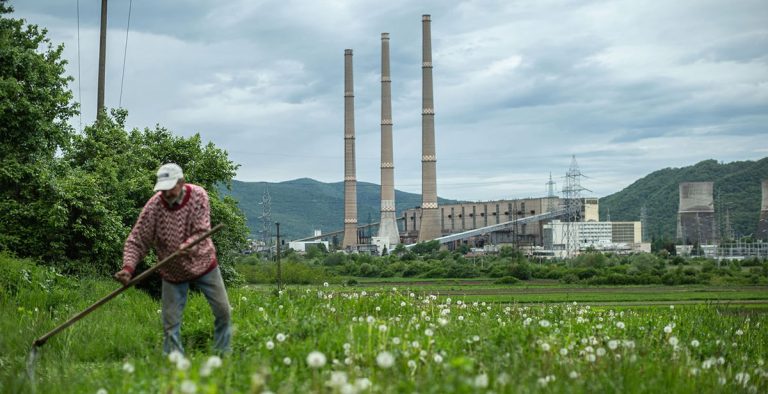
BUCHAREST, Romania—Schools shut down and residents froze in Deva, Romania, for the second winter in a row this year after the town’s coal-dependent energy system stopped working. The nearby Mintia power plant closed in 2021, leaving dozens of public buildings and around 4,000 homes without heat as temperatures reached minus 6 degrees Celsius. When Petronela Luncan, an elementary school teacher in Deva, saw children trying to keep warm during online instruction, she said, “I felt a lump in my throat.”
Romania is phasing away from coal. By 2030, it plans to close all bituminous coal mines in the Jiu Valley region in southwestern Transylvania, but it doesn’t yet have the infrastructure to replace their output. Locals in Deva and other towns suffering from a lack of heating have begun purchasing gas boilers for the winters, with municipalities subsidizing them for low-income families and investing in gas-based heating for schools. “Any other option would have taken too much [time],” said Gabriel Ilies, Deva’s deputy mayor.
Șocul geopolitic cauzat de invazia militară a Ucrainei de către Federația Rusă zguduie nu doar sistemul european de securitate, ci și securitatea energetică a Uniunii Europene, care își acoperă nu mai puțin de 40% din consumul de gaze naturale prin importuri din Rusia. Între statele est-europene puternic dependente de importurile de gaze rusești, România are o situație relativ privilegiată, fiind un producător semnificativ de gaze.
Cu toate acestea, ponderea importurilor din consumul total a crescut în ultimii ani, depășind 20% în 2021.
Șocul geopolitic cauzat de invazia militară a Ucrainei de către Federația Rusă zguduie nu doar sistemul european de securitate, ci și securitatea energetică a Uniunii Europene, care își acoperă nu mai puțin de 40% din consumul de gaze naturale prin importuri din Rusia. Între statele est-europene puternic dependente de importurile de gaze rusești, România are o situație relativ privilegiată, fiind un producător semnificativ de gaze.
Cu toate acestea, ponderea importurilor din consumul total a crescut în ultimii ani, depășind 20% în 2021.
În plus, producția autohtonă a observat un declin constant după 1990. La actuala producție anuală, cu o rată anuală subunitară de înlocuire a rezervelor, rezervele dovedite de gaze ale României se vor epuiza în 10-12 ani.
Studiul EPG prezintă rezultatele unor calcule și exerciții de modelare care răspund la trei întrebări:
Care ar fi implicațiile sistării importurilor de gaze naturale din Federația Rusă pentru următoarea iarnă? Cum și-ar asigura România stocurile minime obligatorii?
Cum putem elimina complet importurile de gaze naturale până la finalul deceniului?
Care va fi rolul gazelor într-o economie neutră din punct de vedere climatic în 2050?
The fifteen priority actions on energy efficiency on renewables developed in this report should thus be at the heart of Europe’s efforts to regain its energy sovereignty.
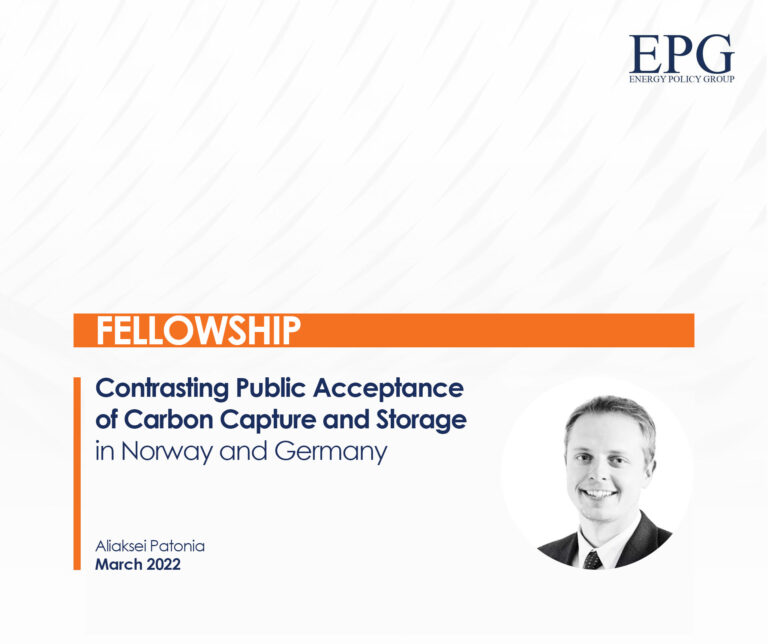
Carbon capture and storage (CCS) is the process of removing carbon dioxide (CO2) from industrial processes before it enters the atmosphere, delivering it to a specific storage site and sequestering it there for a long time (Franci and Franci, 2016). The CO2 is captured directly at the production sites (for example, a cement of steel plant), and transported for the injection into underground geological formations such as depleted oil and gas fields or salt caverns (ibid).
As the main goal of CCS is to avoid CO2 emissions to the atmosphere, CCS technologies ultimately aim to mitigate the effects of climate change.
Although the phase-out of fossil fuels and their replacement with renewable energy sources is often viewed as the ultimate solution for many environmental challenges, CCS has recently been gaining greater attention as a means for achieving decarbonisation and meeting the climate targets set by many countries (Bellona, 2007). At the same time, while CO2 has been injected into geological formations for several decades for a number of purposes (e.g., enhanced oil recovery), storing CO2 for a long term is a relatively new concept with only a handful of pilot projects operating worldwide (Global CCS Institute, 2021). The relatively high costs of CCS make it economically challenging to implement, particularly given the lack of a standard CO2 price, economic concerns are not the only factor that prevents it from scaling up. In fact, in many countries the public tends to express doubts and even strong opposition to CCS, which often leads to many planned CCS initiatives being ultimately terminated.
This paper presents a comparative case study of Norway and Germany.
While both countries could potentially benefit from the implementation of carbon capture and storage projects, the level of public acceptance of CCS in Norway is currently significantly higher than in Germany, where such initiatives are generally regarded as ‘no-go issues’ for both the public and private sectors (Clean Energy Wire, 2020). Focusing on CCS projects in both countries and covering the main industries for which they would be most relevant, this research implements PEST analysis framework of Aguilar (1967) to analyse political, economic, and technological factors that could potentially explain the diverging levels of public acceptance. Finally, having summarized the main findings, the paper provides brief recommendations on how public acceptance of CCS could potentially be improved.
II. Analysis
II.1. Political factors
Currently, the number of countries where the ruling political establishment has been explicitly promoting CCS is low. While most European nations still seem to demonstrate a great deal of uncertainty in their political narratives regarding the construction and exploitation of CCS projects on their territories, countries like Norway have consistently supported carbon capture and storage initiatives both domestically and abroad (Roettereng, 2014). In fact, Norway was one of the pioneers in starting the CCS debate, which later created ‘political path dependence effects’, including recruitment of much of many environmental sectors as ‘CCS promoters’ (Tjernshaugen, 2011, p. 227).
At the same time, it has been reported that the early pro-CCS narratives within the political domain were motivated by the ‘challenge of reconciling relatively ambitious climate policy targets with growing emissions from Norway’s offshore oil and gas operations’, which form the basis for the country’s economic prosperity (ibid). Indeed, since the oil and gas and the related chemical industries contribute to over a half of the nation’s GDP (Figure 1), taking an anti-CCS stance would most likely be disadvantageous for any politician, as failure to adapt these key economic sectors to the new decarbonisation reality would most likely result in a loss of GDP. Although various factors contribute to this, key one is the extremely high oil and gas prices during the ongoing European energy crisis, which resulted in a record export of hydrocarbon form Norway to the EU in 2021 (Bloomberg, 2022). Under these conditions, limiting the emissions of the oil and gas sector with no use of CCS would simply mean scaling down the output and an associated loss in revenue.
Figure 1. Norway’s exports by types of goods
Source: Government of Norway (2021)
Paradoxically, the historical absence of fossil-based power generation has additionally contributed to the public support of the pro-CCS political narratives in Norway. Specifically, new initiatives to add gas-fired generating capacity to Norway’s previously emissions-free power supply have created an entrenched conflict, in which carbon capture and storage became a ‘politically necessary compromise’ capable of addressing the challenge of low-emission electricity production (Tjernshaugen, 2011, p. 227). Here, the long-lasting political support of CCS projects also transformed into public acceptance of this technology as the only viable solution to a potential problem (ibid).
In Germany, however, the political support for carbon capture and storage has been neither consistent nor effective.
While some of Germany’s political movements on the conservative end of the spectrum view CCS as an important step towards decarbonisation of the national economy, others would prefer the country to ‘go down the right path and focus on renewable energies and efficiency’ (DW, 2011). In fact, due to lack of unanimity from the key political parties, the German Draft CCS Act failed in the legislative procedure in 2009 and it was finally rejected by the upper house of the Bundestag in 2011 (ibid). Although the pro-CCS narrative was raised again at the highest political level by Chancellor Merkel in 2019 stating that the issue of carbon capture and storage needs a ‘wide debate in society’, it has not been expressed in an adopted CCS Act, nor in real CCS projects (Süddeutsche Zeitung, 2019).
Although the German industry has been actively eyeing opportunities for carbon capture and storage projects in Germany (Argus Media, 2019), the country’s business lobby has so far failed to gain enough political favour. As in the case of Norway, this could potentially be explained through the prism of the business-politics nexus, as dominant economic sectors are likely to influence national policymakers. Looking at German exports (Figure 2), one can spot a major difference with the case of Norway. In fact, cement, metallurgy, chemicals, and rubber/plastic goods) do not seem to form the core of the national economy (23% of total exports). In contrast, the remaining industries related to vehicle, machinery and electrical and data equipment manufacturing, which jointly constitute over a half of total exports, are more easily electrifiable and thus could potentially be run on renewables. This is why, for the politicians in Germany, using the Norwegian narrative of ‘CCS as a necessary compromise’ that would save the national economy is likely unviable.
Figure 2. Germany’s exports by types of goods
Source: BPD (2017)
II.2. Economic factors
Economically, current CCS projects put significant pressure on the budget of the companies that implement them. That is why government support of such initiatives is a decisive factor in their fate. This is so because public-private cooperation and partnerships will not only share the financial burden of project implementation, but also spread the risk across stakeholders.
In the case of Norway, the country’s first large-scale CCS initiative, announced in 2006 and estimated to cost around USD67.4 million, was supposed to capture CO2 from a natural gas plant at Mongstad and pipe it into underground storage on the Norwegian continental shelf. However, several years into development, the project that was compared to ‘Moon landing’ due to its complexity and cost was finally abandoned due to significant cost overruns (Reuters, 2013). At that time, the national oil company Equinor (then called Statoil), who led the project, failed to keep up with the budget within the conditions of low prices for carbon dioxide emissions and overall economic slowdown after the global financial crisis (Euractiv, 2020).
On the other hand, in 2020, when the growing concern about global warming was spurring the rise of carbon prices, the Government of Norway announced that it would finance two-thirds (i.e., around USD3 billion) of a large-scale CCS plan named ‘Longship’. In contrast to the previously unsuccessful CCS initiative at Mongstad that focused on decarbonisation of a coal-fired power plant, Longship plans to capture CO2 from hard-to-abate sectors such as cement, glass, paper, and fertilizer production (Financial Times, 2021). In addition, to further decrease the costs associated with the implementation of this project, Norway attracted international oil companies such as Total and Royal Dutch Shell to finance the transport and storage of Longship’s CO2 beneath the seabed of the North Sea, called the ‘Northern Lights’ project (Euractiv, 2020) (Figure 3). As a result, in comparison to the ‘Moon landing’ project and the country’s first two large-scale CCS initiatives of Sleipner an Snohvit where the financial burden on Equinor – the initial lead – was reduced through obtaining CO2 credit, the expenses and risks of Longship are shared with international stakeholders (ibid).
Figure 3. Northern Lights Project
Source: Crude Oil Facilitators (2020)
In the case of Germany, the start of CCS initiatives was very similar to that of Norway both in terms of projects’ nature and funding. In 2006, the German branch of the Swedish company Vattenfall decided to invest some EUR70 million (about USD96 million) into the construction the CCS facility that would capture CO2 from the Schwarze Pumpe power plant, transforming it into the world’s first nearly carbon-free coal-fired power plant (BBC, 2005 and Reuters, 2008). Despite the initial ambitions, the project was finally abandoned in 2014 amidst the falling costs of renewable power generation and growing public discontent with the expenses and high environmental and public health risks associated with the initiative (Euractiv, 2017). At that time, since neither financial backing nor political support from the German government was obtained, the company decided to officially discontinue all CCS research, as Vattenfall’s R&D research budget was cut by 20 percent (MIT, 2014). Similarly, unable to find business partners and political support within Germany, Vattenfall shelved a much larger CCS initiative at the Jänschwalde lignite-fired power plant, to which some EUR1.5 billion (USD2.2. billion) was supposed to be dedicated by the company (Argus Media, 2019).
II.3. Social factors
From the social perspective, the perception of the oil and gas industry in Norway has been generally positive, given the enormous impact it has on the economic development as well as welfare of the country (Ryggvik, 2010).
Being Norway’s most important export commodities (see Figure 1), oil and gas form the backbone of the nation’s pension fund (Government Pension Fund Global), which is responsible for ensuring long-term management of revenue from the country’s hydrocarbons, so that this wealth benefits both current and future generations (NBIM, 2022). Representing one of the world’s largest funds (Figure 4), the Norwegian pension fund (previously known as the Petroleum Fund of Norway) spreads its investments across most markets, countries, and currencies to achieve broad exposure to global growth and value creation (ibid). In this context, the oil and gas sector of Norway is seen as the original contributor to the country’s current prosperity as well as the foundation of its investment for a prosperous life in the future, as it deposits the surplus wealth produced by Norwegian petroleum income into the pension fund (Ryggvik, 2010).
This is why maintaining the competitiveness of this sector in a net-zero scenario is viewed as a prerequisite for the stability of the Norwegian society. Since CCS currently seems to be the only set of technologies that give a significant chance for fossil fuels to remain relevant in a decarbonized world of tomorrow, this option is generally perceived by the Norwegian public as a necessary step to safeguard the welfare of its current and future generations (PerCCSeptions, 2020).
Figure 4. Total assets of selected sovereign-wealth funds (in USD billion)
Source: The Economist (2019)
Despite its deep historical roots in some regions of Germany, the coal mining industry as well as its legacy does not seem to have the same positive effect on the social perception of the carbon capture and storage projects associated with them. On the contrary, according to Braun (2016), communities living in coal-mining regions demonstrate a remarkably low tolerance to the storage component of CCS initiatives. According to the author, this is most probably related to the perceived additional health risks that would further aggravate the environmental adversities of such territories. Although proposed CCS initiatives in Germany have been most recently associated with the production of ‘blue’ hydrogen from natural gas, the overall link to coal is present in the mind of the public (ibid and Wintershall Dea, 2022).
In addition to the welfare factor, the generally positive attitude of the Norwegian public to CCS projects could be related to the ‘neutral’ location of the CO2 storage sites. Where storage of CO2 occurs deep under the seabed and far away from the nearest settlements (as is the case with Longship), projects usually tend to have higher public acceptance rate than those located in close vicinity of cities, towns, and villages (Braun, 2016). In this respect, it should be of no surprise that, in Germany, the local population who live close to proposed CO2 storage locations demonstrated extremely low tolerance to these initiatives. For instance, after the announcement of Vattenfall’s initial plans to pick Schwarze Pumpe and Jänschwalde as testing sites for CCS, the local communities organized a series of protests against CO2 storage in their communities (DW, 2010).
Although some of these concerns might seem to be primarily related to public distrust towards relatively new technologies, European anti-CCS groups often refer to the negative past experiences associated with the uncontrolled release of carbon dioxide. Here, the most notable case of Lake Nyos in Cameroon, where a CO2 cloud burst killed over 1,700 people and more than 3,000, is often mentioned as an example of what consequences CCS projects could bear (Forbes, 2008). Despite the fact that the disaster in Africa was caused by natural processes, any risk of potential mishandling of carbon dioxide has long been associated with extremely negative consequences since then. In this context, CCS initiatives planned in or near residential areas, particularly highly populated ones often tend to face strong opposition.
II.4. Technological factors
Both Norwegian and German CCS initiatives appear to be similar in terms of their technological aspects, as CO2 emissions are meant to be directly captured at the production site and then transported and stored in depleted oil or gas fields.
The major difference, however, lies in the fact that the Norwegian projects generally consider offshore storage of carbon dioxide beneath the sea bed, while the German ones focus primarily on the underground sequestration of CO2. For instance, in the case of the Northern Lights project augmenting Longship, liquid carbon dioxide from capture facilities is meant to be first transported by ship to a terminal at Øygarden in western Norway for intermediate storage, and then pumped through pipelines to a depleted reservoir some 3 km beneath the sea bed for permanent storage in depleted oil and gas reservoirs (Northern Lights, 2021). In case of the Schwarze Pumpe power station, the captured CO2 was supposed to be delivered for sequestration via road tankers to the small town of Beeskow nearby, where it would be injected into a depleted gas reservoir 1 km below ground (DW, 2010 and ExchangeMonitor, 2014).
Another significant difference lies in the fact that all the mentioned CCS initiatives in Germany were applied to energy production facilities running on fossil fuels – i.e., coal-fired power plants. Regardless of the substantial historical importance of the coal industry for Germany, the intention of energy companies to decarbonize their operations is focused on replacing coal-fired power with electricity produced by renewable energy sources, which is gradually becoming cheaper (Euractiv, 2017). In this context, since CCS is viewed by many energy experts as unattractive because it dramatically reduces the efficiency of power generation and thus severely increases fuel costs, replacing the entire plant with a renewable facility of similar capacity might be seen as a preferable option (Energy Transition, 2022). In fact, low-cost renewables could erode the value of CCS by 15%-96% across different energy sectors (Grant et al, 2021). At the same time, given Germany’s extreme reliance on Russian natural gas, implementing CCS to coal-fired power generation could help make the country less energy dependent in the future, which seems to be even more important during the ongoing invasion of Russia of Ukraine.
In the case of Norway, however, the Longship project will focus on the hard-to-abate sectors such as e.g., cement production, whose electrification appears to be problematic (Gassnova, 2020). That is why, for the Norwegian CCS initiatives, carbon capture and storage might appear to be the only large-scale technological solution that is currently available for the highly polluting sectors they are addressing.
III. Summary and conclusions
As outlined above, while public acceptance of carbon capture and storage is significantly higher in Norway than in Germany, this seems to be driven by political, economic, social, and technological factors. In this sense, summarizing the main contrasting points of each factor allows for suggesting a more specific set of recommendations for countries interested in implementing CCS projects on their territory (see Table 1).
Table 1. Political, economic, social, and technological aspects of the public perception of CCS in Norway and Germany
Norway
Germany
Political[1]
Politicians successfully portrayed CCS as a ‘necessary compromise’ to keep afloat the key oil and gas sectors in a decarbonized future
Politicians were unable to represent CCS as a mechanism that would ‘save’ the national economy in a future that would require meeting net-zero targets
Economic
Current CCS projects are led by main oil and gas company (Equinor) and the expenses are also shared by the government and foreign energy companies (e.g., Total and Shell)Electrifying the target sectors for capture (e.g. cement and chemical industries) would be more expensive than applying CCS, since fossil fuels are used as a feedstock as well as for the production of heat needed in the process
CCS projects were initiated by private companies and most expenses covered by themAlthough Germany could have applied CCS to non-energy sectors (e.g. cement and fertilizers), initial projects focused on coal-fired power generation where it would be cost-effective to use renewables than try to decarbonize with CCS
Social
The oil and gas sector initiating CCS projects is perceived as the cornerstone of the national economy and its successful transformation is crucial for maintaining the country’s welfareCarbon storage sites are far from settlements
Hydrocarbons do not constitute the crucial share in the national economy and thus are perceived as less critical for maintaining the welfare of the countryCarbon storage was meant to be done near settlements
Technological
Carbon storage is supposed to be offshore (under the seabed)Applying CCS to hard-to-abate sectors might be the only technologically possible solution to the challenge of decarbonizing those industries
Carbon storage was supposed to be onshore (underground)Decarbonizing coal-fired power plants with CCS would be more complicated than replacing them with renewables
[1] Although political aspects also relate to climate targets, those would be quite similar for both Germany and Norway
As demonstrated by the analysis, in the political domain, Norwegian politicians were more successful in portraying CCS in a positive light. Specifically, unlike their counterparts from Germany, they represented carbon capture and storage as a ‘necessary compromise’ that a society has to accept in order to keep the country’s oil and gas sector afloat in the future. German politicians, however, did not manage to picture CCS as a mechanism that would ‘save’ the national economy from an imminent decline or collapse. As a result, the Norwegian public was more likely to accept CCS projects than their German counterparts.
From an economic perspective, the current Norwegian carbon capture and storage initiatives are implemented by a group of domestic and international partners. This helps the projects spread their risks and lessen financial pressure on individual stakeholders. As a result, unlike in the case of German CCS initiatives led by single companies, a CCS undertaking in Norway could be perceived as a less risky and with a lesser negative economic impact in case of failure. In addition, the ultimate decision of Norway to focus on applying carbon capture and storage to the industries and sectors that would be hard to run on renewables was most probably a good one from both economic and social perspectives. Indeed, with the gradually declining costs of renewable energy production, justifying the necessity to decarbonise Germany’s coal-fired power plants with extremely expensive CCS installations instead of replacing them with renewable power generating facilities, was extremely challenging.
Socially, viewing the oil and gas industry of Norway as the main ‘breadwinner’ of the country and the insurer of its prosperity and welfare, the Norwegian population seems to have no major concerns about the industry additionally running CCS initiatives. This positive image of the hydrocarbons sector is further augmented with the fact that carbon storage in Norway is supposed to be conducted far away from the cities, towns, and villages. Unfortunately for Germany, the less significant importance of hydrocarbons in the country’s economy, as well as the decision to store CO2 close to populated areas that could have resulted in potential public health risks, appeared to be factors causing substantial social concern.
IV. Recommendations
Given the difference in the political, economic, social, and technological aspects of public acceptance of carbon capture and storage in Norway and Germany is significant, considering the factors that contributed to the higher acceptance level in Norway in contrast to Germany would be useful for other countries planning to invest in CCS. In this regard, meeting the following conditions seems to be beneficial for the ultimate success in making public perception of carbon capture and storage initiatives more affirmative:
First, politicians should identify the sectors where CCS represents the only technological solution to mitigating the emissions. This is obviously more suitable for economies heavily dependent on hard-to-abate sectors.
Second, CCS projects should be run by several business partners and supported by the government to lessen risk and increase economic viability.
Third, further research on carbon dioxide storage should be conducted in order to ensure prevention of CO2 leakage. In addition, ideally, carbon storage should take place far from populated areas, and sub-seabed storage if possible.
Finally, policymakers should foster a concerted public dialogue that would aim to improve understanding of CCS technologies at public level.
References
Aguilar, F.J. (1967) Scanning the business environment. New York, NY: MacMillan.
Argus Media (2019) German industry seeks CCS opportunities [Online]. Available from: https://www.argusmedia.com/en/news/1984772-german-industry-seeks-ccs-opportunities (Accessed: 29 January 2022).
BBC (2005) Germany plans CO2-free power plant [Online]. Available from: http://news.bbc.co.uk/2/hi/europe/4642837.stm (Accessed: 30 January 2022).
Bellona (2007) Why CO2 capture and storage (CCS) is an important strategy to reduce global CO2 emissions [Online]. Available from: https://bellona.org/news/ccs/2007-10-why-co2-capture-and-storage-ccs-is-an-important-strategy-to-reduce-global-co2-emissions (Accessed: 07 March 2022).
Bloomberg (2022) Norway 2021 exports hit record with 77% jump, led by gas and oil [Online]. Available from: https://www.bloomberg.com/news/articles/2022-01-17/norway-2021-exports-hit-record-with-77-jump-led-by-gas-and-oil (Accessed: 02 March 2022).
BPB (2017) Export und Import nach Waren [Online]. Available from: https://www.bpb.de/nachschlagen/zahlen-und-fakten/globalisierung/52848/ex-und-import-nach-waren (Accessed: 29 January 2022).
Braun, C. (2017) ‘Not in my backyard: CCS sites and public perception of CCS’, Risk Analysis, 37 (12), pp. 2264-2275.
Clean Energy Wire (2020) Quest for climate neutrality puts CCS back on the table in Germany [Online]. Available from: https://www.cleanenergywire.org/factsheets/quest-climate-neutrality-puts-ccs-back-table-germany (Accessed: 07 March 2022).
Crude Oil Facilitators (2020) Equinor starts onshore prep works for Northern Lights CCS project [Online]. Available from: https://blog.crudeoilfacilitators.com/2020/10/equinor-starts-onshore-prep-works-for.html (Accessed: 30 January 2022).
DW (2010) German town resists carbon capture and storage scheme [Online]. Available from: https://www.dw.com/en/german-town-resists-carbon-capture-and-storage-scheme/a-6051835 (Accessed: 31 January 2022).
DW (2011) German upper house rejects disputed carbon capture law [Online]. Available from: https://www.dw.com/en/german-upper-house-rejects-disputed-carbon-capture-law/a-15402725 (Accessed: 29 January 2021).
Economist (2019) The assets of Norway’s sovereign-wealth funds fall below $1trn [Online]. Available from: https://www.economist.com/graphic-detail/2019/03/06/the-assets-of-norways-sovereign-wealth-fund-fall-below-1trn (Accessed: 01 February 2022).
Energy Transition (2022) Carbon capture and storage (CCS) [Online]. Available from: https://wiki.energytransition.org/the-book/technology-for-sustainability/carbon-capture-and-storage-ccs/ (Accessed: 31 January 2022).
Euractiv (2017) ‘Game over’ for CCS driven out by cheap renewables [Online]. Available from: https://www.euractiv.com/section/climate-environment/news/game-over-for-ccs-driven-out-by-cheap-renewables/ (Accessed: 30 September 2022).
Euractiv (2020) Norway makes second attempt at carbon capture ‘moon landing’ project [Online]. Available from: https://www.euractiv.com/section/energy-environment/news/norway-makes-second-attempt-at-carbon-capture-moon-landing-project/ (Accessed: 30 January 2022).
ExchangeMonitor (2014) Vattenfall will not build more coal capacity without CCS [Online]. Available from: https://www.exchangemonitor.com/vattenfall-will-not-build-more-coal-capacity-without-ccs/?printmode=1 (Accessed: 31 January 2022).
Financial Times (2021) Norway’s Viking ‘Longship’ goes after greenhouse gas emissions [Online]. Available from: https://www.ft.com/content/ca86ccb9-055d-4233-909d-14edb95cbec0 (Accessed: 30 January 2021).
Forbes (2008) The carbon conundrum [Online]. Available from: https://www.forbes.com/2008/10/06/carbon-sequestration-biz-energy-cx_wp_1007capture.html?sh=633e46b818fc (Accessed: 07 March 2022)
Franci, J.R. and Franci, C.J. (2016) Energy in the 21st century (ed.). Singapore: World Scientific Publishing Company.
Gassnova (2020) Developing longship. Key lessons learned [Online]. Available from: https://gassnova.no/app/uploads/2020/11/Gassnova-Developing-Longship-FINAL-1.pdf (Accessed: 31 January 2022).
Global CCS Institute (2021) Global Status Report [Online]. Available from: https://www.globalccsinstitute.com/resources/global-status-report/download/ (Accessed: 07 March 2022).
Government of Norway (2021) Business and industry in Norway – The structure of the Norwegian economy [Online]. Available from: https://www.regjeringen.no/no/dokumenter/Business-and-industry-in-Norway—The-structure-of-the-Norwegian-economy/id419326/#Sentrale (Accessed: 27 January 2022).
Grant, N., Hawkes, A., Napp, T., and Gambir, A. (2021) ‘Cost reductions in renewables can substantially erode the value of carbon capture and storage in mitigation pathways’, One Earth, 4 (11), pp. 1588-1601.
MIT (2014) Schwarze Pumpe fact sheet: Carbon dioxide capture and storage project [Online]. Available from: https://sequestration.mit.edu/tools/projects/vattenfall_oxyfuel.html (Accessed: 30 January 2022).
NBIM (2022) About the fund [Online]. Available from: https://www.nbim.no/ (Accessed: 31 January 2022).
Northern Lights (2021) About the Longship Project [Online]. Available from: https://northernlightsccs.com/about-the-longship-project/ (Accessed: 31 January 2022).
PerCCSeptions (2020) Public perceptions of carbon capture and storage [Online]. Available from: https://www.uib.no/en/digsscore/133417/public-perceptions-carbon-capture-and-storage (Accessed: 03 March 2022).
Reuters (2008) Coal plant answer to climate change tested [Online]. Available from: https://www.reuters.com/article/us-climate-carbon-germany/coal-plant-answer-to-climate-change-tested-idUSL95271320080909 (Accessed: 30 January 2022).
Reuters (2013) Norway drops carbon capture plan it had likened to ‘Moon landing’ [Online]. Available from: https://www.reuters.com/article/us-norway-carbon-idUSBRE98J0QB20130920 (Accessed: 30 January 2022).
Roettereng, J.K.S. (2014) ‘The foreign policy of carbon sinks: Carbon capture and storage as foreign policy in Norway’, Energy Procedia, 63 (1), pp. 6927-6944.
Ryggvik, H. (2010) TheNorwegian oil experience: A toolbox for managing resources? Oslo, Norway: Centre for Technology, Innovation and Culture (TIK-Centre).
Tjernshaugen, A. (2011) ‘The growth of political support for CO2 capture and storage in Norway’, Environmental Politics, 20 (2) pp. 227-245.
Wintershall Dea (2022) Wintershall Dea drives transformation of the gas industry with hydrogen and CCS [Online]. Available from: https://wintershalldea.com/en/newsroom/wintershall-dea-drives-transformation-gas-industry-hydrogen-and-ccs (Accessed: 03 March 2022).
Prețul gazului și cel al petrolului au avut creșteri istorice de când a început războiul din Ucraina și reprezintă una dintre cele mai îngrijorătoare probleme ale momentului, la nivel global.
În plus, cum dependența Europei de gazul rusesc este de aproximativ 40% și cea a României, de 20%, acum se caută noi surse de gaze la nivel național și european.
Scumpirea energiei electrice și a gazelor naturale îi determină pe români să investească în soluții alternative de încălzire.
Tot mai căutate sunt pompele de caldură. Cererea pentru astfel de echipamente a crescut considerabil, spun reprezentanţii firmelor de profil. Specialiștii în energie consideră că pompele de căldură pot fi o alternativă la gazul rusesc.
Utilizăm cookie-uri pentru a optimiza experiența de navigare și pentru a analiza traficul site-ului. În timp ce cookie-urile strict necesare sunt active permanent pentru a asigura funcționarea paginii, avem nevoie de consimțământul dumneavoastră pentru cookie-urile de analiză și marketing. Află mai multe: Politica de cookies / Politica de confidențialitate.
Funţionalităţi
Always active
"Stocarea tehnică sau accesul sunt strict necesare pentru scopul legitim de a permite utilizarea unui serviciu specific solicitat explicit de către abonat sau utilizator, sau pentru scopul unic de a efectua transmiterea unei comunicări printr-o rețea de comunicații electronice.
Preferinţe
Stocarea tehnică sau accesul sunt necesare pentru scopul legitim de a stoca preferințele care nu sunt solicitate de abonat sau utilizator.
Statistici
Stocarea tehnică sau accesul sunt folosite exclusiv pentru scopuri statistice.The technical storage or access that is used exclusively for anonymous statistical purposes. Without a subpoena, voluntary compliance on the part of your Internet Service Provider, or additional records from a third party, information stored or retrieved for this purpose alone cannot usually be used to identify you.
Marketing
Stocarea tehnică sau accesul sunt necesare pentru crearea de profiluri de utilizator pentru a trimite publicitate sau pentru a urmări utilizatorul pe un site web sau pe mai multe site-uri.