Home Blog Page 14

Romania’s climate strategies: a missed opportunity to support industrial transformation

It is difficult to overstate the urgency and magnitude of Romania’s industrial transformation. Heavy industry sectors such as steel, cement, and chemicals employ thousands of workers and are key contributors to the national economy. But their conventional, carbon-intensive processes are becoming increasingly obsolete in a world rapidly moving towards sustainable forms of production, as the competitive edge in industry slowly shifts from cheap to green. Transforming these processes is a sizeable challenge, but also an opportunity of significant proportions.

By 2034, Romania’s steel, cement, and chemicals manufacturers, all sectors deemed to be at risk of carbon leakage, will no longer benefit from exemptions from paying for their emissions. In today’s carbon prices, this could mean costs of €60 million per year just for emissions for a plant producing 1 million tonnes (Mt) of cement; close to double if EU carbon prices rise as predicted by some models. There is one decade left for Romania’s heavy industry to slash its emissions in order to continue operating and competing. This is just about enough time to assess feasibility, make an investment decision, secure new equipment and technologies from an increasingly oversubscribed market, install, test, and phase in these new technologies and processes, and reskill the workforce. All this under the optimistic assumption that Romania’s existing infrastructure is fit for purpose, new infrastructure has been deployed to the required scale, and state support is forthcoming to leverage the massive required investments.


luciana miu - epg
Luciana Miu, EPG Head of Clean Economy

Luciana Miu is the Head of Clean Economy at Energy Policy Group. She holds a Master’s degree in Sustainable Energy Systems from the University of Edinburgh and a PhD in Energy Efficiency of Residential Buildings from the Imperial College London. Before joining EPG, Luciana worked for the UK Parliament and for the British Government’s Department of Business, Energy and Industrial Strategy (BEIS), as well as a consultant for Climate-KIC and London City Hall.

Contact: luciana.miu@epg-thinktank.org

Decarbonizarea producției de oțel primar din România

Decarbonizarea producției de oțel primar este una din provocările cele mai presante pentru viitorul industriei românești. Producția convențională de oțel primar, un proces cu emisii ridicate de carbon, se confruntă cu o presiune crescândă de a se transforma, în contextul angajamentelor climatice ale UE: eliminarea treptată a alocărilor gratuite sub sistemul de comercializare al certificatelor de gaze cu efect de seră (EU ETS), viitoarele regulamente privind produsele sustenabile, și prețul crescând al carbonului. Aceste provocări sunt insuficient recunoscute în strategiile industriale și climatice ale României: Strategia pe Termen Lung, draftul Planului Național Integrat pentru Energie și Climă și draftul Strategiei Industriale a României 2023-2027 nu consideră îndeajuns magnitudinea provocării generate de transformarea sectorului siderurgic și oportunitățile aduse de producția de oțel verde.

Deși sectorul siderurgic al României și-a redus activitatea comparativ cu 1990, acesta contribuie în continuare în mod semnificativ la economia națională și la forța de muncă, generând aproximativ 6.3% din emisiile naționale de dioxid de carbon (CO2). Aceste contribuții sunt dominate de Liberty Galați, singurul producător de oțel primar încă activ în România, cu aproape 5,000 de angajați și emisii de 4.39 milioane de tone (Mt) de CO2 în 2021 (5.9% dn emisiile totale de CO2 la nivel național). Combinatul siderurgic este un contribuitor important la economia județului Galați, una dintre zonele de Tranziție Justă ale României, dar și un actor esențial pentru încercările de a reînvigora industria grea a României și pentru ambițiile de a furniza oțel de înaltă calitate și cu emisii reduse de carbon către sectoarele prelucrătoare, precum industria auto, atât în România cât și în alte țări.

Traiectoria principală de decarbonizare profundă a producției primare de oțel este înlocuirea procesului convențional blast furnace-basic oxygen furnace (BF-BOF) cu procesul de reducere directă a minereului de fier (direct reduction of iron, DRI), cu topirea ulterioară în cuptoare cu arc electric (DRI-EAF). Impactul climatic pozitiv al acestei transformări depinde de utilizarea hidrogenului cu emisii reduse de carbon ca agent de reducere în procesul DRI și de alimentarea întregului proces siderurgic cu electricitate din surse regenerabile. Înlocuirea procesului BF-BOF cu un proces DRI-EAF alimentat de hidrogen va transforma mixul de combustibili și resurse al producției primare de oțel prin tranziția de la combustibili fosili la electricitate și hidrogen. De asemenea, materiile prime necesare procesului de producție vor suferi schimbări, inclusiv prin creșterea semnificativă a cererii de fier vechi. Alte rute de decarbonizare sunt conversia completă la producția secundară de oțel (folosind fier vechi sau fier verde importat) sau captarea emisiilor de carbon, ambele înfruntând propriile bariere de implementare.

Liberty Galați a anunțat public planul său de decarbonizare care implică înlocuirea procesului BF-BOF cu DRI-EAF, utilizând într-o fază de tranziție gazul metan ca agent de reducere DRI, urmând ca acesta să fie înlocuit cu 100% hidrogen regenerabil până în 2030. Acest plan (planul „GREENSTEEL”) va fi implementat în paralel cu o dublare a producției de oțel, atingând 4.1 Mt de oțel lichid până în 2030. Conform estimărilor noastre, implementarea planului GREENSTEEL ar putea reduce emisiile din producția de oțel lichid (care generează 81% din emisiile producției primare de oțel) cu 93% până în 2030, adică o reducere de 3.26 Mt CO2 pe an. Această transformare ar putea oferi un avantaj competitiv semnificativ companiei ca furnizor de oțel verde, contribuind la aprovizionarea unei cereri crescânde de oțel verde, venit mai ales dinspre industria auto. De asemenea, transformarea ar putea lansa o economie verde locală, inclusiv pentru producția de electricitate regenerabilă și de hidrogen, pentru a satisface cererea de 160,000 de tone/an a viitorului proces DRI-EAF la Liberty Galați.

Pentru transformarea profundă a combinatului siderurgic conform planului GREENSTEEL este necesară o mobilizare masivă pentru instalarea de capacități de energie regenerabilă, investiții în producția de hidrogen regenerabil și asigurarea unei aprovizionări fiabile cu fier vechi. Consumul de electricitate al procesului de producție de oțel lichid va crește de zece ori, iar atingerea țintelor de emisii din planul GREENSTEEL, chiar și în cazul în care hidrogenul regenerabil nu este produs domestic, va fi posibilă doar dacă mixul de energie electrică al României își înjumătățește intensitatea emisiilor de carbon. Dacă hidrogenul este produs domestic, vor fi necesare capacități suplimentare de energie regenerabilă de 6.35 GW, 136% din capacitatea totală instalată de energie solară și eoliană la nivel național, în ianuarie 2024. Cererea de hidrogen regenerabil a Liberty Galați în 2030 va fi mai mare decât consumul întregii economii prevăzut în Strategia Națională pentru Hidrogen, iar consumul de fier vechi al companiei va crește de patru ori, ajungând la un necesar egal cu 80% din exporturile actuale de fier vechi ale României. Costul investițional al transformării tehnologice, precum și costul operațional pentru producerea hidrogenului regenerabil, va necesita susținere din partea statului, în mod direct cât și indirect, pentru a crește certitudinea investițiilor.

Pentru ca sectorul siderurgic românesc să poată deveni vârful de lance al transformării industriale și al revigorării competitivității industriei prelucrătoare este necesară elaborarea de planuri concrete și detaliate de transformare, care să fie sincronizate cu strategiile industriale și climatice naționale. Finanțarea publică bine direcționată și inteligent dimensionată, prin instrumente precum cele pentru susținerea pieței pentru oțel verde cum Achizițiile Publice Verzi și Contractele pentru Diferență de carbon (CCfDs) este esențială pentru susținerea costurilor investiționale ridicate, mai ales în următorul deceniu când alocările gratuite pentru operatorii industriali vor fi eliminate treptat. Trebuie de asemenea planificată și dezvoltarea infrastructurii: instalarea de capacități de electricitate regenerabilă și de electrolizoare, modernizarea și consolidarea sistemului energetic național, și construirea infrastructurii de transport pentru hidrogen. Vor fi necesare și noi lanțuri de aprovizionare cu materii prime și mai ales o regândire a exporturilor de fier vechi din România. Toate aceste acțiuni vor fi necesare indiferent de traiectoria de decarbonizare aleasă de Liberty Galați și necesită o schimbare de abordare a problematicii transformării industriale din partea autorităților naționale.
Decarbonising primary steel production in Romania

The decarbonisation of primary steel production is one of the most pressing challenges for the future of Romania’s industry. A highly carbon-intensive process, conventional primary steelmaking faces increasing pressure to transform in the context of the EU’s climate commitments: a phase-out of free allocation under the EU Emissions Trading System, upcoming regulations on sustainable products, and a rapidly rising carbon price. This pressure is insufficiently recognised in Romania’s industrial and climate strategies: its Long-Term Strategy, draft National Energy and Climate Plan, and draft national Industrial Strategy all fail to account for the scale of the transformation challenge and the associated opportunities for green steelmaking.

While Romania’s steel sector has shrunk since 1990, it still contributes significantly to the national economy and employment, and emits approx. 6.3% of total national carbon dioxide (CO2) emissions. These contributions are centred on Liberty Galați, Romania’s only remaining primary steel producer, which employed nearly 5,000 people in and emitted 4.39 mega-tonnes (Mt) of CO2 (5.9% of Romania’s total CO2 emissions) in 2021. It is a major contributor to economic activity in the Galați county, a Just Transition region, and is an essential part of any attempt to revive Romania’s upstream manufacturing sector and any ambition to supply domestic and foreign downstream sectors, such as the auto industry, with high-quality, low-carbon steel.

The main pathway to deeply decarbonise conventional primary steelmaking is conversion of the conventional blast furnace-basic oxygen furnace (BF-BOF) process to the direct reduction of iron, coupled with melting in electric arc furnaces (DRI-EAF). To achieve deep decarbonisation, the DRI process must use low-carbon hydrogen as a reducing agent, and the whole steelmaking process must be supplied by renewable electricity. Transitioning from BF-BOF to hydrogen-based DRI-EAF production will shift the fuel mix of primary steelmaking from fossil-based to using primarily electricity and hydrogen, and will change raw material requirements, including an increased consumption of scrap steel. Other decarbonisation pathways include a complete conversion to secondary steel production (using scrap steel or imported green iron) or carbon capture, all with their own challenges.

Liberty Galați has publicly announced a decarbonisation pathway involving a conversion from BF-BOF to DRI-EAF, using natural gas as a transitional DRI agent and fully switching to renewable hydrogen by 2030. This deep decarbonisation plan (the “GREENSTEEL plan”) will accompany a doubling in production, reaching 4.1 Mt of liquid steel by 2030. According to our estimates, executing the GREENSTEEL plan could slash emissions from the production of liquid steel (responsible for 81% of emissions in primary steel production) by 93% by 2030, a reduction of 3.26 Mt CO2 per year. This could give Liberty Galați a significant competitive edge as a green steel supplier, meeting increasing demand from downstream sectors such as the auto industry. It could also spur a local green economy, including for the production of renewable electricity and hydrogen to supply the DRI-EAF pathway, which will consume over 160,000 tonnes of hydrogen per year.

To truly achieve deep decarbonisation, the transformation of Liberty Galați under the GREENSTEEL plan will require a massive mobilisation to deploy renewable energy capacities, invest in renewable hydrogen production, and secure a reliable supply of scrap steel. Electricity consumption of the steelmaking process alone would increase ten-fold, and even if hydrogen production is outsourced abroad, meeting the target specific emissions of the GREENSTEEL plan will require the carbon intensity of Romania’s electricity grid to halve. Using domestically-produced renewable hydrogen will require an additional 6.35 GW of renewable electricity capacity, 136% of Romania’s total installed wind and solar energy in January 2024. The renewable hydrogen requirement of Liberty Galați in 2030 would be more than currently stipulated in Romania’s national Hydrogen Strategy for the entire Romanian economy, and scrap steel consumption would increase four-fold, amounting to 80% of Romania’s current scrap exports. The investment cost of the transformation itself, including the operating costs of using renewable hydrogen, will likely require state support both directly and indirectly to increase investment certainty.

If Romania’s primary steelmaking is to spearhead industrial transformation and revive the competitiveness of manufacturing, urgent action must be taken to provide concrete, detailed transformation plans which are accounted for in national industrial and climate strategies. Targeted and carefully sized public financing instruments, including Green Public Procurement and Carbon Contracts for Difference, will be essential to meet upfront investment costs, especially in the coming decade as industrial operators begin to strain under increasing carbon prices. Infrastructure development will also be crucial, most importantly the deployment of renewable electricity capacities, strengthening of Romania’s national electricity grid, installation of electrolysers and construction of hydrogen transport infrastructure. New supply chains for raw materials will also be needed, particularly a rethinking of Romania’s export-oriented scrap steel sector. These actions will be necessary regardless how Liberty Galați decarbonises and require a shift in the approach of policymakers to the challenges of Romania’s industrial transformation.


A correction was made to this report on 14/03/2024. The increase in direct electricity consumption quoted in the Conclusions and Recommendations section (page 33) was corrected to 1,000%.

A further correction was made to this report on 03/06/2024. Figure 4 (page 17), Table 5 (page 16), and Table 4 (page 15) were updated with small corrections to the values for electricity and natural gas consumption.


luciana miu - epg
Luciana Miu, EPG Head of Clean Economy

Luciana Miu is the Head of Clean Economy at Energy Policy Group. She holds a Master’s degree in Sustainable Energy Systems from the University of Edinburgh and a PhD in Energy Efficiency of Residential Buildings from the Imperial College London. Before joining EPG, Luciana worked for the UK Parliament and for the British Government’s Department of Business, Energy and Industrial Strategy (BEIS), as well as a consultant for Climate-KIC and London City Hall.

Contact: luciana.miu@epg-thinktank.org

The DelHyVEHR project has officially kicked off. Its goal? To make liquid hydrogen distribution viable and accessible.

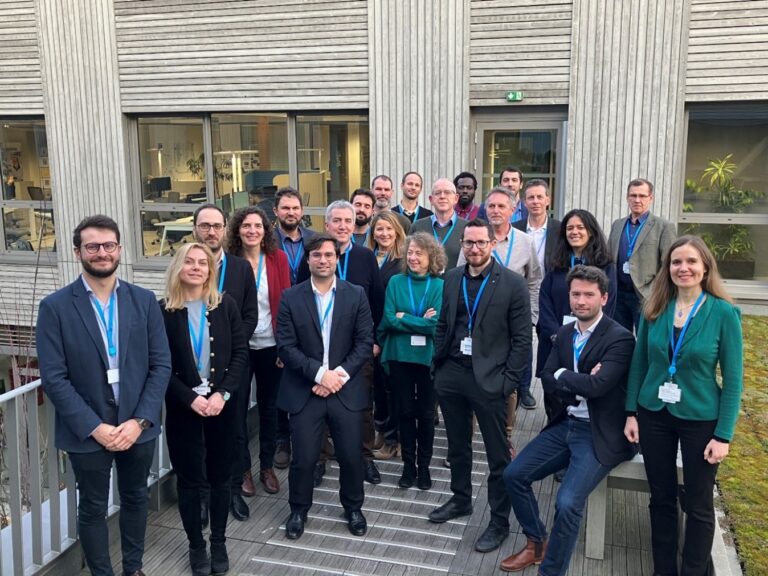
Paris, France – February 28, 2024 – The DelHyVEHR project has officially kicked off its start with the goal to make liquid hydrogen distribution viable and therefore making it accessible as a clean energy carrier across various industries. Hosted at ENGIE Lab Crigen in Paris on January 29th and 30th, the project’s Kick-Off brought together the consortium of 13 partners, including EPG.

The Romanian think tank was represented by Alina Arsani, EPG Head of Energy Systems, and Radu Cîrligeanu, EPG Senior Researcher.

What should Romania do to align with the EU 2040 climate targets? 

The Commission released a comprehensive impact assessment outlining potential approaches to reach the established objective of achieving climate neutrality in the European Union by 2050. In accordance with this assessment, the Commission suggests a 90% net reduction in greenhouse gas emissions by 2040, relative to 1990 levels. It also articulates several imperative policy conditions for achieving this target, including meeting 2030 goals, industrial competitiveness, and an inclusive dialogue on post-2030 climate action. In particular, a just transition with adequate measures for energy price affordability and the mitigation of social impact will be essential.    


Quote

Ioana Vasiliu – EPG Senior Researcher:

Romania, as a member of the EU, should align with this target and play a significant role in contributing to the overall climate action. 

To set its commitment and ensure accountability, the implementation of Climate Law, including clear emissions goals for 2030, 2040, and 2050, is imperative. This legal framework will play a pivotal role in addressing essential aspects, including industrial competitiveness, where sectoral emissions reduction plans will be crucial for Romania’s industries to compete in a low carbon world. Enshrining energy efficiency targets into a Climate Law will also be key to increasing the rate and depth of renovation in Romania’s building stock, which are struggling to keep up with the pace required to meet the EU’s climate goals. 

Recognizing the socio-economic impact of the transition to climate neutrality, especially in terms of energy poverty, a just transition is crucial. Given the ambition of reducing EU-wide emissions by 90% until 2040, Member States must devote substantial attention to putting in place effective measures for managing the subsequent impact on jobs and local economies, which will be vital for a smooth transition towards a sustainable future. 

To fully align with the EU’s more ambitious 2040 climate targets, Romania also needs to intensify efforts in critical areas such as transportation and land use. By implementing policies that support sustainable agriculture and protect natural ecosystems, Romania can contribute to the EU’s climate targets while also safeguarding its natural heritage.”  


Contact person:

[CLOSED] EPG is looking for a Senior Researcher

0

About EPG:

The Energy Policy Group (EPG) is a Bucharest-based non-profit, independent think-tank specialising in energy and climate policy, market analytics and decarbonisation strategy, grounded in 2014. EPG is committed to promoting long-term decarbonisation policies and actions across all economic sectors. Through publications and public events, EPG disseminates knowledge about the green transition and provides well-documented input to stakeholders and decision-makers. Its publications are freely available as research reports, opinion papers, and policy briefs. EPG’s conferences, roundtables and workshops provide a platform for informed discussion and expert analysis. EPG’s funding comes mainly from research grants, but also from sponsorships and membership fees.  

About this position

The new research position will support the Energy Systems and Clean Economy Programmes, our two main research programs. EPG has a range of ongoing projects, including renewable energy, industrial transition, climate technologies, carbon pricing and social acceptability of climate policies. We are currently focused on advancing the decarbonisation of the industry, of the energy mix, electricity market design, RES roll out and energy infrastructure to transition to climate neutrality.

The selected candidate will join our team of researchers. The candidate is expected to contribute to our research outputs, as well as to the broader strategic thinking of EPG and in particular our work on the energy transition.

The position is offered for a one-year fixed-term contract, with possibility of extension to an indefinite-term contract. The level of the position will be decided based on the qualifications of the successful candidate. EPG welcomes applications from a diversity of backgrounds irrespective of age, gender, ethnicity, religious beliefs, sexual orientation, or disability.

Tasks

  • Managing research activities and leading research efforts in the field of climate and energy and energy systems
  • Producing analysis in support of our research outputs and strategic thinking
  • Participating in international research teams as part of our research grants
  • Monitoring key policy developments at EU and international levels
  • Actively participate in the design and organisation of events, deliver presentations and engage with key stakeholders
  • Building a broad and relevant network of key stakeholders
  • Writing op-eds and commentaries
  • Assisting the application process for new research proposals
  • Supporting our overall activity at the office, including supporting applications for funding for their area of research and, where necessary, review EPG publications related to their work area

Background and experience

  • A Master degree in in relevant discipline, such as economics, political or environmental sciences
  • Postgraduate qualification in a field related to engineering (represents an advantage), energy & climate policy or economics
  • Minimum 5 to 7 years (Senior Researcher) of work experience in the energy sector.
  • Demonstrable knowledge of the issue of energy systems/infrastructure and climate policies at EU, the EU ETS, as well as a high-level understanding of the energy regulatory framework.
  • Previous involvement in the organisation of workshops and events, including experience with moderating roundtables and workshops.
  • A strong research profile and access to a network of relevant experts.
  • Experience in international research grants.
  • Analysis and modelling skills in energy.
  • Ability for critical thinking, summarising complex research, drafting reports, and communicating effectively in writing.
  • Demonstrable presentation skills.
  • Ability to work in a diverse team of experts.
  • Excellent command of English (C2 or native), both orally and in writing.

Personal profile

You are dedicated and committed to conducting research and formulating policy solutions in the field of climate and energy.

You understand the need for reaching net-zero greenhouse gas emissions by 2050 and are passionate about contributing to climate change mitigation efforts.

You are intellectually curious and able to engage in multidisciplinary research.

You have great analytical abilities, you can deal with complex information, and can communicate in a concise, yet nuanced manner.

You are willing to participate in the dissemination of EPG’s work.

You are a keen team-player, but also capable of organising your own work.

What EPG offers

Full-time employment for a fixed one-year contract, with possibility of further extension to an indefinite-term contract. 23 days of legal holiday entitlement and a flexible work environment which can accommodate remote working. Opportunity to progress in your career path and gain valuable knowledge and insights on energy and climate policy. EPG also encourages the participation of its employees in training and education programmes in relevant areas.

Salary range (net salary): €1450-2000 (Senior Researcher), based on relevant experience.

How to apply

The deadline for applications is February 25th, 2024 EOD. Interviews will be conducted before the end of February. Successful candidates are expected to start as soon as possible. Complete applications in English should be emailed to office@epg-thinktank.org, mentioning the position you are applying for (Senior Researcher) and your name. The email should contain a single pdf file with:

  • A CV maximum of 2 pages
  • A cover letter of maximum one page outlining your interest and motivation for applying
  • A list of maximum one page with your personal publications

Incomplete application will not be considered. You must have the right to work in the EU or you must commit in obtaining such qualification.

Candidates selected for an interview will be asked to provide a written sample in English of no more than 20 pages.

Unfortunately, we will not be able to reply to every candidate. If you have not received a reply within two weeks of the application deadline, you should consider you application unsuccessful.

The Industrial Carbon Management Strategy. What is good and where does it disappoint?

The European Commission’s first ever strategy governing carbon capture, utilisation and storage (CCUS) – the Industrial Carbon Management Strategy – is an important step for the deployment of CCS in Europe. For Romania and Central and Eastern Europe (CEE), with potentially significant carbon storage capacity and important industries that will need to capture their emissions, this long-awaited Strategy sets a strategic direction which should enable firmer and quicker action on making CCUS a reality, and enabling a fair geographical spread of new technologies and infrastructure across a currently West-centric Europe.   


Quote

Luciana Miu – EPG Head of Clean Economy:

The Strategy does well to broach the subject of actual climate benefits of CCUS projects, including a focus on “process emissions” in the decade to 2030 and a chapter on the removal of atmospheric and biogenic CO2. However, the incoming Commission can be bolder in differentiating climate-positive use cases of CCUS, particularly given the vague language around capturing CO2 in the power sector in the EU’s 2040 climate target.  While restrictive lists of eligible capture sites may be counterproductive, there is really no such thing as “clean carbon”, and facilities should be required to conduct a thorough assessment of their technological options for reaching a clear emissions target, before requesting public funding for carbon capture. 

Importantly, the Strategy also addresses the issues of CO2 transport, a key part of the CCUS value chain, and we hope to soon see an associated dedicated regulatory package on this complex issue, as indicated in the Strategy. Funding will also be available, with a call forthcoming for cross-border CO2 transport infrastructure under the Connecting Europe Facility. This is a good opportunity for CEE countries to plan regional CO2 transport, developing storage hubs in the eastern Mediterranean Sea and Black Sea areas to balance the North Sea-focused CCS landscape in Europe. The commitment to develop minimum standards for CO2 streams is also welcome. 

For an efficient decarbonisation of EU industries, it is vital that CCUS projects demonstrate climate benefits in line with emissions targets. Carbon capture and utilisation (CCU) pathways which do not allow for carbon recycling (including e-fuels and Enhanced Hydrocarbon Recovery) should be subject to rigorous accounting to avoid unnecessary sunk costs and greenwashing. The Strategy’s promise to start addressing these issues in the 2026 EU ETS revision may not be enough to firmly direct EU CCUS sector towards projects with durable climate benefits. Indeed, this is the original remit of the CCUS Observatory, a watchdog project proposed by EPG and now being piloted by the European Commission. 

It is disappointing to see the ever-neglected issue of public perception of CCUS only briefly addressed in the Strategy. As co-chair of the CCUS Forum’s Working Group on public perception of CCUS, EPG heard consistently from a wide range of stakeholders about the importance of considering public perception, particularly at community level, and engaging in earnest public dialogue for upcoming projects. The lack of a clear mandate for project developers to conduct transparent public engagement is a missed opportunity. It risks leading to a fragmented approach in aligning CCUS project deployment with social needs and concerns, and ensuring that CCUS is part of a Just Transition.”  


Contact person:

Meeting the revised Effort Sharing Regulation target in Romania. Measures for the buildings and transport sectors

The European Union has almost completed its recalibration of targets and measures for 2030 to align them with the goal of climate neutrality by mid-century. Important changes have been made through the Fit-for-55 legislative package to essential EU energy and climate files, including the Energy Efficiency Directive, the Renewable Energy Directive, the Emissions Trading System Directive, and the Effort Sharing Regulation. The revised levels of ambition are now moving to the implementation stages, which may pose some challenges in some Member States. Targets for Romania are assessed in this paper using 2050 Pathways Explorer, a specialised modelling tool.

Romania has one of the lowest targets under the revised Effort Sharing Regulation (-12.7% GHG emissions by 2030 compared to 2005) but given the relative neglect of the covered sectors over the past years, there will be distinct challenges for implementation, particularly in the buildings and transport sectors. At the very least, Romania should achieve its goal without overusing the available flexibility tools.

The scope and speed of renovations will have to be the main focus of the building sector’s efforts. Romania may reduce its building-related emissions by 29% in 2030 compared to 2005 (and by 33% compared to 2020), depending on how aggressively it pursues this goal. A Fit-for-55 compatible scenario estimates that Romania’s rate of residential building rehabilitation needs to be 2%/year, compared to the 1.5%/year baseline pace. Up until 2030, Romania ought to renovate almost 66 million square meters of habitable space in residential buildings annually and become a leader in the field of energy-efficient new construction, with deep energy efficiency a feature of half of new buildings. By then, the percentage of energy used for space heating with heat pumps should increase to 6.84% of total energy consumption. Romania should achieve a 3% yearly non-residential building renovation rate and, to further reduce the total energy consumption for space heating, it should significantly improve building codes. Lastly, a comprehensive strategy for Romania’s construction sector should consider the pressing needs to solve the skills deficit in the industry and to tame the price increase of building materials.

Romanian electricity consumption in transports is expected to rise by more than four times by 2030 compared to 2020. About one-third of the country’s automobile fleet in 2030 should be full-electric (or hybrid equivalent in terms of electricity consumption), consuming a total of 3.25 TWh of electricity. All new cars sold in Romania should have zero emissions by 2035, and all new trucks by 2040. Additionally, rail transport would need to increase its energy efficiency by 16% compared to 2015. New internal combustion engine (ICE) buses will need to become 10% more energy-efficient than the new ones sold in 2015. New cars sold in 2030, both diesel and petrol, should be 14% more energy-efficient than the new ones entering the fleet in 2015. Romania should improve freight transportation efficiency such that new heavy-duty diesel trucks consume 13% less energy per km by 2030 compared to 2015. Should significant changes be made to the fleet of passenger and freight vehicles, Romania may achieve a 29% renewable energy sources (RES) share of the total energy consumed in transportation by 2030. In transport, Romania would greatly benefit from aggregating its policies under the umbrella of a comprehensive short and mid-term national strategy.


costin postoiu - epg
Constantin Postoiu, EPG Head of Data Analytics

Constantin is the Head of Data Analytics at EPG. He holds a PhD in Regional Development and a Master Degree in European Economics, both from Bucharest University of Economic Studies. From 2015 to 2017 he worked as advisor to the Chancellery of Prime Minister Dacian Ciolos where he led data driven policies and advised on education, poverty and public administration reform. Prior, he was a trainee at the EU Committee of the Regions, Europe 2020 Monitoring Platform.

Passionate about data analysis and data-based policies, he is also a member of the Advisory Council for the Evaluation of the Impact of Normative Acts, in the Romanian Government.

Contact: constantin.postoiu@epg-thinktank.org

Strategia industrială a României 2023-2027: un prim pas lăudabil, dar prea mic pentru provocările industriei României

La finalul anului 2023, Guvernul României a publicat mult-așteptata Strategie industrială a României 2023-2027, promisă în programul coaliției de guvernare. Publicarea acestei strategii este un pas important în coagularea unui cadru instituțional capabil să gestioneze provocările multiple și intersectate ale industriei din România și să asigure o tranziție digitală și verde, atât durabilă, cât și justă. Cu toate acestea, în forma sa actuală strategia industrială oferă mai multe semne de întrebare decât răspunsuri spre soluționarea acestor provocări, și are nevoie de o abordare mai riguroasă pentru a funcționa drept piatra de temelie a tranziției industriei românești.

Mesaje-cheie

  • Strategia industrială 2023-2027 nu abordează decarbonizarea industrială într-un mod holistic și ca pe un potențial adaos de competitivitate – această mentalitate politică riscă să creeze un cadru de sprijin ineficient al industriei și un colaps al competitivității pe termen mediu;
  • Lipsește o conștientizare adâncă a magnitudinii și urgenței transformării, reflectată în lipsa adresării adecvate a subiectului finanțării, capacității administrative, cadrului de reglementare, și infrastructurii;
  • Strategia abordează subiectul inovării într-un mod prea generalist și nu definește planuri sectoriale, astfel România riscă să continue cu un cadru de susținere generalist, nefocusat pe industriile cu avantaj competitiv și creând ineficiență în cheltuielile publice.
luciana miu - epg
Luciana Miu, EPG Head of Clean Economy

Luciana Miu is the Head of Clean Economy at Energy Policy Group. She holds a Master’s degree in Sustainable Energy Systems from the University of Edinburgh and a PhD in Energy Efficiency of Residential Buildings from the Imperial College London. Before joining EPG, Luciana worked for the UK Parliament and for the British Government’s Department of Business, Energy and Industrial Strategy (BEIS), as well as a consultant for Climate-KIC and London City Hall.

Contact: luciana.miu@epg-thinktank.org

Captarea și stocarea carbonului, instrument al dezvoltării economice a României

0

Ca parte a ambițiilor Pactului Ecologic European, România s-a angajat să își reducă cu 95% emisiile de dioxid de carbon până în 20501. Atingerea acestei ținte necesită o schimbare profundă a tehnologiilor, materialelor și proceselor din economie, în sensul electrificării, al eficienței energetice și al reducerii emisiilor de carbon în toate ramurile economice – energie, industrie, transporturi, agricultură, clădiri. Dar, pentru o serie de industrii critice, cu mari emisii de carbon în procesele tehnologice – de exemplu, producția de ciment, rafinarea petrolului sau producția de substanțe chimice – este nevoie de mai mult de atât și anume de tehnologie pentru captarea emisiilor de dioxid de carbon la punctul de emisie și infrastructură de transport la un rezervor de stocare subterană definitivă a gazelor captate (carbon capture and storage, CCS). În lipsa CCS, aceste industrii nu au opțiuni de a-și reduce emisiile (în condițiile în care nu vor mai beneficia de alocări gratuite de certificate de emisii de carbon) și nici de a-și menține competitivitatea cu alți producători industriali europeni, care investesc deja în instalații de CCS.

Pentru o decarbonizare reală, CO2-ul captat trebuie sechestrat subteran în mod definitiv. Cea mai sigură soluție este stocarea permanentă în formațiuni geologice, cum ar fi zăcămintele depletate de petrol și gaze naturale, având ca unică destinație stocarea sigură, permanentă și durabilă a dioxidului de carbon. În acest sens, se dezbate la nivel european o obligație asupra producătorilor de petrol și gaze naturale din UE de a dezvolta capacități de stocare geologică și de a le pune la dispoziția agenților industriali care urmăresc captarea emisiilor. Obligația, încorporată în propunerea de Regulament privind industria care contribuie la obiectivul de zero emisii nete2 – mai bine cunoscut prin acronimul NZIA (Net Zero Industry Act) – reprezintă un demers crucial pentru accelerarea proiectelor de CCS și susținerea industriilor dependente de aceste tehnologii.

Negocierile pentru NZIA au revitalizat o dezbatere deja existentă despre viabilitatea stocării geologice a CO2, cu vechi temeri legate de potențialele scurgeri de CO2 din depozitele folosite pentru stocare. Acest aspect este însă reglementat la nivel UE încă din 2009, prin Directiva privind stocarea geologică a dioxidului de carbon3, transpusă de România în 2011. Astfel, România are obligații clare privind gestionarea siturilor de stocare, care trebuie atent selectate și caracterizate, avizate de autoritatea competentă (ANRM) și monitorizate pe termen lung. Pentru 20 de ani după închiderea sitului (mai precis, după ce nu mai are loc injectarea de CO2, situl fiind sigilat și echipamentul de injectare demontat), operatorul sitului este obligat să monitorizeze și să raporteze performanța sitului și este responsabil pentru reducerea oricăror riscuri asociate. După această perioadă, responsabilitatea este transferată statului.

Agenții industriali carbon-intensivi din România se confruntă, așadar, cu o dublă provocare. În primul rând, generează emisii substanțiale de CO2 – de exemplu, industria cimentului emite aproximativ 8 milioane de tone de CO2 pe an, adică peste 10% din totalul emisiilor la nivel național. Mare parte din emisii nu pot fi eliminate prin metodele și tehnologiile îndeobște propuse în tranziția către o economie curată, precum energia din surse regenerabile, eficiența energetică, etc. Acest fapt are un impact economic: prin revizuirea directivei EU ETS, operatorii industriali vor fi expuși gradual costului certificatelor de emisii de carbon, începând cu 2026, până la eliminarea completă a alocărilor gratuite în 2034. În prezent, certificatele de carbon sunt încă alocate gratuit, ca măsură de prevenire a relocării industriilor carbon-intensive. La costul actual al certificatelor de emisii (aproximativ €85/tonă de CO2), chiar și fabrica de ciment din România cu cele mai mici emisii s-ar confrunta cu costuri anuale de €55 de milioane pe an, emisii din care aproximativ jumătate sunt imposibil de evitat fără CCS.

În al doilea rând, producătorii industriali din România au concurenți internaționali, dintre care mulți au luat deja măsuri de a-și reduce amprenta de carbon, pentru a-și scădea costurile cu certificatele de carbon și pentru a satisface o cerere crescândă de produse industriale cu conținut redus de carbon. Acest din urmă aspect este în atenția legiuitorilor europeni. De exemplu, cea mai recentă revizuire a Directivei privind performanța energetică a clădirilor introduce o nouă obligație de a contabiliza emisiile „încorporate” în materialele de construcție (inclusiv cimentul, varul și oțelul), care includ emisiile rezultate din procesul de producție al acestor materiale.

Adoptarea tehnologiilor CCS va duce la îmbunătățirea profilului economic și competitiv al industriilor carbon-intensive. Ele contribuie semnificativ la economia națională și sunt angajatori importanți. Mai mult, unele sunt situate în zone de tranziție justă. Tehnologia CCS poate aduce un beneficiu economic prin crearea de locuri de muncă în procesele de instalare și construcție și un plus la cercetarea și inovarea din România, dacă tehnologiile sunt produse intern iar centrele de cercetare existente (spre exemplu, UBB Cluj sau UPB București) sunt implicate în dezvoltarea de tehnologii de captare mai eficiente și durabile.

O componentă cheie a lanțului CCS este stocarea emisiilor captate, a cărei utilizare în România poate aduce beneficii economice importante. Producătorii de petrol și gaze, cu o experiență inegalabilă în explorarea și gestionarea subsolului, sunt cei mai potriviți dezvoltatori și operatori ai siturilor de stocare de CO2. Astfel, se vor crea noi linii de business și locuri de muncă și se vor dezvolta domenii conexe, cum ar fi producția de echipamente pentru injecția de CO2, sisteme de monitorizare, etc. România deține un potențial apreciabil de stocare de CO2 (aproximativ 550 de milioane de tone doar în zăcămintele epuizate de petrol și gaze naturale, la care se adaugă alte formațiuni sedimentare, momentan mai puțin studiate), și ca atare poate oferi servicii de stocare nu doar pe plan intern, ci și internațional, pentru operatorii care nu au acces la capacități de stocare în țările unde activează.

Pentru a fructifica oportunitățile aduse de CCS și a proteja industriile expuse enumerate mai sus, statul român trebuie să acționeze rapid. În primul rând, tehnologiile CCS trebuie aplicate cu discernământ, în industriile unde sunt cu adevărat o soluție potrivită și nu există alternative mai eficiente. Instalațiile de captare, ca și infrastructura de transport și de stocare a CO2, necesită investiții enorme, care se recuperează într-o perioadă îndelungată. În acest scop, statul român trebuie să elaboreze un plan de acțiune pentru susținerea proiectelor CCS, bazat pe dovezi și recomandări științifice.

În al doilea rând, planul de acțiune pentru CCS trebuie însoțit de angajamente de finanțare publică a acestor proiecte, cu indicarea surselor financiare. Pe lângă capitalul operatorilor industriali, investițiile în CCS necesită susținere atât din fondurile europene disponibile – țări vecine României (inclusiv Bulgaria și Croația) au obținut deja finanțare pentru proiecte CCS – cât și din fonduri naționale. De asemenea, planul va trebui să conțină principii și proceduri clare pentru dezvoltarea de infrastructură pentru CCS, mai ales transportul de CO2 prin conducte de la siturile de captare la cele de stocare.

Nu în ultimul rând, subiectul CCS este din ce în ce mai mult în atenția autorităților europene, cel mai recent prin propunerea NZIA. România trebuie să fie un participant proactiv în negocieri, susținând accelerarea proiectelor CCS cu termene și condiții realiste pentru țările din Europa Centrală și de Est, care au o putere de finanțare și capacitate instituțională mai reduse.

Statul român are, de asemenea, și mijloace non-legislative de a încuraja activitatea CCS în România, prin poziționarea în platforme și rețele globale de interes. Cel mai recent, România s-a alăturat inițiativei Carbon Management Challenge, destinată implementării tehnologiilor CCS și de management al carbonului, condusă de Statele Unite. În Europa, România s-ar putea implica mai activ în platformele existente, precum CCUS Forum și grupul de lucru pe CCS din SET-Plan și ar trebui să urmărească cu atenție publicarea, în februarie, 2024a Strategiei Industriale pentru Managementul Carbonului, prima strategie CCS la nivel european. Această strategie poate fi impulsul necesar pentru angajarea la un plan de acțiune pentru CCS în România.

1 – Strategia pe Termen Lung a României pentru reducerea emisiilor de gaze cu efect de seră – România Neutră în 2050, aprobată prin Hotărâre a Guvernului României în septembrie 2023

2 – https://eur-lex.europa.eu/resource.html?uri=cellar:6448c360-c4dd-11ed-a05c-01aa75ed71a1.0006.02/DOC_1&format=PDF

3 –  https://eur-lex.europa.eu/legal-content/RO/TXT/?uri=celex%3A32009L0031


Acest articol a fost redactat de Radu Dudău (EPG President) și Luciana Miu (EPG Head of Clean Economy).