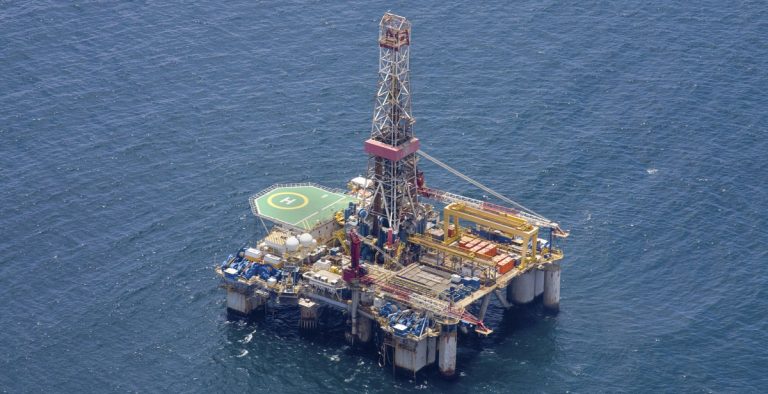
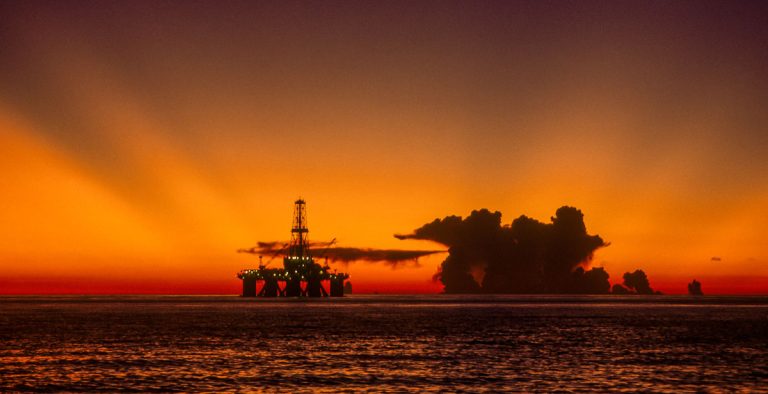
Marea Neagră are potenţialul de a deveni o nouă Mare a Nordului, din punct de vedere al resurselor de hidrocarburi. Cu toate acestea, în contextul în care ţările vecine îşi măresc competitivitatea din sectorul petrolier prin reduceri de taxe şi impozite, legea offshore, în varianta trimisă spre reanalizare la Parlament, continuă creşterea fiscalităţii petroliere în România.
Acestea sunt concluziile unui studiu independent referitor la recenta propunere legislativă a Parlamentul României privind activitatea petrolieră offshore (Legea Offshore), trimisă spre reanalizare de către Preşedintele României la data de 2 august. Studiul a fost realizat de către Vasile Iuga, fost manager al PwC, şi Radu Dudău, director al organizaţiei Energy Policy Group (EPG), la solicitarea Federaţiei Patronale de Petrol şi Gaze (FPPG).
Potrivit studiului, concentrând analiza pe regiunea Mării Negre, mulţi analişti consideră că are potenţialul de a deveni o nouă Mare a Nordului, din punct de vedere al resurselor de hidrocarburi.
România se află în topul ţărilor cu cele mai mulţi restanţieri la utilităţi din Europa, după Grecia, Bulgaria şi Croaţia, a afirmat, marţi, Radu Dudău, directorul Energy Policy Group (EPG), în cadrul unei conferinţe pe tema eficienţei energetice a clădirilor.
„Suntem în topul restanţierilor la utilităţi. Explicaţia este că sunt mulţi locuitori cu venituri mici şi avem un indice ridicat de inegalitate socială, adică diferenţe mari între venituri. Totodată, există un număr mare de consumatori aflaţi în sărăcie energetică, iar mulţi nici măcar nu au acces la energie”, a explicat Dudău.
El a arătat că preţul energiei electrice, în România, este sub media europeană raportat la puterea de cumpărare a populaţiei, ceea ce nu este neapărat un lucru bun, întrucât nu sunt încurajate investiţiile în tehnologii noi, mai eficiente, conform Agerpres.
In a market economy, the term hub generally refers to the intersection of several commercial routes, where an abundance of merchandise from various sources prompts the closing of many deals “on the spot,” transparently, with amounts and prices known to all traders present. In such conditions, prices converge towards a certain value, where supply meets demand, this being the market price.
When it comes to natural gas networks, the technical definition of a hub is, normally, the physical point of intersection of (major) pipelines, where the transport network operator (TSO) receives from suppliers indications on how to direct flows, depending on the trades closed.
However, in gas market terminology, a hub is a virtual trading point, lacking spatial coordinates per se, situated all across the transport network, that is, anywhere the transfer of commodity ownership from seller to buyer takes place. Trades themselves are done and recorded on (online) exchange platforms.
The first gas trading hub in Europe was the NBP (National Balancing Point), initiated in the 1980s. Indeed, despite the convergence of pipelines bringing gas from the North Sea and Europe, the NBP’s inception was not as much physical as it was commercial, if not political. Margaret Thatcher’s frantic push for market deregulation and privatization replaced state monopoly with competitive private companies, which quickly built a “free” gas market, leading to gas prices converging all across the UK.[1] The notional price reference thus became known as the NBP, the “point” for trades within the British transport network. As of 2000, trading takes place on the online ICE ENDEX exchange platform.[2]
As a side note, the B for Balancing refers to the hub’s role as buffer between network entries (inflows) and exits (outflows), where traders offset their daily imbalances with other market participants, under TSO’s oversight.
In time, more European hubs were similarly built, being used as price references, thanks to the naturally occurring price convergence. Different prices would be “formed,” based on the gas “product” – that is, the delivery period. This time-based categorization was officially transposed into what are nowadays standardized products: there is a price for gas delivered in the remaining hours of the day (intra-day), another one for the next day (day ahead), a different price for the next month (month ahead) etc.
Prices vary depending on season, gas demand, power demand, prices of fuel alternatives (if any) etc. Hub trading takes place on a centralized platform, an online exchange where suppliers close deals, as users of the transport network, with volumes and prices visible to all market participants. This approach is the same as the one used in power markets.
Before transparent hub trading, deals were signed in private (old-fashioned bilateral/OTC), with tailor-made clauses and no published information, shared only with energy regulators, for market monitoring and fraud prevention. New entrant producers and suppliers, unaware of recent prices and with low negotiation leverage, were deprived of a clear image of the market, and had a hard time getting an adequate price.
Once multiple hubs were set, traders developed their offers and capabilities, and simple commodity trades were supplemented with hedging on hub vs. hub price spreads, as well as financial market-inspired derivative instruments, like call and put options (i.e. securing the right to buy/sell at a fixed price later on, for a fee), and mixtures of all these products.
In 2016, the NBP was outrun as European leader in terms of liquidity (volumes traded) by TTF (Title Transfer Facility),[3] the Dutch hub. Indeed, despite the near-depleted Groningen field, the Netherlands still sees massive pipeline flows, as well as year-on-year increasing LNG shipments.[4]
Another gas hub, which is also a physical network hub, and happens to be the one geographically closest to Romania is based in Baumgarten, Austria, near the border with Slovakia. Back in the Soviet era, this was a key “triage” point, just beyond the Iron Curtain, splitting massive Siberian gas volumes towards different destinations in the Balkans, as well as Central and Western Europe.[5] More recently, since 2005, trading takes place on a web platform, with centralized auctions and live price updates. Thus, the Baumgarten network hub became the Central European Gas Hub (CEGH, a.k.a. VTP).[6]
However, this hub sees much less action than the two hubs mentioned above (there are others in-between, in Germany, France, Belgium etc.):
Note the colossal amounts traded at TTF and NBP in 2016 – they are not just the physical flows (they much exceed regional demand), but typically each MWh “changes hands” several times before reaching its final consumer. The average number of trades each MWh is likely to see is called the hub’s churn rate, and is also a measure of liquidity.
Coming back to our regional context, no gas volumes are known to have been traded by Romanian suppliers directly at the Austrian hub. Firstly, the price here usually gets about €2/MWh on top of the average Romanian prices, so even when CEGH gas is slightly cheaper, the Austrian and Hungarian transport tariffs, which add to the commodity price, usually discourage Romanian buyers. One can assume that the only situation in which Baumgarten gas is purchased by Romanian traders is during peak cold days, when local sources and imports via Ukraine fail to suffice, and the extra euros become irrelevant on the back of dire heating demand. And even then, Romanian traders do not go online on CEGH, but seek foreign counterparties who do so and are willing to sell at the Arad – Szeged (Csanádpalota) inter-connector.
Despite this “missing link”, CEGH quotes came to be essential in the Romanian fiscal regime for natural gas producers. Indeed, much to the dismay of the latter, early this year the ANRM (National Agency for Mineral Resources) chose the CEGH average day-ahead market as price reference for production royalties. This basically means that any producers selling at a price lower than Baumgarten (which, as said, is usually the case) still owe royalties as if they were selling at Baumgarten levels.[7]
One argument in favor of this remote reference was that Romania does not have a hub of its own, lacking a mature, trustworthy price forming mechanism, which the authorities could rely on to set a long-term reference, the closest such entity being CEGH. This is correct, on account of Romania’s energy market history.
On the Romanian power market, because of dubious deals made in the 2000s by atate-owned producers (mainly Hidroelectrica), which sold power below production costs to several suppliers, leading to the insolvency of the producers,[8] the Energy Law was consistently modified, and became Law No. 123/2012.[9] Following the change, all power trades are held transparently, on the online platform run by OPCOM.[10]
For natural gas, until about two years ago, all Romanian gas trades were bilateral, with little or no transparency, details only shared with ANRE. In a country where two domestic producers roughly had a 50-50 share in meeting about 90% of annual demand, and where two suppliers covered most household and small B2C consumers,[11] this meant that newcomers would need to be exceedingly able and persuasive in order to earn market share. Despite the secrecy of these bilateral deals, no corrupt trades, or dilapidation schemes, similar to those on the power market, are known to have happened, except perhaps for the amounts currently under scrutiny, involving Romgaz and Interagro,[12] the fertilizers producer.
The good news is, the Romanian gas market is on its way to establishing its own price reference, through its nascent centralized market. ANRE and lawmakers agreed that there was a need for transparency on the gas market as well, and in 2014 amended Law 123/2012 by introducing the obligation for suppliers to trade a minimum percentage of their yearly portfolio on centralized exchanges. Through Order 114/2014,[13] these minimum percentages would be: 35% in 2015, 30% in 2016, 25% in 2017 and 20% in 2018. The obligation was set to decrease with each year as ANRE believed that, in time, trades would largely shift to centralized platforms anyway.[14] There are currently two active centralized market operators, each with their own secured online exchange: OPCOM, relying on the expertise of their power exchange, and BRM (the Romanian Commodities Exchange), offering online trading platforms for many markets. So far, all Romanian market participants have preferred BRM, and practically all trades have taken place there, ever since the obligations were set.
On BRM, trades are closed following either of two types of auctions:
“Disponibil”[15](“Available” trades), whereby the initiator trader posts a request to buy (or sell), including quantity, starting price, delivery period etc. During the auction, any interested traders can reply with their offers to sell or buy and meet the initiator’s request for the entire quantity or, if allowed, fractions of it. Once the auction time expires, the initiator chooses the best offer, even if prices do not exactly match, and closed the deal. Initiators need to register and announce the auction, so that interested counterparties can prepare.
“STEGN” (Electronic System for Trading Natural Gas), whereby the initiator trader posts a request to buy (or sell) including quantity, starting price, delivery period etc. During the auction period, any interested trader can simply click to confirm and close the deal. Sometimes, there is the option for another trader to secure a different quantity, or change the price, in which case the initiator should confirm. Auctions are initiated spontaneously, no early announcement required.
According to BRM data,[16] centralized trade volumes evolved as follows:
Comparing the TWh traded on BRM with CEGH volumes, which reached 622 TWh in 2017, one notices a ration of about 1:9, which is eloquent in terms of development lag, but also understadable given the lack of Romanian source diversification, both internal and external. Should more producers, traders and import origins develop, liquidity would increase.
Here is the evolution of volumes traded each month on the BRM exchange:
In terms of volumes, despite heating demand, early 2017 did not see massive trades, as most deals were still bilateral then. The June 2017 peak was due to purchases for summer months, in view of injection to meet the suppliers’ storage obligation. Jan-Feb 2018 were quiet on account of warm weather, while Mar 2018 blizzards triggered many auctions for short term gas. Summertime has been surprisingly illiquid, with trading parties failing to reach price consensus on the scarce quantities.
Price-wise, the influence of import quotes (usually dependent on oil products) on the Romanian market is obvious, albeit July at over 80 Lei/MWh is rather unexpected. Should volume scarcity persist, winter 2018-19 can go well above 100 Lei/MWh.
In the meantime, the trading obligation percentages were slightly amended and differentiated per trade type: in 2018, for each supplier, 20% of the gas purchased should be from the centralized market, the obligation for sales being 30%. For 2019, centralized trade obligations go up to 40% of purchases and 50% of sales.
In addition, while delivery periods for centralized market deals are currently “loose,” depending on the initiator’s needs, ANRE recently set the list of standardized products that can be traded on the exchanges,[17] meaning the Romanian gas market is on its way to having a clear separation of trades for gas delivered over one day, one week, one month, one quarter, one season (Oct-Mar, or Apr-Sep), one year etc., and implicitly get price references, comparable to those of European gas hubs.
Of all these products, both operators (first OPCOM, then BRM) recently launched online tools for trading day-ahead gas. However, this particular market has proved illiquid, as practically no trades have been closed so far. This is mostly because suppliers do not yet have a real-time image of the estimated flows in their portfolio, relying solely on their in-house estimates and forecasts.
However, through Order 160/2018,[18] ANRE prompted the TSO (Transgaz) to draft and implement a forecast methodology. This will provide each supplier with forecasts for the rest of the day and the day ahead, for the portfolio segment of non-daily-metered consumers (mostly households and weather-dependent consumers). Such information would normally be based on real-time flow measurements, coupled with demand history and weather data. The estimate/forecast itself would help each supplier be more aware of its (potential) imbalance and, eventually, react by trading on the intra-day and day-ahead markets, which would, in turn, become more liquid. The deadline for this methodology (and the start of information sharing) is October 2018.
In any event, while following this path, Romania will soon see its own reliable market price(s) for natural gas. On short term, this will remove the need for (literally) farfetched fiscal references, like CEGH – ANRM recently announced that, by the end of 2018, they will switch the royalty price reference to domestic quotes. In the long-run, this is an essential step for Romania’s ambitions to harness its local resources and become a gas hub, as well as additional motivation and trust for the development of regional infrastructure projects.
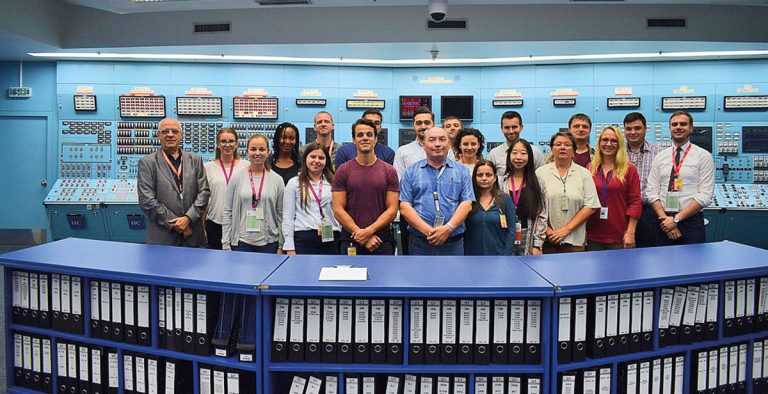
The first edition of Energy Policy Group’s Energy Summer School took place between July 23-27, 2018 in Bucharest, with a focus on ‘Smart Transformation in the Energy Sector.
The Summer School enjoyed the participation of 15 young energy professionals from Romania and across the world. Indeed, they came from four continents, had an average age of 27, and were representatives of utilities, NGOs, academia, energy companies, research institutes and public sector. In one densely packed week, they debated the challenges and prospects of the energy sector and of the policy and market tendencies that are shaping the ongoing smart transition towards a decarbonized economy.
24 reputed speakers, Romanian and international (representatives of energy companies, energy consultants, diplomats, policy makers, members of NGOs and the academia) came to share their specialized knowledge and facilitate the debate.
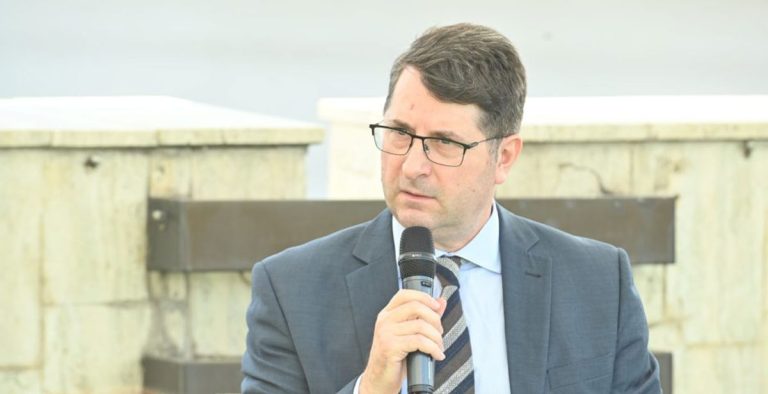
Ţara noastră va plăti costuri reputaţionale foarte mari, dar şi costuri care vor rezulta din acţiunile de arbitraj înaintate de companiile petroliere, dacă acestea vor stopa investiţiile în perimetrele de gaze concesionate în Marea Neagră, a declarat, ieri, Radu Dudău, director al organizaţiei Energy Policy Group (EPG), în cadrul unei dezbateri pe tema gazelor offshore.
El a arătat că, în 2010, când companiile petroliere au semnat acordurile de concesiune cu Agenţia Naţională pentru Resurse Minerale, acestea au primit asigurări privind stabilitatea cadrului fiscal, însă, de atunci, în anul 2013, au fost introduse două impozite noi, cel pe profiturile extraordinare din reglementare, plus 0,5% impozit pe producţia de hidrocarburi lichide asociate producţiei de gaze.
Radu Dudău subliniază, conform Agerpres: “Acestea au ridicat România destul de repede în prima parte a clasamentului privind impozitarea la nivel european în sectorul petrolier. Pentru că ne apropiem de momentul unei decizii, operatorii din Marea Neagră au toate datele geologice pentru a-şi întemeia o decizie de investiţii, dar aşteaptă clarificarea regimului fiscal, legea offshore era necesară, dar mesajul companiilor a fost că aceşti termeni din lege nu le convin”.
România va plăti costuri reputaţionale foarte mari, dar şi costuri care vor rezulta din acţiunile de arbitraj înaintate de companiile petroliere, dacă acestea vor stopa investiţiile în perimetrele de gaze concesionate în Marea Neagră, a declarat, miercuri, Radu Dudău, director al organizaţiei Energy Policy Group (EPG), în cadrul unei dezbateri pe tema gazelor offshore.
El a arătat că, în 2010, când companiile petroliere au semnat acordurile de concesiune cu Agenţia Naţională pentru Resurse Minerale, au primit asigurări privind stabilitatea cadrului fiscal, însă, de atunci, în anul 2013 au fost introduse două impozite noi, cel pe profiturile extraordinare din reglementare, plus 0,5% impozit pe producţia de hidrocarburi lichide asociate producţiei de gaze.
“Acestea au ridicat România destul de repede în prima parte a clasamentului privind impozitarea la nivel european în sectorul petrolier. Pentru că ne apropiem de momentul unei decizii, operatorii din Marea Neagră au toate datele geologice pentru a-şi întemeia o decizie de investiţii, dar aşteaptă clarificarea regimului fiscal, legea offshore era necesară, dar mesajul companiilor a fost că aceşti termeni din lege nu le convin”, a susţinut Dudău.
Aceasta este a treia şi ultima parte a unui material mai amplu, intitulat „Sărăcia energetică astăzi“, publicat iniţial pe site-ul Energy Policy Group.
Prima parte a materialului s-a axat pe problematica accesului la energie, iar cea de-a doua parte a abordat tema sărăciei faţă de combustibil, în timp ce ultima parte îşi propune să aducă în atenţia cititorilor recomandări şi bune practici pentru combaterea acestor fenomene. Acestea nu trebuie însă privite ca soluţii universal valabile, deoarece există anumite specificităţi în ceea ce priveşte condiţiile climatice, contextul cultural şi social, precum şi structurile economice, cadrul fiscal, mediul de afaceri etc.
Statistici
Peste 1,1 miliarde de persoane sunt în prezent private de acces la energie.
Granting subsidies from the state budget to extend gas distribution networks and connect vulnerable consumers to them, extension of Rabla Plus Program including to compressed gas vehicles, reintroducing the environmental tax for polluting vehicles and supporting the petrochemical industry should be, in the following period, the main targets of the government policy to ensure a higher use of natural gas. These are the conclusions of the study ‘The perspective of natural gas in Romania and the modalities for their superior capitalization’, prepared by the members of think-tank Energy Policy Group – Vasile Iuga and Radu Dudau.
The report analyses the current natural gas sector from the point of view of reserves, infrastructure and market setup. The report also addresses the prospects for the evolution of different segments of natural gas consumption by 2030 and provides appropriate policy and regulation recommendations which would lead to the value-added capitalization, on the Romanian market, of the expected Black Sea natural gas production but also of onshore deposit.
România este cea mai expusă ţară din Uniunea Europeană la o întrerupere masivă pe termen lung a aprovizionării cu gaze naturale prin Ucraina, iar noi nu am scos o silabă despre cum vom fi afectaţi după construcţia Nord Stream 2.
Proiectul de ţară al acestor zile pare să fie, mai degrabă, izolarea energetică a României în condiţiile în care exploatarea gazelor din Marea Neagră stă în mâna unor parlamentari „patrioţi” care negociază resursele ţării noastre ca la talcioc.
Ţara noastră a devenit, chipurile, independentă de gazul rusesc, în trei feluri. În primul rând, combinaţiile dintre tot felul de politicieni, interpuşi şi oameni de „afaceri” dubioşi au asasinat industria. Apoi, aproape 3.5 milioane de gospodării folosesc şi astăzi, în anul 2018, combustibili solizi ca sursă de încălzire deşi, paradoxal, Parlamentul României a fost dominat de social-democraţi în ultimii cinci ani însă nimănui nu i-a păsat de situaţia disperată în care se află o mare parte din locuitorii acestei ţări, deconectaţi de la utilităţi!
O soluţie avansată într-un studiu pentru revigorarea Oltchim Râmnicu Vălcea, odinioara una dintre cele mai mari unităţi industriale din ţară, dar care se află acum în insolvenţă, ar fi înlocuirea materiei prime tradiţionale pentru combinatul chimic.
Metanol convertit din gaz metan în loc de benzină nafta obţinută din petrol. Aceasta poate fi soluţia pentru dezvoltarea combinatului chimic din Râmnicu Vâlcea, pomenită de Vasile Iuga şi Radu Dudău, autorii studiului „Perspectivele gazelor naturale în România și modalități de valorificare superioară a acestora”.
Investiţia într-o unitate de conversie a metanului ar fi de circa 300 de milioane de euro, dar, odată făcută, combinatul ar putea avea materia primă necesară pentru produsele sale, în condiţiile în care lanţul său de aprovizionare cu nafta, de la fosta rafinărie Arpechim, a fost rupt.
Utilizăm cookie-uri pentru a optimiza experiența de navigare și pentru a analiza traficul site-ului. În timp ce cookie-urile strict necesare sunt active permanent pentru a asigura funcționarea paginii, avem nevoie de consimțământul dumneavoastră pentru cookie-urile de analiză și marketing. Află mai multe: Politica de cookies / Politica de confidențialitate.
Funţionalităţi
Always active
"Stocarea tehnică sau accesul sunt strict necesare pentru scopul legitim de a permite utilizarea unui serviciu specific solicitat explicit de către abonat sau utilizator, sau pentru scopul unic de a efectua transmiterea unei comunicări printr-o rețea de comunicații electronice.
Preferinţe
Stocarea tehnică sau accesul sunt necesare pentru scopul legitim de a stoca preferințele care nu sunt solicitate de abonat sau utilizator.
Statistici
Stocarea tehnică sau accesul sunt folosite exclusiv pentru scopuri statistice.The technical storage or access that is used exclusively for anonymous statistical purposes. Without a subpoena, voluntary compliance on the part of your Internet Service Provider, or additional records from a third party, information stored or retrieved for this purpose alone cannot usually be used to identify you.
Marketing
Stocarea tehnică sau accesul sunt necesare pentru crearea de profiluri de utilizator pentru a trimite publicitate sau pentru a urmări utilizatorul pe un site web sau pe mai multe site-uri.